Cattle feed: concentrates for finishing, mix and doses
Concentrate feed is a concentrated energy source: cereal grains, meals and oilseed cakes that speed up gain in finishing cattle. It does not replace forage, and a single meal must be limited, because too much at once leads to acidosis. We cover the mix, feeding rules and what to watch in practice.
verifiedFrom the team that has organised work on poultry farms for years.
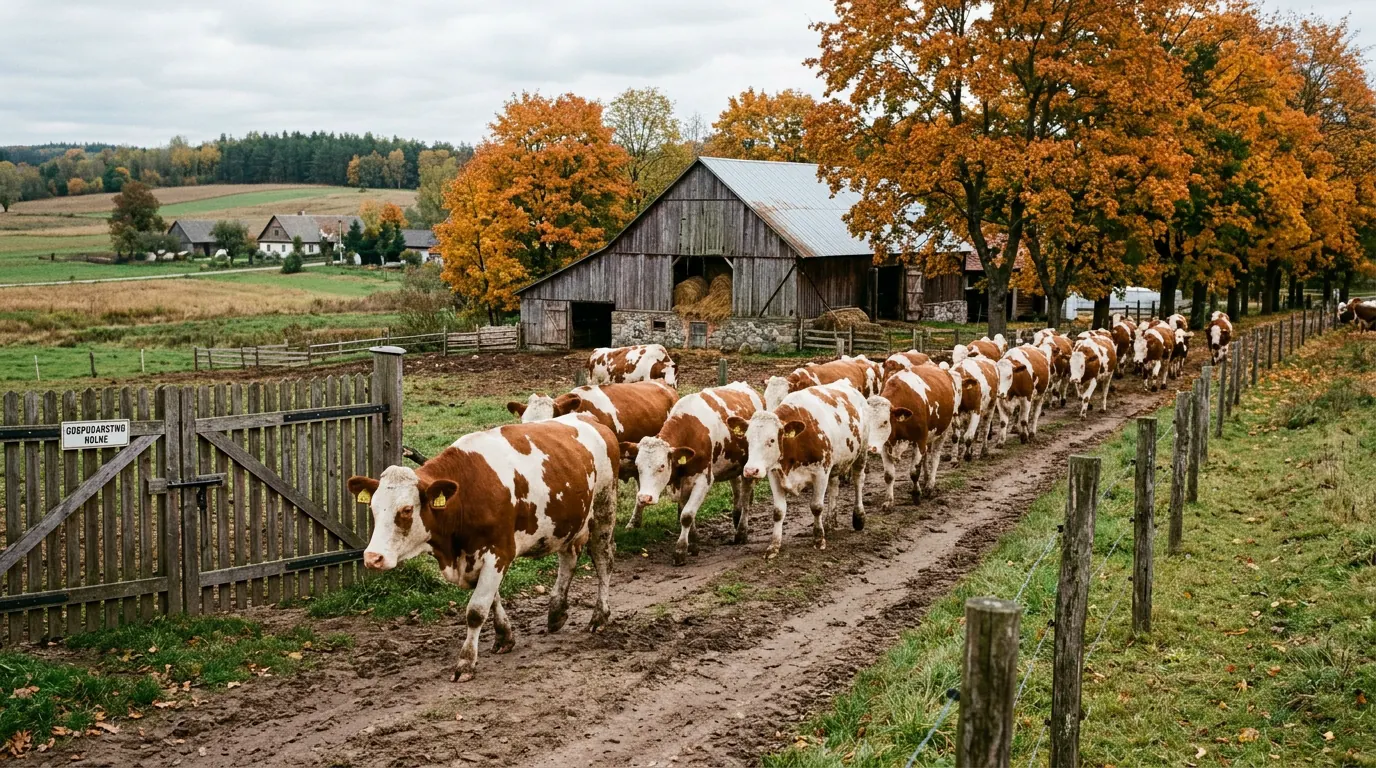
Concentrate feed is high in energy, high in dry matter, low in water and high in starch. In finishing cattle, it supplies the energy for fast gain. According to the OODR Łosiów leaflet "Żywienie bydła mięsnego" (feeding beef cattle, from a Polish agricultural advisory center), concentrates for finishing cattle carry a high concentration of energy components in the dry matter. Concentrate alone does not make a full diet, though: you match amount and composition to the animal category, age and finishing goal, and a vet or feeding adviser sets the actual doses.
Concentrates versus forage
Cereal grains, meals, oilseed cakes and pulp are concentrates. Hay, straw, silage and haylage are forages, which cattle eat willingly because they taste good. A good finishing diet combines both: forage keeps the rumen working, and concentrate adds energy. The more concentrate in the ration, the more you must make sure it does not push out the forage. If you make your own silage, see silage from maize, grass and beet for cattle.
What concentrate for finishing cattle is made of
Most common ingredients
Concentrate mixes are built on ground grain, mainly barley, triticale and oats. Rapeseed cake is added as a protein source, and sometimes ground faba bean or sweet lupin. Wheat bran adds fiber and improves the structure of the mix. The OODR leaflet notes that different grains have different value for finishing cattle, so when you change an ingredient, check how energy and protein change. Mixes from local sources often also contain a mineral supplement with calcium, phosphorus, magnesium and sodium.
Example mixes from research
A source on feeding cattle in organic farming (K. Bilik et al., Wiadomości Zootechniczne, a Polish animal science journal) gives mixes for young finishing cattle after Strzetelski et al. (2004). In mix 1, barley makes up 58%, triticale 18%, faba bean 7%, rapeseed cake 15% and mineral mix 2%. In mix 2, barley is 60% and sweet lupin replaces faba bean. The authors state that 1 kg of dry matter of such a mix contains about 170 g of crude protein, 108 g BTJN and 106 g BTJE (Polish protein values for the small intestine), plus 6.9 g phosphorus and 8.7 g calcium. Use these values for comparison, not to copy a recipe without analyzing your own feed.
How grain is processed
Barley is best digested crushed, as flakes or pellets. A small share of whole grains is acceptable. The finer the grain is ground, the faster cattle digest it, but very fine grinding raises the risk of rumen acidification at a high dose. So the form changes not only handling but also the speed of fermentation in the rumen. If you buy a ready mix, ask the maker about its form and composition, not just its name.
Concentrate doses and feeding rules
Single-meal limit
According to the OODR Łosiów leaflet, a limited single dose of concentrate, for example ground grain or pulp, should not exceed 1.5 kg per animal. Too much concentrate in one meal acidifies the microflora of the digestive tract. If daily energy needs are higher, split the feed into more portions through the day instead of adding it to one feeding. Agree the final split with your vet or adviser.
Feeding order
The OODR leaflet lists feeding in the right order among the most important rules. In practice, that means forage first and concentrate after, so the rumen already has material to chew before a large dose of energy. The same routine makes it easier to check what the cattle actually ate. A hay or bale feeder helps keep steady access to forage, see feeders for cattle for hay and bales.
Water with concentrate
A diet with more concentrate raises water demand. Cattle need constant access to clean water, especially after a large portion of feed. When you change the diet, check that the animals drink as much as before. If your watering system is limited, see our overview of cattle waterers, because the number and flow of drinkers affect water intake in the group.
Rumen acidosis and concentrate feed
How acidosis develops
Rumen microflora ferment starch from concentrate into acids. When a lot of starch arrives at once, more acid forms than bacteria and saliva can neutralize. The OODR leaflet links too much concentrate to acidification of the microflora and numerous health problems, including acidosis. Move to a higher share of concentrate gradually, not in jumps.
How to watch the herd
Acidosis does not always show clear signs right away. Watch appetite, rumination, manure consistency and behavior at feeding. If you see changes in several animals at once, call your vet; we do not recommend treating or choosing medicines yourself. Keep records of treatments and any medicines up to date, see the treatment and withdrawal period module in DlaFerm.pl.
Forage as the base of the finishing diet
What counts as forage
The OODR leaflet lists hay, straw, silage and haylage as forages. Cattle eat them willingly, and their structure stimulates chewing and saliva. Straw is low in energy, so it is not enough alone for finishing, but a small amount complements the diet well. Prepare and store silage so it does not lose quality, because spoiled feed upsets the whole diet.
Molasses as an additive
Molasses is sometimes added to feed because it improves taste and makes the mix easier to eat. It does not replace forage and does not solve the problem of too large a concentrate dose. Before adding molasses to the ration, check how much you give and how the group's appetite changes. Read more about amounts in our guide to molasses for cattle.
Finishing plan and feed stock control
Goal of finishing
Teagasc (Ireland), in its Beef Manual chapter on nutrition, describes the finishing period as the time when animals get an energy-dense diet so they grow rapidly, add muscle and optimize fat cover before slaughter. Different finishing systems, on forage, on silage with concentrate or on a high-concentrate diet, use different proportions of ingredients. The choice depends on your land, your stocks and the slaughter target.
Costs and where they come from
The cost of finishing depends on the prices of grain, protein and silage, and on feeding intensity. Market prices change often, so we give no specific amounts. Sample calculations of income from beef production at different intensity levels are published by PODR Lubań (a Polish agricultural advisory center). Compare your own costs with such calculations and with your own performance.
Controlling silo stock
In finishing, you should know your stock of concentrate and forage ahead of time, because a gap in deliveries forces a sudden diet change, and that raises the risk of acidosis. Keep a simple record of stock and use. It makes ordering easier, see feed silo monitoring, and it also helps with a cattle shelter, where you keep both stock and animals.
Frequently asked questions
How much concentrate should I feed finishing cattle?add
The amount depends on age, body weight, finishing goal and the rest of the diet. According to the OODR Łosiów leaflet, a single dose of concentrate should not exceed 1.5 kg per animal, and larger amounts are split into several portions. Agree the final plan with your vet or feeding adviser.
Is concentrate alone enough for finishing cattle?add
No. Concentrate supplies energy, but cattle need forage to keep the rumen working. According to the OODR leaflet, feeding in the right order is one of the most important rules of feeding finishing cattle.
What is rumen acidosis and how do I avoid it?add
Acidosis is acidification of the rumen microflora, which happens when too much starch from concentrate arrives at once. You avoid it by raising the share of concentrate gradually, splitting the dose into portions and looking after forage. If several animals show signs, call your vet.
What is in a concentrate mix for young finishing cattle?add
Typical mixes are based on ground barley, triticale or oats, rapeseed cake and a mineral mix. Example mixes from IZ PIB research (Poland's National Research Institute of Animal Production) give the percentage of each ingredient. Always set the composition of your own mix with an adviser, because it depends on the grain you have.
Does barley need processing before feeding?add
Yes, barley is best digested crushed, flaked or pelleted. A small amount of whole grains is acceptable. The form affects the speed of fermentation in the rumen.
What decides the price of concentrate feed for cattle?add
The price depends on grain and feed protein quotes, transport costs and the composition of the mix. Quotes change often, so we give no amounts. Check current prices with your feed supplier and local market.
Sources & resources
- linkOODR Łosiów (gov.pl) — Feeding beef cattle (leaflet)
- linkIZ PIB — WZ — Feeding beef cattle in organic farming (K. Bilik et al.)
- linkTeagasc — Teagasc Beef Manual — Section 6: Nutrition
- linkAHDB Beef & Lamb (UK) — Beef BRP Manual 5: Feeding suckler cows and calves for Better Returns
- linkODR Lubań (PODR publication) — Sample calculation of farm income from beef production (different intensity levels)
Prepared by: DlaFerm Team based on data from the sources listed · Publisher: INSTA-TECH sp. z o.o.
Do you keep track of feed stock in the silo?
The silo monitoring module in DlaFerm.pl helps you plan feed deliveries and avoid a sudden diet change. Create a free farm account and see how it works on your farm.
Phone
+48 796 258 151