Cattle waterers: bowl, trough and heated, and how many per group
Pick the waterer to match group size, housing and winter conditions. A bowl waterer suits smaller groups and pasture, a trough suits a larger herd indoors, and a heated waterer suits places where water freezes. We do not give a fixed number of liters per head, because intake depends on weight, age, temperature and feed. Your vet or a nutrition adviser sets a practical figure for your farm.
verifiedFrom the team that has organised work on poultry farms for years.
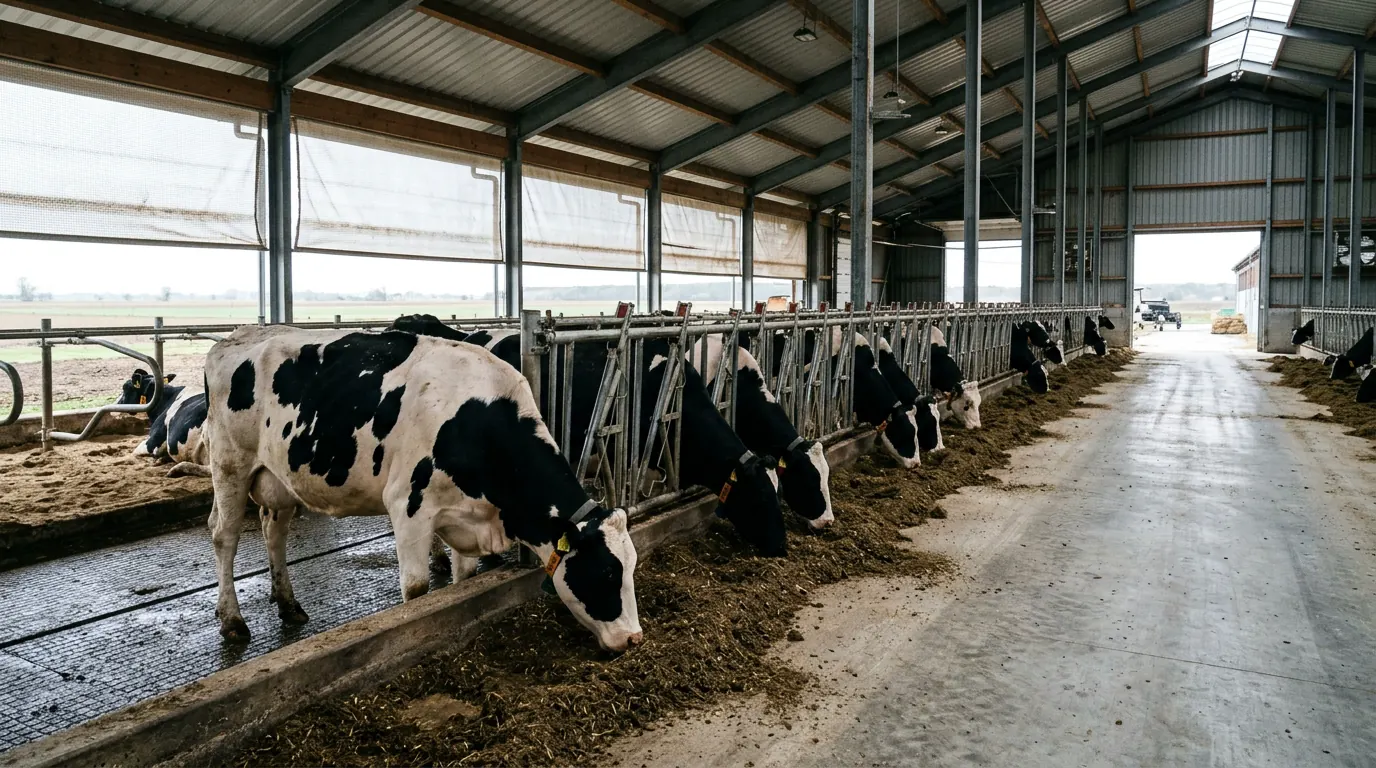
The short answer: in a beef herd, bowl waterers suit cows with calves on pasture or in small pens, troughs suit groups of finishing cattle indoors, and heated waterers suit places where the water line freezes in winter. No single number of liters per head fits every farm. Need depends on the animal's weight, the temperature, the ration and its health. Below we cover the waterer types, how to work out needs, and hygiene and winter watering.
Why water matters in beef cattle
Water is part of every ration, and an animal that drinks little eats less and grows more slowly. Teagasc, Ireland's agricultural advisory body, advises in its nutrition manual that with good spring grazing you keep available grass at about 2% of the animal's body weight and raise the allowance as numbers grow. The more dry feed cattle eat, the more water they need, so with a lot of silage and hay the waterer has to keep up with feed intake. If there are too few drinking places, weaker animals drink less, and you only see it when weight gains fall. So check watering as carefully as you check feeding. You can keep feed and water records in a farm management program.
Bowl, trough and heated waterers
Bowl waterer
A bowl waterer, a bowl with a float valve or one filled by hand, works best for cows with calves and small groups. The animal drinks from the bowl on its own and the valve keeps the level steady. The downside is that mud and bedding quickly foul the bowl, so it needs frequent cleaning. Mount the bowl so adult animals do not have to bend their necks at an awkward angle and calves can still reach it. We describe how the valve works for poultry too, in our article on the automatic waterer for hens, because the mechanism is similar.
Trough waterer
A trough is a shared waterer for a larger group, for example finishing cattle indoors. Its advantages are larger capacity and easier filling, by hose or from a tank. But a trough needs emptying and washing more often, because algae and sediment build up in warm water. In a group, dominant animals often hold the trough for a long time, so trough length and the number of drinking places must match herd size. Set the trough on a hard base with a drain so water does not pool around it.
Heated waterer
A heated waterer, bowl or trough, stops water freezing in frost. It makes sense where animals stand outside or the water line runs through unheated rooms. Look after electrical safety: cables must be protected from animals and moisture, and the heating element checked before the season. Heating raises energy costs, so before you buy, count how many waterers really need it. Insulating pipes and placing waterers away from drafts also helps.
How much water a head of cattle needs
What drives water demand
Water demand depends on body weight, age, production category, ambient temperature and feeding. A calf on milk drinks differently from a lactating cow, and both differ from a finisher eating a lot of dry feed. Heat and humid weather raise intake, while illness, especially diarrhea or fever, can change it noticeably. Livestock tables give exact values for each category, but in practice your vet or a nutrition adviser sets the amount from your ration and housing conditions.
How to check that animals drink enough
The simplest check is observation. If animals stand at the waterer for a long time and the water level does not drop, flow may be too slow or there may be too few drinking places. If the waterer is empty or animals rarely come to it, check the flow, the valve and the water temperature. Record daily water use where you have a meter and compare it with head count and weather. Changes in water intake are often an early sign of a health problem, so tell your vet before the herd's condition worsens.
How many waterers per group and how to place them
Number of places and access
The rule is simple: every animal in the group needs real access to water, including the weakest. One waterer for a big group causes queues and stress, and dominant animals block the way. In a larger herd, spread waterers across several spots in the pen so water is quick to reach from any corner. Do not count places only on paper. Watch the herd at feeding time and in hot weather, when demand rises fastest.
Height and surroundings
Set the hanging height separately for adult cows and for calves, and do not put a waterer where animals have to squeeze past each other. Mud usually forms around waterers, so firm up the ground and drain the water away. IZ PIB (Poland's Institute of Animal Production, National Research Institute) at its Kołbacz center describes keeping beef cattle on deep bedding, where bedding quickly gets dirty near the drinking equipment. In such a system the waterer needs a guard or a raised base and more frequent checks, so the water stays clean.
Waterers in winter and on pasture
Winter watering indoors
Once animals move indoors, the waterers become the only source of water, because snow and dew from pasture are gone. In its grazing table for a spring-calving herd, Teagasc advises considering housing finishing cattle in late autumn, and in practice pastures are closed around the turn of November. Before that happens, check the system: pipes, valves and waterers should work without interruption. A frozen waterer is a common cause of lower water intake in winter, so a daily check is a must.
Watering on pasture
On pasture, cattle drink from tanks, portable troughs or straight from a watercourse. Stream water is usually contaminated and a health risk, and animals standing in the stream damage the banks and soil. So place the tank on dry, firm ground with access from one side. When you move groups, provide water in every new paddock before the animals go in. Only then does grazing avoid dragging down results for the whole season.
Clean water and herd health
Cleaning and waterer hygiene
Sediment, algae and biofilm build up in tanks and bowls, especially where flow is slow. Set a fixed schedule for cleaning and emptying, and a disinfection method that follows the equipment maker's and your vet's advice. Record what you do, which makes checks easier and shows quickly when a waterer has been neglected. Water cleanliness affects appetite and gut health, so do not treat this job as an optional extra. Contamination with manure or mud is one of the most common routes of infection in a herd.
Medicines in water and withdrawal periods
Giving medicine in drinking water needs a decision from your vet, who chooses the medicine and dose and says how to prepare the solution. Animals may drink unevenly, so the concentration in the tank does not always mean the right dose. After treatment a withdrawal period applies, and you must note it before milk or meat is sold. Log all of this in your treatment and withdrawal records so you do not mix up dates across batches.
Welfare and rules
Providing water and free access to it is one of the basic principles of cattle welfare. The EFSA report on beef cattle welfare describes housing conditions that affect water intake and animal comfort. For calves, minimum EU standards apply under Directive 2008/119/EC, which requires proper care of young animals. We describe the legal position as of 22.11.2026. Before you change anything on your farm, check the current text in Poland's Internet System of Legal Acts (Internetowy System Aktów Prawnych), because rules can change.
Frequently asked questions
How much water does a beef cow drink per day?add
There is no single figure that fits every cow. Need depends on weight, lactation, temperature and ration. Livestock tables give guide values, but your vet or a nutrition adviser sets the amount for your herd.
What is the best waterer for cattle?add
The best one fits your system. A bowl waterer suits cows with calves and pasture, a trough suits groups indoors, and a heated waterer suits places where water freezes in winter. Every type needs cleaning and a flow check.
Do I need a heated cattle waterer?add
You need one when animals drink outside in winter or the water line runs through unheated rooms. Look after electrical safety and count the energy cost. In a heated building, insulated pipes and good waterer placement are often enough.
How many waterers does a group of cattle need?add
It depends on group size and competition for access. Every animal, including the weakest, must have a real chance to drink. In a larger herd, spread waterers across several spots in the pen and watch for queues when demand is high.
Can I give medicine in the waterer?add
Yes, but only as your vet directs, since the vet chooses the medicine and dose. Animals may drink unevenly, so the concentration in the tank does not always mean the right dose. A withdrawal period applies after treatment and must be recorded.
How often should I clean a cattle waterer?add
Each farm sets its own schedule based on waterer type, flow and weather. Tanks with slow water turnover need cleaning more often than waterers with high flow. Record every cleaning so neglect is easy to spot.
Sources & resources
- linkTeagasc (Ireland) — Teagasc Beef Manual — Section 6: Nutrition
- linkTeagasc — Teagasc Beef Manual — Section 7: Animal Health
- linkIZ PIB — WZ — Beef cattle farming on the organic farm in Glinna — IZ PIB Kołbacz
- linkOODR Łosiów (gov.pl) — Feeding beef cattle (leaflet)
- linkEU / Publications Office of the EU — Council Directive 2008/119/EC laying down minimum standards for the protection of calves
Prepared by: DlaFerm Team based on data from the sources listed · Publisher: INSTA-TECH sp. z o.o.
Run a beef herd and want watering and treatment records in one place?
The farm management module in DlaFerm.pl keeps your farm records in one place. Create a free farm account and start with your own data.
Phone
+48 796 258 151