Blue Andalusian chicken: breed and color inheritance
The blue Andalusian is a light Mediterranean breed with slate-blue feathers and white eggs. Its color does not breed true: two blue parents produce only about half blue chicks. We explain how this works and how to plan your matings.
verifiedFrom the team that has organised work on poultry farms for years.
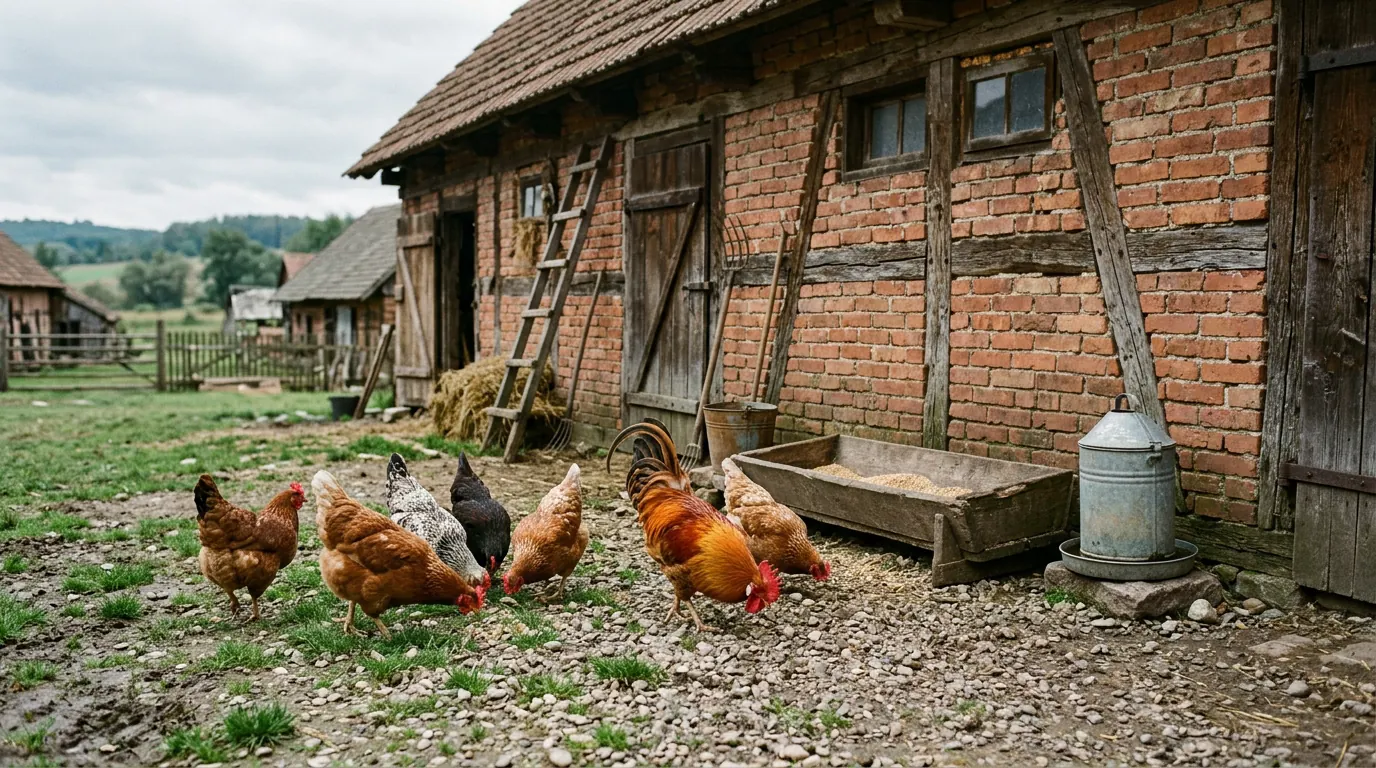
The Andalusian chicken is a light laying breed from southern Spain. The best known variety is the blue: slate-gray feathers, each edged with a darker lacing. You cannot fix this color by simply mating blue to blue. From such a pair about every second chick is blue, and the rest are black and light (splash) in equal parts.
Why keepers choose this breed
The Andalusian is active, grows fast and lays white eggs. Keepers value it for its looks and for the hands-on lesson in genetics it gives. If you are interested in other chickens with blue feathers or blue eggshells, see our guide to hens that lay green and blue eggs. The Andalusian is not in that group: its feathers are blue, not its eggs.
What an Andalusian chicken looks like
Origin of the breed
The breed comes from Andalusia in Spain and belongs to the Mediterranean chickens, like the Minorca or the Leghorn. In the 19th century it reached England, where its standard and the blue color were set. Mediterranean chickens developed in the warm south and have a light build, plenty of movement and a tendency to start laying early. The breed is not covered by Poland's genetic resources conservation programs, so for details on numbers and pedigrees look to associations of ornamental and pure-breed poultry keepers.
Build and outward features
The Andalusian has a long, upright body, a high-carried neck and a large single comb. In hens the comb flops to one side; in roosters it stands upright. Earlobes are white and legs are dark slate-blue. The plumage is an even gray-blue, with darker feathers on the neck and back. The build is light and slim, so the bird looks sleeker than heavy chickens such as the Langshan. For exact weights and measurements of each variety, check the breed standard of your breeders' association.
How the blue color is inherited
Why blue does not breed true
Blue appears when a bird carries one copy of a gene that dilutes black feathers and one copy of the ordinary gene. Keepers call this incomplete dominance: a bird with two identical copies looks different from a bird with two different ones. A blue hen is therefore always a "hybrid" for this gene and passes on one copy or the other. That is why you cannot build a blue line that always gives blue chicks.
Three colors in one hatch
A bird with two copies of the diluting gene is light: white with blue flecks, called "splash". A bird with no copy is black. A bird with one copy is blue. From two blue parents you usually get about 25% black chicks, 50% blue and 25% splash. This is an average over many chicks; in a small hatch the split can differ clearly. Black and splash birds are not waste, but material for further matings.
Which crosses give blue chicks
Black to splash: all blue
When you mate a black bird to a splash, all the chicks are blue. This is the surest way to a uniform hatch of blue birds. It does mean keeping three lines: black, splash and blue. Keepers who want as many blue birds as possible keep a black flock and a splash flock apart, and use the blue birds mainly for showing and sale.
Blue to black or to splash
A blue bird mated to a black gives half blue and half black offspring. A blue mated to a splash gives half blue and half splash. Both pairings give 50% blue, but with no birds of the third color. This is handy when you want to limit the number of lines in your flock. A similar pattern of inheritance appears in another blue breed, described in our article on the Swedish blue duck.
Blue to blue
This is the simplest mating but the least efficient: only every second chick will be blue. In return you get all three colors in one hatch and can pick birds for further breeding. Record which bird came from which mating. Without pedigrees, after three generations you will not tell well-built birds from ones that are merely pretty.
Laying and eggs of the Andalusian
Eggs and laying
The Andalusian lays white-shelled eggs, which is typical of Mediterranean chickens. The breed counts as a laying breed, but we give no exact number of eggs per year: it depends on the line, feeding, lighting and age. For data on specific lines, go to animal science institutes, for example Poland's Institute of Animal Science (Instytut Zootechniki PIB). Laying falls with age, as we describe in the guide to a laying hen after one year.
Broodiness and hatching
Mediterranean hens rarely sit on eggs. If you want to breed Andalusians, plan to hatch in an incubator or set the eggs under a broody hen of another breed. Meat value is low: the build is light, so the breed is not raised for carcasses. You keep it for eggs and looks.
Housing and record keeping
Cold, space and run
A large comb freezes easily in hard frost and damp. The coop should be dry and free of drafts, and the perches placed so that birds do not rub their combs on the walls. Andalusians are active and fly well, so they need a run with a high fence or netting overhead. In this they resemble other light breeds, such as the Wilanów chicken, although that breed has different mating requirements.
Mating records
With a breed that inherits color incompletely, every hatch is a result to compare. Write down the ring numbers of the parents, the date eggs were set, the number of chicks of each color and the losses. After a few seasons you will see which pairs give well-built birds and which only pretty ones. In DlaFerm you keep this record in the coop records module, and you plan the dates of later matings and placements in placement planning.
Frequently asked questions
What chicks do two blue Andalusians produce?add
On average about half blue, a quarter black and a quarter splash (white with blue flecks). This is an average over many chicks, and in a small hatch the proportions may differ. You can use the black and splash birds for further matings.
How do you get all blue Andalusians?add
Mate a black bird to a splash. All the chicks will be blue, but you must keep separate black and splash lines. Blue birds from these matings will not pass the color on to their own offspring.
Does the Andalusian lay blue eggs?add
No. Its feathers are blue, but the eggs have a white shell. Hens that lay blue or green eggs are other breeds, described in our article on hens that lay green and blue eggs.
Is the Andalusian good for meat?add
No. It is a light, slim breed kept for eggs and looks. For meat, choose heavy breeds or old dual-purpose breeds such as the Dorking.
Do Andalusians cope with the Polish climate?add
Yes, if you keep them dry and free of drafts. The large comb is sensitive to frost, so in hard frost limit time outdoors or heat the coop. Discuss bird condition and diseases with a veterinarian.
Sources & resources
- linkInstitute of Animal Science PIB (Instytut Zootechniki PIB) — izoo.krakow.pl
- linkMinistry of Agriculture and Rural Development (Ministerstwo Rolnictwa i Rozwoju Wsi) — gov.pl/web/rolnictwo
- linkChief Veterinary Inspectorate (Główny Inspektorat Weterynarii) — gov.pl/web/wetgiw
Prepared by: DlaFerm Team based on data from the sources listed · Publisher: INSTA-TECH sp. z o.o.
Keep your matings and hatches in the coop records
The DlaFerm coop records module lets you store bird origins, hatch results and losses in one place. Create a free farm account or get in touch with us.
Phone
+48 796 258 151