Yokohama chicken: a long-tailed ornamental breed
The Yokohama is an ornamental breed known for its very long tail and slim build. It was developed in Europe from fowl brought from Japan and is kept for looks, not for eggs or meat. We cover its origin, varieties and the care its long feathers need.
verifiedFrom the team that has organised work on poultry farms for years.
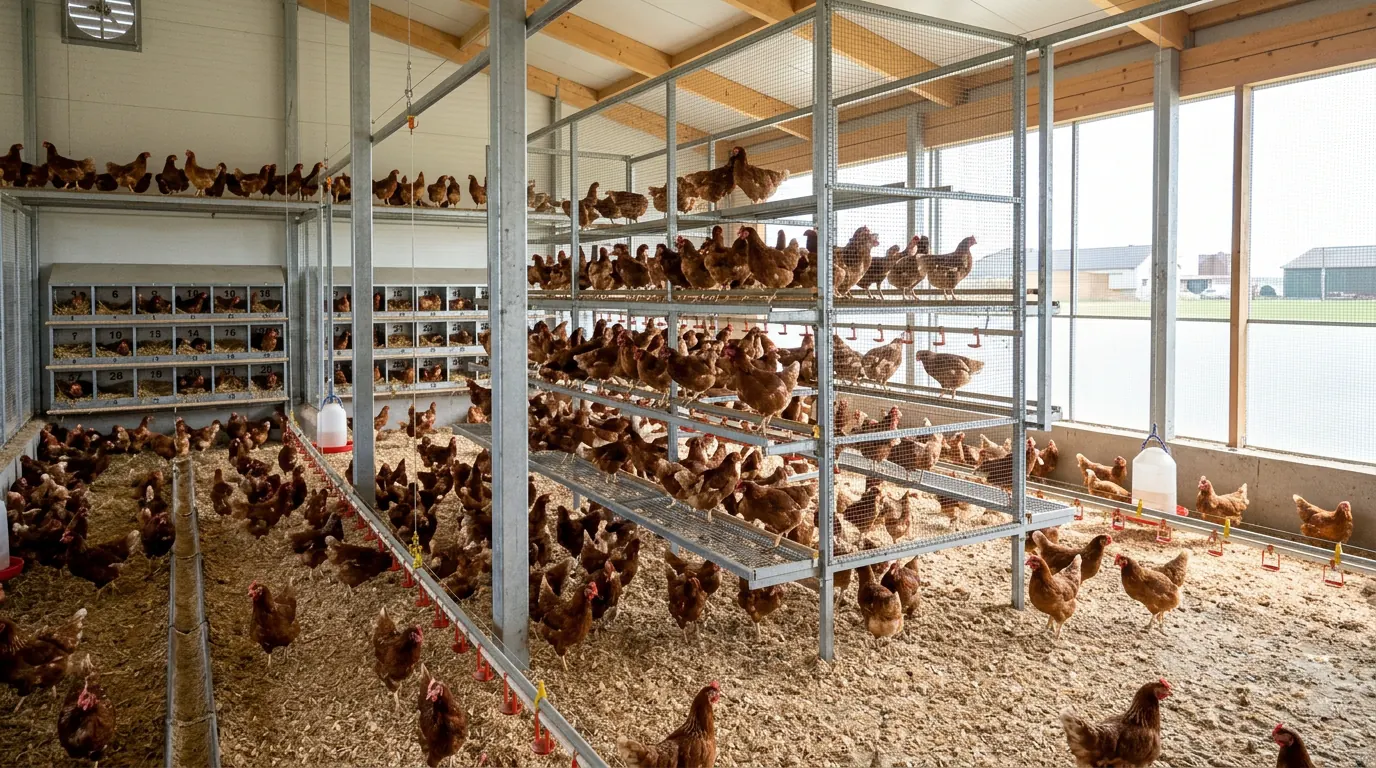
The Yokohama is an ornamental chicken with a slim, upright build and a very long tail. People keep it for shows, not for eggs or meat. It was developed in Germany in the 19th century from Japanese fowl shipped through the port of Yokohama, which gave the breed its name. If you want a working bird, read our article on poultry production types.
Where the Yokohama comes from
The breed was created from Japanese long-tailed fowl, which breeders in Europe crossed with other birds to fix the look and match it to a show standard. The long-tailed family also includes the bird described in our article on the Phoenix chicken. The two breeds are often confused because both have a similar build and long feathers. They differ in details of the standard, mainly the shape of the comb, so judges score them separately at shows.
Who this breed suits
The Yokohama suits a keeper who has time for daily care and a separate coop. The long tail needs clean litter, a high perch and dry ground. It is not a bird for a large production flock. It does best in a small group kept apart from laying hens and meat birds.
How to recognize a Yokohama
Build and tail
The Yokohama has a slim, upright body, a high-set tail and fairly long legs. Its key feature is the tail, including long saddle feathers that hang far past the body. A rooster's tail reaches full length only after several months and needs time to grow. A hen's tail is shorter and less showy, but still clearly longer than on typical working breeds.
Comb and color
The breed has a small walnut comb, which copes well with cold and is less prone to frostbite than a large comb. The standard recognizes several color varieties. The best known is the white bird with a red saddle, called the red-saddled variety. For exact descriptions of varieties and accepted shades, see the breed standard of Poland's national association of pedigree poultry breeders.
Rooster and hen
Roosters have a longer, fuller tail and a more upright stance. Hens are lighter and calmer. When you buy young birds, sex is easiest to judge after a few months, once saddle and tail feathers start to grow. Until then, buy from a breeder who knows the line and can show you the parents.
Laying and incubation
Laying
The Yokohama lays few eggs and is not suited to selling eggs or even to larger household needs. Hens usually lay seasonally, mainly in spring and summer. Figures for eggs per year vary, because they depend on the breeding line, feeding and lighting, so ask the breeder you buy from. If eggs matter to you, consider the New Hampshire chicken or another dual-purpose breed.
Incubation and hatching
When you breed Yokohamas, choosing the parent pair matters more than whether a hen likes to sit. Many keepers of ornamental breeds use an incubator or put the eggs under a broody hen of another breed. Incubation time for chicken eggs is the same as for other chickens; see our article on how long a hen sits on her eggs. Young birds grow more slowly than working breeds, so do not rush to judge how they look.
Coop and run for long-tailed birds
Perches and litter
A long-tailed bird needs a high perch so the tail does not touch the floor. Feathers that lie on wet litter get dirty, break and lose their show quality. Keep litter dry and change it regularly. The coop entrance and pop hole should be wide enough that the bird does not rub its tail on the frame.
Run
In the run, remove branches, wire and sharp edges that could catch the tail. Keep the grass dry and the spot sheltered from wind and rain. In mud and after rain, long feathers get dirty quickly, so many keepers of show birds give them a run with a hard-surfaced area. If you plan to keep several ornamental breeds, also read about the Orlov chicken and Liliputki bantams, which have different needs.
Feather care
Clean tail feathers gently and only when needed. Before a show, many breeders bathe their birds and then dry them in a warm place without drafts. Keep show birds apart so other hens do not pick at them. If you see feather pulling, check stocking density, feeding and external parasites.
Health, biosecurity and registration
Biosecurity
Show birds meet birds from other flocks, so the risk of bringing in disease rises. When a bird comes back from a show, keep it in a separate room for the time your vet advises before it joins the flock. Change footwear at the coop door and keep wild birds away from feed. You can prepare a ready plan in the biosecurity plan generator.
Treatment
A vet treats birds, ornamental ones too, and chooses the medicine and dose. Respect the withdrawal period: eggs and meat from treated birds must not be eaten until the period set for that medicine has passed. Record every treatment as you go.
Registration and avian influenza
Whether you must report and register depends on how many birds you keep and how you keep them, so ask the county veterinary office (powiatowy inspektorat weterynarii). Also follow housing orders that the Veterinary Inspection (Inspekcja Weterynaryjna) issues during avian influenza outbreaks. Current notices are on the website of the Chief Veterinary Inspectorate (Główny Inspektorat Weterynarii).
Buying a Yokohama and what it costs
What sets the price
The price of a Yokohama depends on the breeding line, age, sex, color variety and whether the bird has show value. A chick costs less than an adult rooster with a full tail. We give no amounts, because they differ between breeders and change from season to season. Ask poultry breeders' clubs and check at shows.
What to look for
Buy from a breeder who shows you the parents and the coop and knows the flock's health history. Check the legs, wings and feather condition. A crooked back, a tail that is too short or the wrong color can count against a bird. After buying, quarantine the bird and only then mix it with your flock.
Frequently asked questions
Is the Yokohama a working breed?add
No. The Yokohama is an ornamental breed kept for looks and shows. It lays few eggs, and its build does not suit meat production.
How long is a Yokohama's tail?add
A rooster's tail is very long and reaches far past the body. Its length depends on the breeding line, age and housing. The breed standard of the pedigree poultry breeders' association gives exact values.
What is the difference between a Yokohama and a Phoenix chicken?add
Both breeds are long-tailed and look alike, but they differ in details of the standard, such as comb shape. Read about the other breed in our article on the Phoenix chicken.
Can Yokohama chickens handle winter?add
The small comb helps in frost, but the bird needs a dry, sheltered coop without drafts. Above all, protect the tail from mud and damp.
How much does a Yokohama chicken cost?add
The price depends on line, age, sex and show value. Check with breeders and breed clubs, because it changes from season to season.
Do I have to register Yokohama chickens?add
It depends on how many birds you keep and how you keep them. Ask your county veterinary office how the rules apply to you.
Sources & resources
- linkNational Research Institute of Animal Production (Instytut Zootechniki PIB) — izoo.krakow.pl
- linkChief Veterinary Inspectorate (Główny Inspektorat Weterynarii) — gov.pl/web/wetgiw
- linkARiMR — gov.pl/web/arimr
- linkMinistry of Agriculture and Rural Development — gov.pl/web/rolnictwo
Prepared by: DlaFerm Team based on data from the sources listed · Publisher: INSTA-TECH sp. z o.o.
Keep ornamental breeds? Run your coop records in DlaFerm
The coop records module lets you log bird numbers, treatments, losses and hatches in one place, even for small groups of ornamental breeds. Create a free farm account at DlaFerm.pl or get in touch.
Phone
+48 796 258 151