Swine erysipelas: signs, treatment and risk to people
Swine erysipelas is a bacterial disease. It can run an acute course with sudden deaths, or a chronic one with joint inflammation. We explain how to recognize it, why treatment always starts with a vet, and how to protect yourself and your herd. We also cover what to do in the first hours after you suspect it.
verifiedFrom the team that has organised work on poultry farms for years.
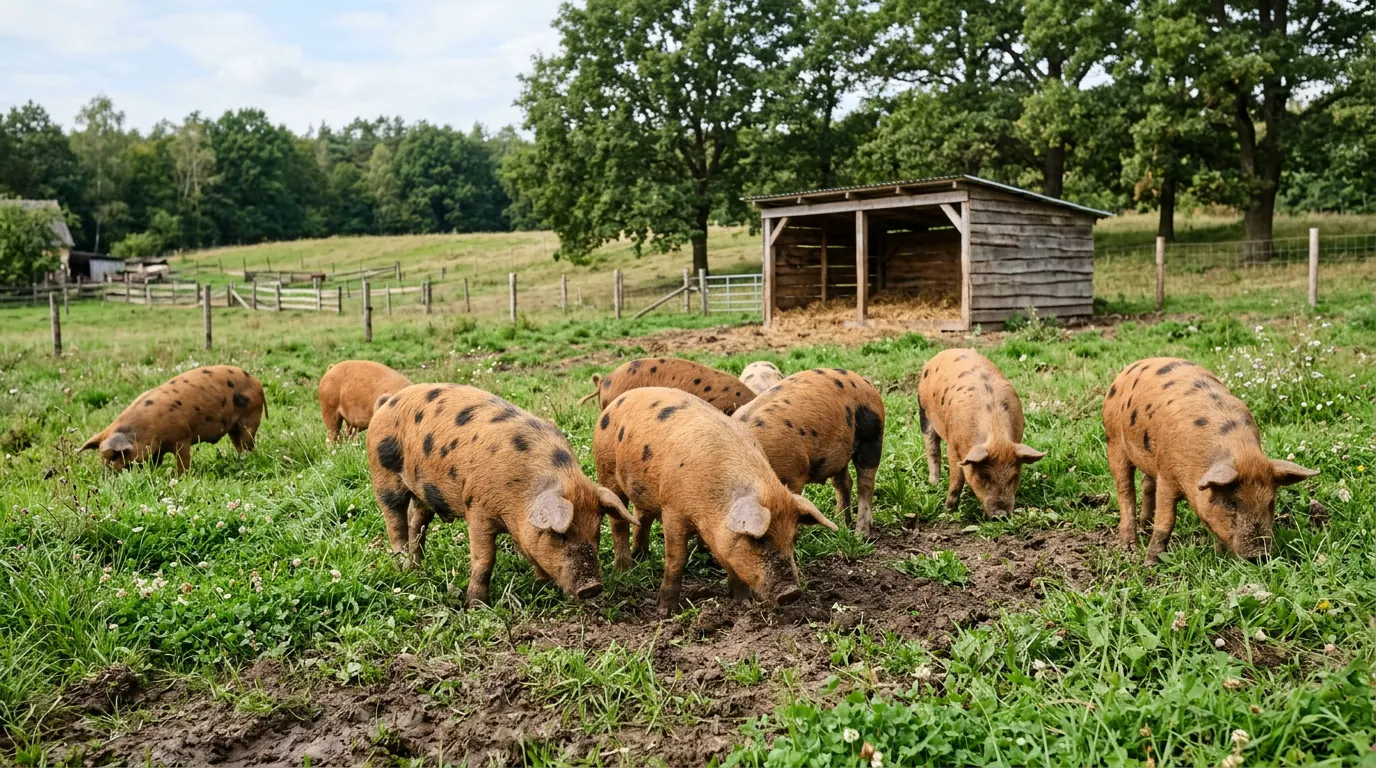
Swine erysipelas is a bacterial disease caused by Erysipelothrix rhusiopathiae. It can run an acute course, with high fever and sudden deaths, or a chronic one, with painful joints and changes in the heart. It affects both finishing pigs and sows, and causes the most trouble in herds without a vaccination program. The disease is zoonotic, but in people it usually causes a local skin lesion rather than a severe infection. The vet always chooses the medicine and dose. We help you spot signs early and keep your records.
First step when you suspect it
If you see sudden deaths, high fever or skin changes in several pigs at once, do not wait. Erysipelas is often confused with other diseases, including African swine fever, because both can cause sudden deaths and skin changes. According to KPODR Minikowo (a regional agricultural advisory center in Poland), an animal keeper who sees signs suggesting an infectious disease must report the suspicion immediately to the county veterinary officer (powiatowy lekarz weterynarii). For unusual deaths, call your vet before you start any treatment on your own. You can compare signs in our guide to ASF symptoms in pigs.
Signs of erysipelas in pigs
Acute form
In the acute form the animal weakens fast. Typical signs are high fever, loss of appetite, dullness and reddened skin. Some pigs die without clear earlier signs. If another pig dies in the herd within a short time, treat it as an emergency and contact your vet the same day. Do not wait for improvement, because the course can be quick.
Skin changes
The typical sign is sharply outlined red patches shaped like diamonds or irregular polygons. They most often appear on the flanks, belly and ears. The patches can be slightly raised above the skin and darken over time. The look of the skin alone is not enough for a diagnosis, because other conditions cause similar changes. Taking samples and confirming in a laboratory is the vet's job. For other causes, see skin diseases in pigs.
Chronic form
In some animals the disease becomes chronic: swollen, painful joints, lameness and inflammation of the heart valves. These pigs lose weight, grow more slowly and perform worse in finishing. A pig with chronic arthritis rarely returns to full performance, so react to the first lameness instead of waiting for it to get worse.
Treating erysipelas: the vet's role and withdrawal periods
Who chooses the medicine
The vet makes the diagnosis and chooses the medicine. The same sign can have different causes, and how well an antibiotic works depends on the form of the disease and how sensitive the bacteria are. We do not give drug names or doses here, and we advise against using products from the farm medicine cabinet without a consultation. After the visit, write down what was given, when and at what dose, because you need this to work out the withdrawal period. Keep these records in the treatment and withdrawal module.
Withdrawal period and slaughter
Every medicine has a withdrawal period: the time during which the animal cannot go to slaughter for meat. The manufacturer gives the length in the leaflet, and the vet confirms it when writing up the treatment. A pig that has not completed the full withdrawal period does not go to the abattoir. You count from the last dose given. Poland's Chief Veterinary Inspectorate (Główny Inspektorat Weterynarii, GIW) lists the animal treatment book among the required documents of a farm, so entries must be complete. See also treatment book, prescription and withdrawal rules.
Why treatment is not enough
An antibiotic treats sick animals, but it does not remove the cause that let the bacteria spread. After an outbreak, review pen hygiene, stocking density, the arrival of new animals and how you mix groups. A monograph from IZ PIB (Poland's National Research Institute of Animal Production) on pig welfare states that chronic stress lowers immunity and favors conditionally infectious diseases. The better the housing conditions, the lower the risk of the problem returning in the following months.
Protecting your herd from erysipelas
Vaccination
Vaccination against erysipelas is one of the basic tools of protection. The vet sets the program for your herd, taking into account the infection history on your farm and in the area. Record vaccination dates and vaccine batch numbers in the herd records, so you can easily see which animals were vaccinated and when the next dose is due. It helps to link vaccination planning with your schedule for bringing in new animals, because new animals bring infection risk into the herd. More on this disease and vaccines: PRRS and erysipelas in pigs.
Biosecurity
The biosecurity rules are described in a GIW document. It requires a register of people entering rooms with pigs, a register of vehicles entering the farm, and registers of cleaning and disinfection. Splitting the farm into a clean and a dirty zone makes it easier to control the movement of people and equipment. You can prepare your biosecurity plan in the biosecurity plan generator and record entries in the farm entry log.
Hygiene and housing
Clean, dry bedding, proper ventilation and no overcrowding reduce the bacterial load in the building. Stress from moving animals, mixing groups and sudden feed changes weakens immunity. An EFSA (European Food Safety Authority) report on pig welfare on farm links housing conditions to animal health. If disease appears in a pen, separate the sick animals and do not move equipment between pens without disinfecting it. For an overview, see our pig disease table.
Is erysipelas dangerous to people?
Erysipelas in people
The bacteria can infect a person, most often through a cut or scratch during contact with a sick animal, a carcass or raw meat. In people the infection is called erysipeloid. It usually shows as a painful red lesion on the hand or a finger, which can spread. The disease usually clears up, but you need to see a doctor, who will choose the antibiotic. Do not treat yourself.
How to protect yourself
When working with pigs, especially during procedures and butchering, wear protective gloves and cover cuts with a dressing. Wash your hands thoroughly with soap and water after contact with sick animals. If redness, swelling or pain in the hand appears a few days after contact, see a doctor and say that you work with animals.
The role of staff and crews
People who help with the herd, including outside crews, should know which signs to report and to whom. Clear instructions reduce accidental infections and delays in reporting. You can pass the rules and duties to your team in the staff app module, so everyone has them at hand and not only in the farm manager's head.
What to do if you suspect erysipelas
Step 1: isolate and report
Separate animals with clear signs, limit entries to the pen and call your vet. Reporting a suspected infectious disease is the animal keeper's duty, and delay can have legal consequences. Write down the time you noticed the signs, the number of sick and dead animals, and the categories of animals affected.
Step 2: record the deaths
Keep a register of deaths by production category: piglets, weaners, finishers, sows. Regulations require this record for the farm, and it helps the vet judge the scale of the problem. Keep data on deaths and treatment in one place instead of on slips of paper in different rooms. Herd records will also make later analysis easier.
Step 3: what next
The vet decides on tests, treatment and measures for the other animals in the same pen. Follow the vet's advice on moving animals and contact with other groups. When the episode ends, enter test results and measures taken in the herd records in the pig farmer app.
Frequently asked questions
Is swine erysipelas dangerous to humans?add
Yes, the bacteria can infect a person, most often through a cut during contact with a sick animal or raw meat. In people it usually causes a painful skin lesion on the hand rather than a severe disease. If you notice such signs, see a doctor.
What are the first symptoms of erysipelas in pigs?add
Most often high fever, dullness and loss of appetite. In some cases sharply outlined red patches appear on the skin. If pigs die suddenly in the herd, do not wait: call your vet.
Can swine erysipelas be cured?add
It is usually treated with antibiotics, but the vet chooses the medicine and dose. After treatment a withdrawal period applies: the time during which the animal cannot go to slaughter. Check the length in the leaflet and with your vet.
Can you vaccinate a herd against erysipelas?add
Vaccination is a basic part of prevention, but the vet sets the program for your herd. Record the dates and vaccine batches in your records. Vaccination does not replace hygiene and control of entries to the farm.
When can a pig go to slaughter after erysipelas?add
Only after the withdrawal period set for the medicine given has ended. If treatment was long or changed along the way, the vet works out the date. Enter every dose in the treatment book.
How do you tell erysipelas from African swine fever?add
You cannot tell for sure without laboratory tests, because both diseases can cause sudden deaths and skin changes. So you report every suspicion to the county veterinary officer. Do not make the diagnosis yourself.
Sources & resources
- linkGIW — Base document — farm biosecurity rules (derogation from testing), v. 5.0
- linkKPODR Minikowo — ABC of piglet rearing
- linkIZ PIB — Pig welfare in a sustainable system of animal production (eds. A. Rekiel, G. Żak)
- linkEFSA AHAW Panel — Welfare of pigs on farm (EFSA Journal 20(8):7421)
- linkChief Veterinary Inspectorate — gov.pl/web/wetgiw
Prepared by: DlaFerm Team based on data from the sources listed · Publisher: INSTA-TECH sp. z o.o.
Do you keep pigs and want health under control?
The treatment and withdrawal module in DlaFerm keeps dose records and withdrawal dates in one place. Create a free farm account and see how it looks for your herd.
Phone
+48 796 258 151