PRRS and swine erysipelas: signs and vaccination
PRRS and erysipelas are infectious pig diseases that look different. PRRS hits breeding and breathing hardest. Erysipelas brings a sudden fever and skin lesions. We explain how to recognize them, what to do if you suspect one, and how biosecurity and a vaccination decision made with your vet lower the risk in your herd.
verifiedFrom the team that has organised work on poultry farms for years.
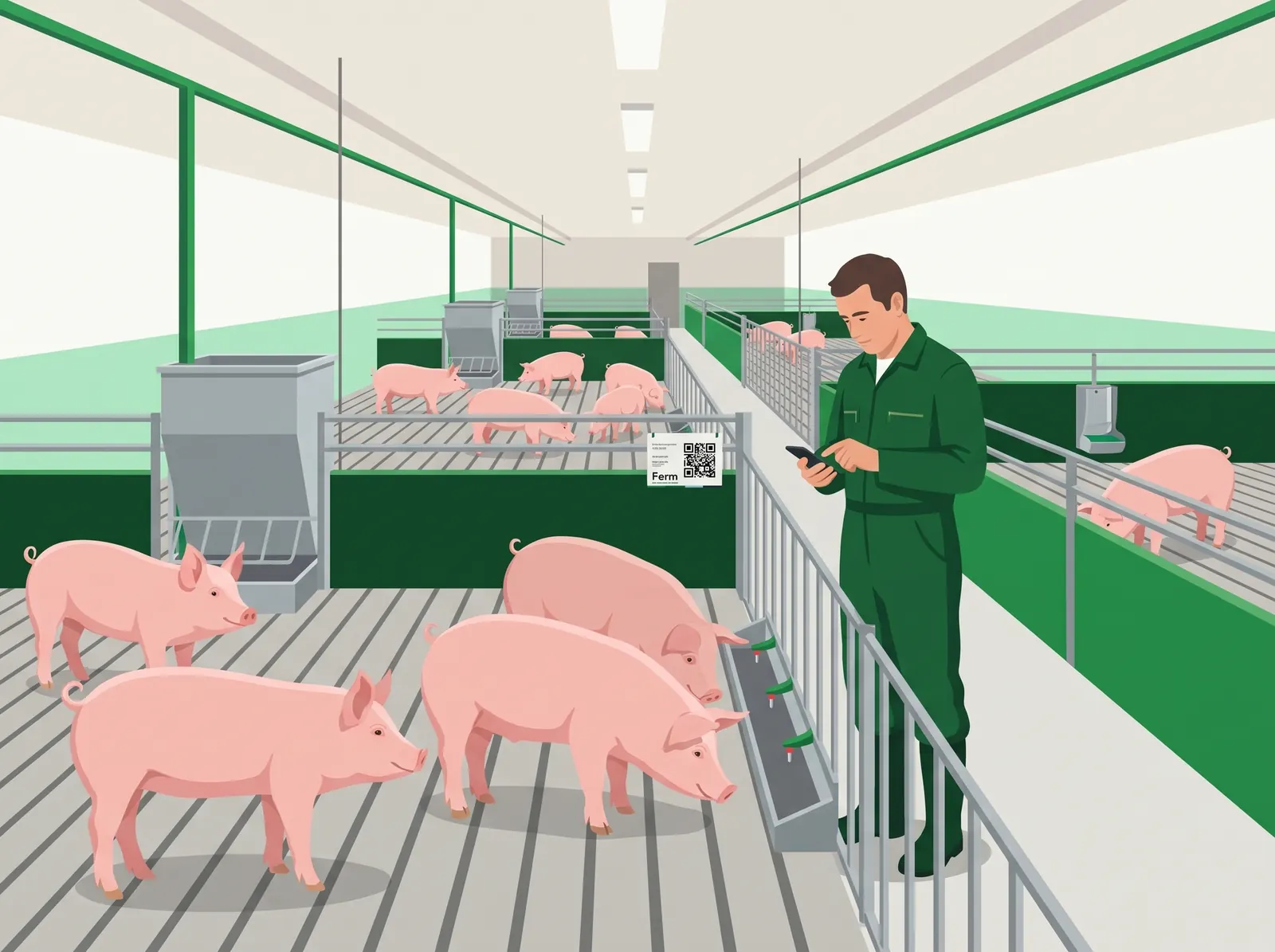
PRRS (porcine reproductive and respiratory syndrome) and erysipelas are two different infectious diseases. PRRS most often causes breeding problems in sows and breathing problems in piglets and weaners. Erysipelas usually strikes suddenly: the animal has a high fever, eats poorly, and develops skin lesions and swollen joints. The signs below help you notice that something is wrong in the herd, but the diagnosis is always confirmed by laboratory tests and your vet.
Why stress makes infection easier
According to the IZ PIB monograph on pig welfare (Poland's National Research Institute of Animal Production), long-term stress lowers immunity and favors conditionally infectious diseases, and PRRS is given as an example. In practice, stress means mixing groups, moving pigs, overheating or chilling, sudden feed changes and overcrowded pens. Check whether any of these changed in recent weeks before you look for a cause. Cutting stress does not replace vaccination or biosecurity, but it lowers the chance that an infection turns into a serious herd problem.
PRRS signs in sows, piglets and weaners
Sows and breeding
In sows, PRRS shows up mostly in breeding. You may see abortions in late pregnancy, stillborn and weak piglets, and mummified fetuses. Some sows have heat problems and lower fertility, and boars show poorer semen quality and libido. If stillbirths rise over a short time, do not wait for the next cycle. Record every farrowing and every loss, because only a few months of data show a trend. You can do this in the app for pig farmers.
Piglets and weaners
In piglets and weaners, PRRS mainly causes coughing, fast or difficult breathing, fever and apathy. Animals grow poorly, and the illness often overlaps with other respiratory infections, so the picture can be mixed. Higher death rates during rearing and big weight differences within a group are signs to report to your vet. Do not choose drugs yourself, because the vet picks the substance and dose. Your job is to record every treatment and its withdrawal period in the treatment and withdrawal records.
Swine erysipelas: how to recognize it
Sudden illness in finishers
Erysipelas usually appears suddenly. The animal has a high fever, refuses feed, lies down and is reluctant to get up. Typical are sharply outlined skin lesions shaped like diamonds or irregular patches, usually reddish or purple, mostly on the back, sides and ears. Joint inflammation makes walking hard, and in severe cases the animal is difficult to get up. If you see this, call your vet right away. Choosing the drug and the treatment is the vet's job, not the farmer's.
Telling it apart from other diseases
Erysipelas and PRRS are not the only diseases that cause sudden deaths. With quickly rising mortality, blue skin on the ears and belly, pinpoint bleeding, bloody diarrhea or nervous signs, African swine fever must be ruled out. A brochure from KPODR Minikowo (a regional agricultural advisory center) reminds keepers that anyone who notices signs suggesting an infectious disease must report the suspicion immediately to the county vet (powiatowy lekarz weterynarii). Duties in controlling ASF are set by the Minister of Agriculture's regulation of 12.03.2026 (Dz.U. 2026 poz. 344, Poland's Journal of Laws), legal status as of 22.11.2026.
Biosecurity: your first line of defense
New animals
The IZ PIB guide to organic pig farming recommends keeping the introduction of animals from other farms to the necessary minimum. When buying, check that the animals come from farms free of infectious diseases, and keep new pigs in quarantine in separate buildings, ideally away from your own herd. You can build a set of such rules for your farm in the biosecurity plan generator. Run quarantine consistently, with separate tools and clothing for that group.
People and vehicles
People, vehicles and equipment carry infection between farms as effectively as animals do. Limit entries to pens, change clothes and footwear at the entrance to the animal area, and keep a visitor log. Stop vehicles that carry animals and feed outside the fence. Record entries and exits in the QR entry and exit book, so you know who was on site and when if a problem appears.
Vaccination against PRRS and erysipelas
When to consider vaccination
The IZ PIB guide to organic farming states a general rule: every protective vaccination needs an analysis of the disease situation in the area and a consultation with your vet. The vet sets the schedule and the type of vaccine. Vaccination is usually considered after the disease appears in the herd or when cases repeat over several production cycles. We do not name products or doses here, because they depend on the animals' age, the herd history and your vet's advice.
Vaccination records
Write down every vaccination in the herd log: the date, the group of animals, the product name and who gave it. Good records help your vet judge how well the program works over the following cycles. They are easier to keep together with batch and cycle planning, because vaccination dates often tie in with the sows' breeding cycle. Also check that animals bought from outside were vaccinated as your vet advised.
What to do if you suspect PRRS or erysipelas
The first hours
If you see fever, deaths or skin lesions, take three steps. Call your vet, and write down the signs, the number of animals and the time the problem began. Do not move animals out of the group without your vet's approval. If the vet orders samples, collect them as instructed. With a suspected infectious disease, the report goes to the county vet, even if the signs later turn out to be something else.
Daily observation
A daily walk-through with notes gives the earliest warning. Note how many animals eat less, which are lame, which breathe faster and how many have died. Putting these figures together over several days shows where a problem starts. We describe pen camera recordings in a research article, linked here: pen camera recordings. Your vet interprets the data, because a camera image does not replace a laboratory test.
Frequently asked questions
Can PRRS spread to humans?add
PRRS affects pigs and is not a risk to people. But people, vehicles and equipment carry it between farms, so the same hygiene and entry control rules apply. Infection in a herd most often comes from new animals or weak biosecurity.
Is swine erysipelas dangerous to humans?add
Erysipelas can infect people, usually through a cut while working with animals or meat. Gloves, covering wounds and disinfecting hands lower the risk. If you get redness or a painful lesion on your hand, see a doctor.
How much does a PRRS or erysipelas vaccine cost?add
The price depends on the maker, the type of product, the number of doses and pack size, and on who gives the vaccine. Prices change, so we give no figures. Check current offers with your vet or a veterinary wholesaler.
Can I treat erysipelas with antibiotics on my own?add
No. Your vet chooses the drug and dose, knowing the health status of the herd. After every treatment a withdrawal period applies. You must record it and keep to it before selling animals. Keep the records in your treatment log.
How do I tell PRRS from erysipelas?add
Erysipelas brings a sudden fever, typical skin lesions and swollen joints, often in finishers. PRRS more often affects sow breeding and causes breathing problems in piglets. A final distinction needs laboratory testing of samples taken by your vet.
Is a pig that has recovered from the disease immune?add
Not always. Immunity after recovery varies and is not always complete, and in some animals the infection can persist longer. Your vet, who knows the herd history, decides on further steps and any vaccination program.
Sources & resources
- linkIZ PIB — Pig welfare in a sustainable animal production system (eds. A. Rekiel, G. Żak)
- linkIZ PIB — Guide to organic pig farming (ed. E.R. Grela)
- linkKPODR Minikowo — ABC of piglet rearing
- linkMinistry of Agriculture / Journal of Laws — Regulation of 12.03.2026 on measures to control African swine fever (Dz.U. 2026 poz. 344)
Prepared by: DlaFerm Team based on data from the sources listed · Publisher: INSTA-TECH sp. z o.o.
Do you keep pigs and want everything in one place?
The DlaFerm app for pig farmers lets you keep treatment records, an entry book and a biosecurity plan. Create a free farm account and see how it works in your herd.
Phone
+48 796 258 151