Pig skin diseases: how to recognize and treat them
Skin changes on a pig can have several causes, so how a lesion looks is rarely enough to tell what it is. We explain what to watch for in your herd, when to call the vet and how to keep treatment records so you never send an animal to slaughter before the withdrawal period ends.
verifiedFrom the team that has organised work on poultry farms for years.
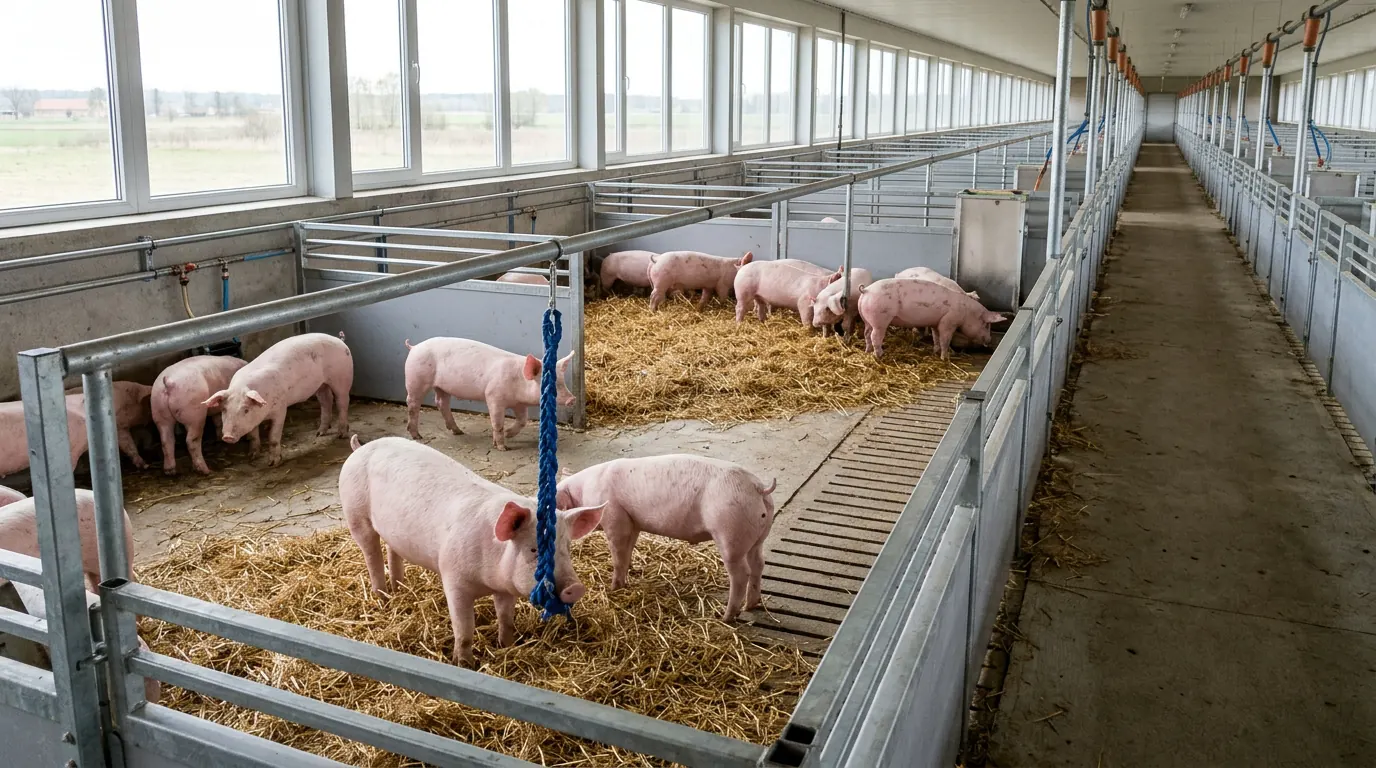
You recognize pig skin diseases by the changes you can see on the body: redness, bumps, scabs, hair loss, wounds and thickened skin. The same picture can come from mange, erysipelas, a bacterial infection or a plain injury from a fight in the pen. The first step is to observe and call your vet, not to treat on your own. Below we describe how to separate sick animals, what to write down at every dose and which changes need urgent contact with the vet. For a general overview, see the table of pig disease symptoms.
Photos do not replace a diagnosis
Comparing photos of skin diseases helps you get an idea of what you are dealing with, but it does not give a diagnosis. A fresh lesion looks different from one a few days old, and different diseases can cause similar eruptions. Note where on the body the lesions are, how many animals are affected, since when you have seen them and whether the numbers are growing. These notes and photos taken in good light speed up the visit and help the vet decide whether lab tests are needed.
Skin signs and what they may mean
Red patches and eruptions
Red patches, red spots and raised lesions of irregular shape need attention, especially when they appear suddenly and spread fast. Erysipelas often causes typical diamond-shaped marks on the skin and may come with fever and loss of appetite. We describe the disease and its treatment in Swine erysipelas: signs, treatment and risk to humans. You cannot tell it apart from other causes on your own, so report it to your vet before giving the animal anything.
Mange, scabs and itching
Mange causes itching, rubbing against walls and pen fittings, and scabs most often on the ears, belly and inner legs. A pig with severe itching is restless and gains less weight, and the disease spreads through the herd by direct contact. We cover similar skin problems in cattle in the text on cattle skin diseases. Diagnosing mange needs a skin scraping examined, which the vet orders.
When to call the vet
Signs that cannot wait
Call your vet at once if lesions spread quickly, several animals fall ill together, or you see small hemorrhages, bluish ears or sudden deaths. These signs are not a diagnosis, but they may point to an infectious disease that must not be ignored. If an infectious disease is suspected, official procedures apply, described in the article on suspected disease and outbreaks on the farm.
Samples and tests
The vet decides whether to take a skin scraping, a swab or blood. Material taken badly, from the wrong place or after a drug has been given, gives a false result, so do not take samples without instructions. Before the visit, separate the sick animals so the vet sees them as they are in the herd, and to limit contact with the rest of the pen.
Treating skin diseases: what stays with the vet
Why you must not treat by guesswork
In its guide to pig keeping, IZ PIB (Poland's National Research Institute of Animal Production) stresses that safe and effective therapy requires knowing how the drug works, its indications, dosing, route and storage conditions. Superficial knowledge can lead to complications or failed treatment. Giving medicines without a prescription is therefore a risk to the animal and to food safety. We describe general rules of treatment and prevention in Pig diseases: table of symptoms and prevention.
Topical products and probiotics
Even external products you apply to a lesion need a prescription or at least a talk with your vet. According to IZ PIB, probiotics act mainly on the digestive tract, because they colonize the gut and limit disease-causing microflora, and they do not treat skin lesions. Discuss their use with your vet too, so you do not delay the right treatment.
Isolation, injuries and welfare in the pen
Separate the sick animals
According to KPODR Minikowo (a regional agricultural advisory center in Poland), every keeper should watch animal behavior daily and remove aggressive animals or those suspected of illness from the pen. Move injured and sick animals to a separate room, keep them on bedding and start treatment ordered by the vet as soon as possible. This limits the spread of lesions to healthy pigs and makes it easier to follow the course of the disease.
Injuries and biting
Skin wounds often come from fights over a place at the feeder, from overcrowding or from tail and ear biting. Provide dry bedding, enough space per animal and something for the pigs to do, for example rooting material. According to KPODR, tail docking and tooth clipping must not be done routinely. They are done only when injuries or biting have occurred, and only by a vet or a trained person.
Treatment records and withdrawal periods
Treatment book
At every dose, write down the date, the group of animals, the product name, the dose as prescribed, the vet's details and the end of the withdrawal period. The vet and the product leaflet give the withdrawal period, not a rule you heard from someone. We describe record keeping and withdrawal periods, with legal status as of 22.11.2026, in the guide to treating animals, the treatment book and withdrawal periods.
Withdrawal period in practice
The withdrawal period is the time when products from the animal cannot be placed on the market and the pig cannot be sent to slaughter. With several drugs on different dates it is easy to make a mistake, so record each product separately and follow the longest period. Show the record at the slaughterhouse before you load the animals.
How to limit skin disease in the herd
Clean pen and dry bedding
Wet, dirty bedding and manure on the floor favor skin infections and parasites. Remove dirt regularly, provide ventilation without drafts and avoid overcrowded pens. Healthy skin also resists minor injuries better.
Biosecurity and new animals
Bring in new pigs only after an observation period, and check purchased animals for skin changes already at loading. Rules for limiting the spread of disease between pens and into the herd are covered by the biosecurity plan generator. Draw up and update the plan together with the vet who looks after your farm.
Frequently asked questions
How do you tell mange from erysipelas in pigs?add
You cannot tell them apart reliably on your own, because both cause skin changes. Mange goes with heavy itching and scabs, while erysipelas usually comes with fever and typical lesions. Tell your vet where the lesions are, how many animals are affected and since when you have seen them.
Can I give a pig an ointment or antibiotic myself?add
No. The vet chooses the medicine and dose, and giving something without a prescription can make diagnosis harder and lengthen the withdrawal period. A product bought without advice also has to be entered in your records.
Are pig skin diseases dangerous to humans?add
Some can pass to people, for example erysipelas, so wear gloves and wash your hands when you work with sick animals. We write more about this in the article on swine erysipelas. Take extra care if the skin on your hands is broken.
How long does the withdrawal period last after treatment?add
Your vet gives the withdrawal period based on the product used and its leaflet. Do not guess the date or rely on habits from other farms. Enter the end date in the treatment book.
When should I report a suspected infectious disease?add
Report at once when lesions spread quickly, many animals are sick, small hemorrhages appear or animals die suddenly. Do not wait until you work out the cause yourself. Your vet will tell you the next steps.
Do you have to dock tails when pigs bite them?add
Not routinely. According to KPODR Minikowo, tail docking is done only when injuries or biting have occurred, and only by a vet or a trained person. First improve conditions in the pen and watch the herd.
Sources & resources
- linkIZ PIB: Organic pig farming guide (ed. E.R. Grela)
- linkKPODR Minikowo: Pig behavior and welfare (P. Dorszewski et al.)
- linkEFSA AHAW Panel: Welfare of pigs on farm (EFSA Journal 20(8):7421)
- linkChief Veterinary Inspectorate (Główny Inspektorat Weterynarii): gov.pl/web/wetgiw
Prepared by: DlaFerm Team based on data from the sources listed · Publisher: INSTA-TECH sp. z o.o.
Treating pigs in a finishing herd?
The Treatment and withdrawal module helps you record every dose, the end date of the withdrawal period and who ordered the treatment. Create a free farm account in DlaFerm.pl or get in touch, and we will show you how it works for pigs.
Phone
+48 796 258 151