Cattle skin diseases: ringworm, mange and lumpy skin disease (LSD)
Skin disease in beef cattle is mostly ringworm, mange and lumpy skin disease (LSD). Different causes give similar lesions, so diagnosis and treatment belong to the vet. Your job is to report fast, isolate the animals and record every treatment with its withdrawal period.
verifiedFrom the team that has organised work on poultry farms for years.
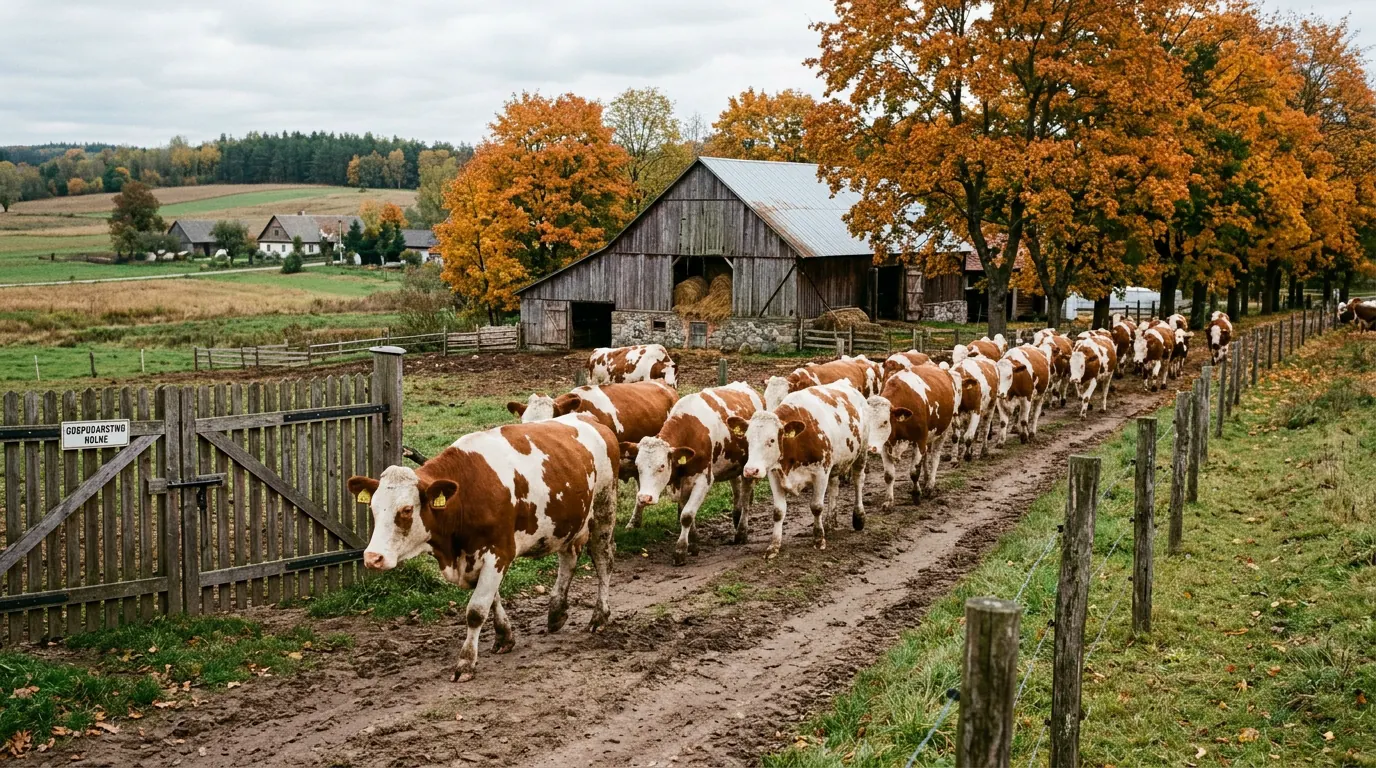
In beef cattle, skin disease shows up as bald patches, scabs, thickened skin or nodules. Farmers most often meet ringworm and mange. In recent years lumpy skin disease (LSD) has become a bigger issue in Europe. Report every skin change to your vet, because the vet makes the diagnosis and chooses the treatment. You keep a record of what you see and what you give. Below we explain how to tell these diseases apart at a glance, what to do in the herd and how to keep treatment records with withdrawal periods.
Why diagnosis matters
Similar skin lesions can have different causes: fungi, parasites, viruses, or mechanical damage from rubbing and injuries. So the look of a lesion alone is not enough to choose a treatment. According to a leaflet from PODR Szepietowo (a regional agricultural advisory center in Poland), LSD is a viral disease of cattle and buffalo that spreads quickly and causes heavy losses on farms. It does not threaten people, but it is very dangerous for animals. The leaflet says it is classed as a category A+ D+ E disease and must be controlled in Poland and other EU member states. Report any suspicion to your vet right away, before you take any action yourself.
How to recognize skin lesions in cattle
Ringworm lesions
Ringworm in cattle gives round, flaky patches, often with hair loss and grayish scabs. It usually starts on the neck, back and around the eyes. Young animals tend to get it more often than adults. The lesions are often barely painful, so they are easy to miss during daily work. Ringworm spreads through contact with animals, bedding and equipment. Isolate sick calves from the rest of the group and wash grooming tools separately. The vet confirms the diagnosis and tells you what to do next.
Mange
Mange is caused by mites living in the skin. The typical sign is strong itching: animals rub on fences, posts and walls, and the coat thins. Scabs form and the skin thickens. The disease develops slowly and usually affects many animals in a group, because it spreads by direct contact. Looking at the skin is not enough, as the vet often takes skin scrapings for testing. The vet recommends the treatment, and you usually need to agree with the vet which animals to include.
Lumpy skin disease (LSD)
With LSD, nodules and skin thickenings appear and may be spread over the whole body. Fever and reduced appetite often go with them. The lesions are easy to confuse with other skin problems, so do not rely on looks alone. If you suspect LSD, isolate the animal, note the date of the first signs and report it to your vet. Do not move cattle without the vet's permission.
What to do in the herd when you notice lesions
Step 1: separate and record
Separate the animals with suspect lesions. Write down the ear tag number, the date of the first lesion, where it is on the body, and any change in appetite and temperature. A dated note and a photo for your records make the talk with the vet easier. Enter your observations straight away in the treatment and withdrawal record, before you forget the details.
Step 2: vet and testing
Report the suspicion to your vet. The vet takes samples, decides on lab tests and sets the next steps. Do not give animals any medicine on your own, even one you remember from earlier cases. The vet chooses the substance and dose, and the same product may not suit a different disease.
Step 3: hygiene and biosecurity
Limit visits by outsiders, set aside clothing and equipment for handling sick animals, and disinfect vehicles. The biosecurity plan generator helps you write down the rules for the whole farm. Log visits by the vet and others in the QR entry and exit log, so that a few days later you know who had contact with the herd.
Treatment under vet supervision, and withdrawal periods
Who chooses the medicine
The vet chooses the medicine, dose and route. Treatment may include local and systemic products, and for some diseases official rules apply. With mange, you often treat not only animals with signs but also those that were in close contact with them. The vet sets the scope of treatment. You make sure every instruction is carried out and recorded.
Withdrawal period: why to keep track
The withdrawal period is the time from the last dose of a medicine until the animal can go to slaughter. Its length depends on the product and is given on the label and by your vet. Record every treatment: the medicine name, the date, the group of animals and the date the withdrawal period ends. Without this it is easy to sell an animal too early. The treatment and withdrawal module in DlaFerm.pl helps you record doses given and watch the deadlines for each group.
What to put in the record
For each case, write the date of the first lesion, the vet's diagnosis, the product name, the route, the number of animals treated and the date the withdrawal period ends. Such a record helps during inspections and when you work out what treating the herd cost. Staff who handle the cattle can see tasks and deadlines in the app for farm workers, so nobody gives a medicine outside the vet's instructions.
Your duties on LSD and reporting
What the law says
LSD is a disease subject to mandatory control under EU law, and the PODR leaflet states that this duty covers Poland as well. You will find the specific rules on reporting, isolation and animal movements in the legal acts in ISAP (Poland's online legal database) and in notices from the Chief Veterinary Inspectorate (Główny Inspektorat Weterynarii). This article is not a list of requirements for your farm. What applies to your situation is decided by the county veterinary officer (powiatowy lekarz weterynarii).
Where to find current information
The Chief Veterinary Inspectorate publishes notices on specific diseases. Current texts of the rules are in ISAP. Advisers at ODR (regional agricultural advisory centers) and the National Research Institute of Animal Production (Instytut Zootechniki PIB) help with paperwork and production rules. Whenever advice changes, note the source and date, because information from a few years ago may be out of date.
Prevention in a beef herd
Hygiene and dry bedding
Dry, clean bedding and dry lying areas reduce the risk of skin infections. Damp and dirt favor ringworm and wounds that let bacteria in. The Teagasc Beef Manual, in its animal health section, points to diseases that weaken cattle condition at pasture and in the shed. Spotting lesions early lets you act before the disease reaches most of the group.
Observation and records
A daily check of the herd is the cheapest prevention. Look at the coat, scabs, rubbing and appetite. Note your observations in the same place where you record treatment, so you can see changes over time. If the number of lesions grows, tell your vet before the problem reaches the whole herd.
Buying and new animals
Bring in animals from an unknown source with care. Ask the seller about the health history and ask for documents at purchase. Watch new animals separately for the first weeks, and agree quarantine with your vet.
Frequently asked questions
How do you tell ringworm from mange in cattle?add
Ringworm usually gives round, flaky patches and scabs. Mange causes strong itching, thinning hair and thickened skin. The two can look alike, so you cannot rely on looks. The vet makes the diagnosis after an examination.
Is lumpy skin disease in cattle dangerous to humans?add
According to the PODR Szepietowo leaflet, the disease does not threaten people but is very dangerous for animals. Report any suspicion to your vet and do not wait for signs to appear in more animals.
What should you do if you suspect LSD in your herd?add
Isolate the sick animal, note the date of the first signs and call your vet as soon as you can. Do not move cattle without the vet's permission, because movement rules come from regulations you need to check regularly.
How long must you wait before slaughter after treatment?add
The withdrawal period depends on the product and your vet's advice, not on a general rule. Check the label, enter the end date in your record and only then plan slaughter.
Do you have to treat the whole herd for mange?add
Mange spreads through close contact, so you often treat animals with signs and those that were in contact with them. The vet sets the scope of treatment after an examination.
Can I use a medicine from my own stock?add
No. The vet chooses the medicine and dose, and you follow the instructions and record every dose. Even a familiar product may not work for a given case or may need a different withdrawal period.
Sources & resources
- linkPODR Szepietowo: Lumpy skin disease of cattle (LSD), leaflet (Z. Marciniak)
- linkTeagasc: Teagasc Beef Manual, Section 7: Animal Health
- linkChief Veterinary Inspectorate (Główny Inspektorat Weterynarii): gov.pl/web/wetgiw
- linkInternet System of Legal Acts (ISAP): isap.sejm.gov.pl
Prepared by: DlaFerm Team based on data from the sources listed · Publisher: INSTA-TECH sp. z o.o.
Do you run a beef herd and want treatment under control?
The treatment and withdrawal module in DlaFerm.pl helps you record medicines given and withdrawal dates for each group of animals. Create a free farm account and enter your first treatment.
Phone
+48 796 258 151