How much does a kilogram of beef cost: live cattle and meat prices
The price of a kilogram of beef depends on whether you mean live cattle, the carcass or meat in a shop. These are three different prices in different units. We explain how Poland's Ministry of Agriculture and Rural Development (MRiRW) calculates the live cattle price, what moves the price per kilogram and where to check current quotes. We give no specific amounts, because they change every week.
verifiedFrom the team that has organised work on poultry farms for years.
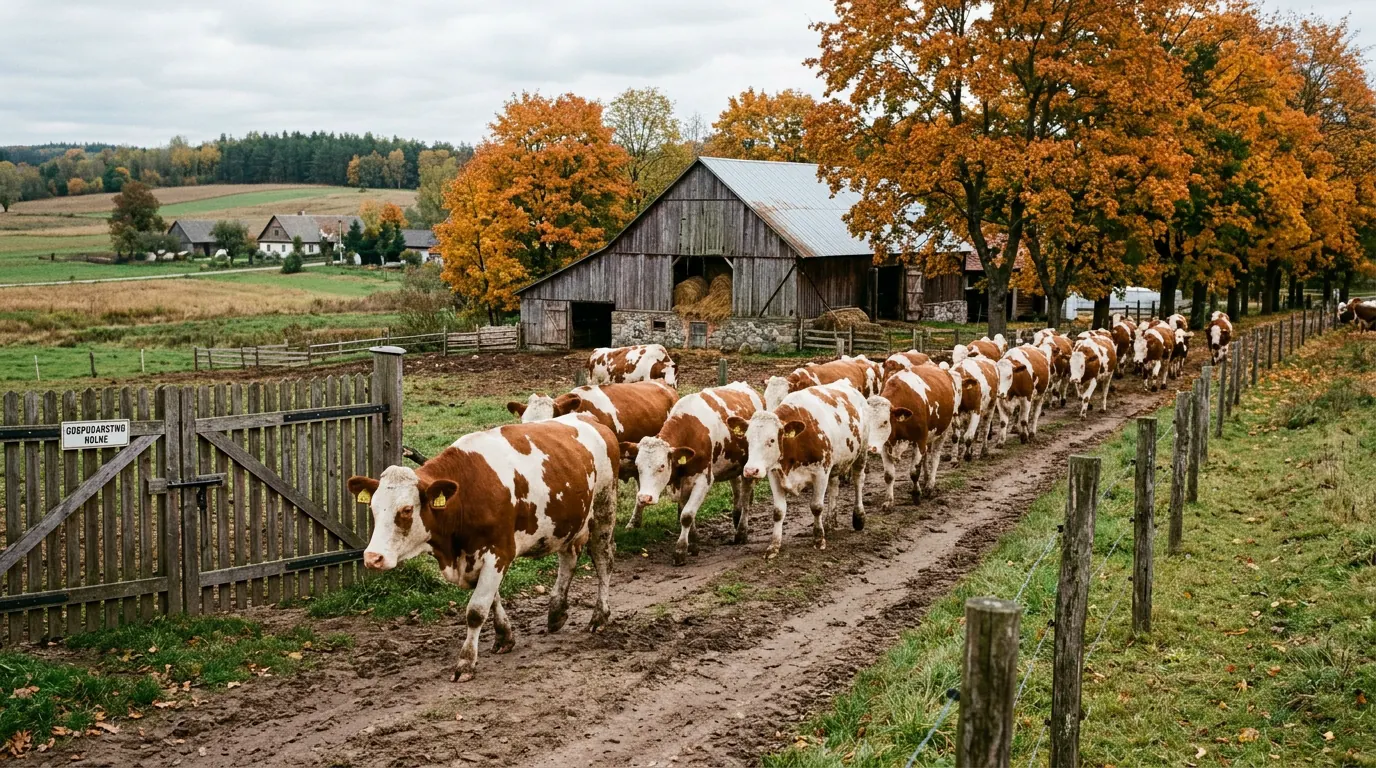
There is no single price of beef. A farmer sells cattle as live animals, the slaughterhouse settles up on the carcass, and a shop customer buys ready cuts. Each price has a different basis and a different unit, so before you compare numbers, check what they refer to. The price of live cattle at the slaughterhouse gate is not what the consumer pays. Instead of amounts, we give the rules that drive prices and point to where you can check them.
Why the price is not fixed
The live cattle price moves with supply, exports and production costs. According to IZ PIB (the National Research Institute of Animal Production), about 70% of the beef produced in Poland is exported, so foreign demand strongly affects domestic prices. The beef cow population is small: about 1% of all cows, according to IZ PIB in 2018. At that scale, single changes in supply show clearly in the quotes. Before you sell, compare offers from several buyers and check the current direction in the cattle price forecast.
Live price vs carcass price: how to tell them apart
The price at the slaughterhouse gate
According to the MRiRW methodology, the market price is the price at the slaughterhouse gate. It states the value of the carcass without VAT, based on documents the slaughterhouse issues to the supplier. The price does not include transport costs, so a farmer who delivers the cattle himself cannot compare it directly with a buyer's offer that includes collection from the farm. When you compare offers, ask whether the price is net or gross and whether it includes transport. Keep your settlements on invoices, because they are the basis of valuation in market statistics.
EUROP grade and the standard carcass
Prices are given per tonne of chilled carcasses, not per kilogram of live weight. Carcasses are graded under the EUROP system, which sets commercial quality classes. The base price is the average net purchase price of a given class, calculated from invoice values and the mass of carcasses adjusted to a standard carcass. Corrections are added to it, for example extra payments made after the weekly price was calculated. For you as a farmer this means that better muscling and a higher grade usually translate into a higher carcass value, even when the live price looks similar.
Breed, weight and production cost
Breed and growth rate
Breed affects calf growth rate and slaughter yield. In IZ PIB research on organic production (Wójcik and Czubska, WZ 2014), average calf gains to day 210 of life ranged from 857 to 970 g per day, depending on breed, sex and type of mating. The authors point out that breeds such as Aberdeen Angus, Hereford and Limousine work well in extensive systems. Black Angus is often chosen for fast growth and meat quality, but breed alone does not set the price. We describe a different production model in the article on Wagyu in Poland.
Production cost and the breeding stock market
Live cattle prices rise and fall together with production costs. An IZ PIB article from 2012 (Choroszy et al.) noted that prices of breeding stock and slaughter cattle rose by about 30% within a year. The authors saw this as a signal to develop beef cattle production. Treat the 2012 data as an example of volatility, not as a current price level. To decide on a sale you need your own farm figures and current quotes.
What 1 kg of live weight costs on your farm
Cost of 1 kg of live weight
The cost of 1 kg of live weight is the sum of feed, calf rearing, veterinary care and depreciation of the animals over the cycle, divided by the mass of live cattle sold. The result depends on production intensity. ODR Lubań (an agricultural advisory center) publishes a sample income calculation for beef cattle at different intensity levels, showing how the result changes with different feeding and performance. Run your own figures in the cost of 1 kg of live weight calculator instead of copying someone else's numbers to your farm.
What a cow and a calf cost
The cost of breeding stock is a separate item. When you buy a cow, bull or calf, you pay for future production, not for current weight. We describe breeding animal prices in the guide on what a cow, bull and calf cost. The rule here: the longer the time until you sell the live animal, the bigger the effect of the purchase cost on the final result. Your calculation should cover the whole cycle from calf to sale, not only the last months of finishing.
Why beef costs more in the shop
From carcass to cuts
A carcass yields cuts of different value. Tenderloin and ribeye cost more than stewing or minced meat. Bones, fat and trim lower the usable yield of the carcass. The retail price has to cover not only the value of the live animal, but also chilling, cutting, packing and the margin of the shop or wholesaler. Comparing the live price with the shop price per kilogram gives a distorted result if you ignore slaughter yield and the mix of cuts.
Black Angus and Angus on the label
The label black angus or angus on meat tells you the breed, not the price. Market value depends on the cut, grade, weight, processing and seller. When you buy, compare the price per kilogram of the same cut, not the slogan on the pack. In direct sales, state the cut, weight and breed in your offer so the customer knows what they pay for.
Where to check current beef prices
MRiRW weekly reports
MRiRW runs the ZSRIR system, to which the reported price is sent every week. The reported price is the base price plus corrections. The methodology is described in a ministry document available on gov.pl. Read the quotes together with the description of the method, because the same number can cover a different scope of data. Before you decide, also compare your own figures with the live beef cattle price forecast.
Settlements and documents
The simplest way to check your own price is to keep invoices in order. The value from live cattle purchase invoices goes into the calculation of market prices, so your sales documents also matter for how you judge the market. In DlaFerm.pl you handle settlements in the KSeF invoicing module (KSeF is Poland's national e-invoicing system). If you do not sell live cattle on the open market, also look at contract and outgrower finishing, where the price is fixed in the contract.
Frequently asked questions
How much does a kilogram of beef cost?add
There is no single fixed price. The price of live cattle, carcass and meat in a shop are three different values in different units. Quotes change every week, so we give no amounts here. Check MRiRW reports and offers from local buyers.
What is the difference between the live cattle price and the carcass price?add
The market price in MRiRW statistics states the value of the carcass without VAT, at the slaughterhouse gate, without transport costs. To compare it with a price per kilogram of live weight, you need the slaughter yield, which is the ratio of carcass weight to live weight.
Is black angus beef more expensive than other beef?add
Breed alone does not decide the price. Black Angus is often chosen for growth rate and meat quality, but market value depends on carcass grade, weight and cut. Compare the price per kilogram of the same cut.
How often do cattle prices change?add
MRiRW quotes are reported weekly through the ZSRIR system. Prices at a given buyer can differ from one another and change during the week, depending on agreements with the buyer.
How do I calculate the cost of 1 kg of live weight on my farm?add
Add up feed, rearing, veterinary care and depreciation of the animals over the cycle, then divide by the mass of live cattle sold. Compare the result with the buying price from the same period. The sample calculations from ODR Lubań show the effect of production intensity.
Does the shop price show the live cattle price?add
No. The shop price includes cutting, chilling, packing and margin. When you compare, also take into account carcass yield and the mix of cuts.
Sources & resources
- linkMRiRW (ZSRIR) — Methodology for recording market data on beef and veal
- linkIZ PIB — Wiadomości Zootechniczne — Breeding work in beef cattle herds (Z. Choroszy et al.), WZ L(2012)1:11–20
- linkIZ PIB — WZ — New methods of assessing the performance and breeding value of beef cattle breeds (Z. Choroszy et al.), WZ LVI(2018)3:17–23
- linkIZ PIB — WZ — Breed selection and breeding work in beef cattle herds under organic conditions (P. Wójcik, A. Czubska)
- linkODR Lubań (PODR publication) — Sample farm income calculation for beef cattle production (different intensity levels)
Prepared by: DlaFerm Team based on data from the sources listed · Publisher: INSTA-TECH sp. z o.o.
Do you sell cattle or beef and issue invoices?
The KSeF Invoicing module in DlaFerm.pl helps you keep sales settlements in one place. Create a free farm account and see how it works in practice, or get in touch and we will answer your questions.
Phone
+48 796 258 151