Wagyu cattle and beef: breeds and farming in Poland
Wagyu is the collective name for Japanese beef cattle breeds, best known for marbled meat. In Poland, keeping them mainly means registering the animals in IRZplus and keeping treatment records. Below we cover the breeds, the meat and the paperwork step by step.
verifiedFrom the team that has organised work on poultry farms for years.
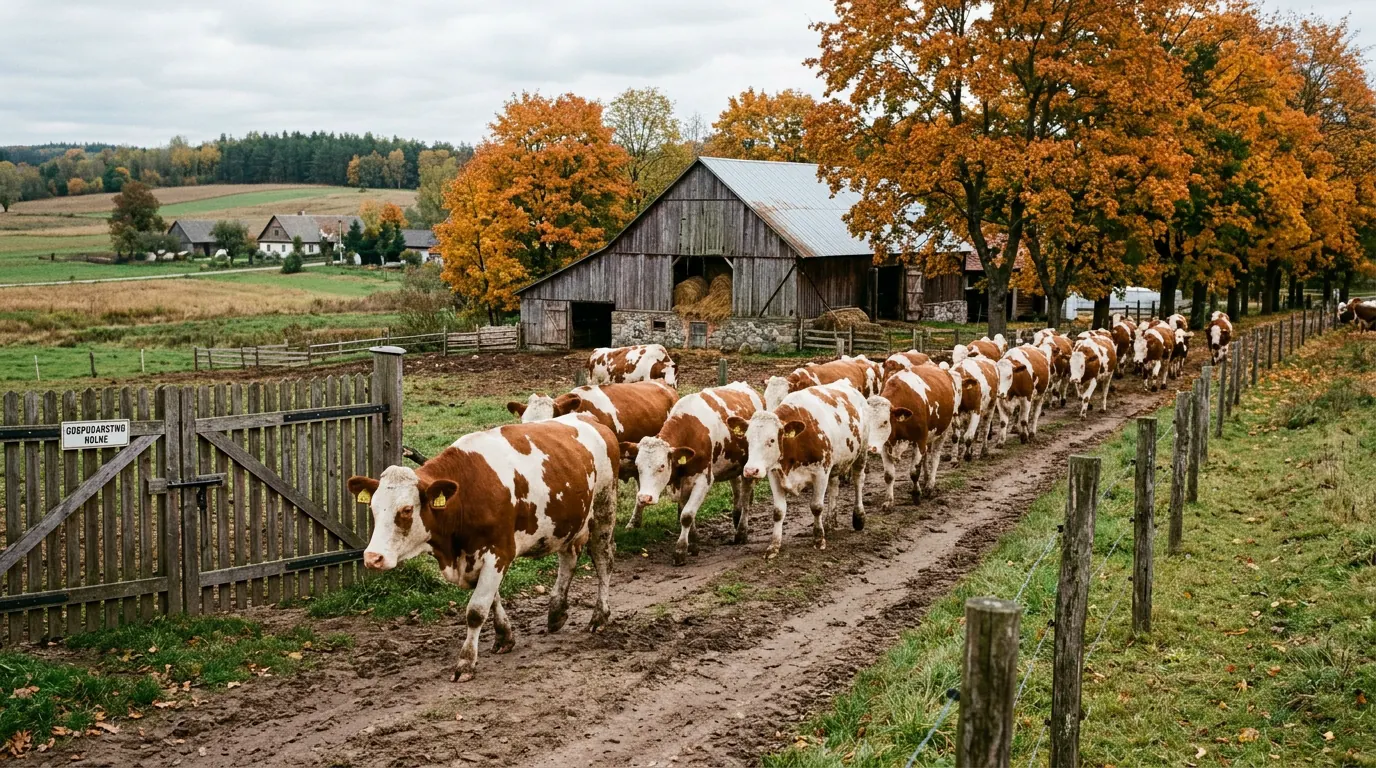
Wagyu is the collective name for Japanese beef cattle. It covers four breeds: Japanese Black (kuroge), Japanese Brown (akage), Japanese Shorthorn (nihon tankaku) and Japanese Polled (mukaku). The black breed is the one most often kept outside Japan. Wagyu beef is known above all for a high, evenly spread level of intramuscular fat, called marbling. Below we explain what that means on the farm and which rules apply in Poland.
Where the name comes from
The word wagyu has two parts: "wa" means Japanese and "gyu" means cow, so it simply means Japanese cattle. The name does not point to one specific breed. When you buy animals or breeding material, check which breed of the group it is and whether the animal has a proof of origin. The word "wagyu" on a label is not proof of pedigree. Pedigree papers come from the relevant breeders' association or the body that keeps the herd book, not from a shop or a middleman.
The four wagyu breeds and their traits
Japanese Black and Japanese Brown
The black breed (kuroge) is the most numerous and best known worldwide. It has a black coat and is most often linked with the highest meat marbling. The brown breed (akage) is rarer, has a brown coat and copes well with varied housing conditions. Both breeds are kept mainly as beef cattle, not for milk. When you plan a herd, compare the needs of both breeds with your own barn conditions, because not every breed suits the same feeding system.
Shorthorn and Polled
Japanese Shorthorn (nihon tankaku) has a red or brown coat and is kept mainly in Japan, in regions with varied climates. Japanese Polled (mukaku) is hornless, which matters in practice: fewer injuries in the herd and easier use of space. Both breeds are less common in Poland than the black breed. Before buying, ask about the pedigree and where the genetic material comes from.
Marbling and beef grading
Intramuscular fat
Marbling is fine flecks of fat spread between the muscle fibers. It differs from subcutaneous fat, which sits on the outside of the carcass. According to breeding literature, wagyu fat has a lower melting point than the fat of many European breeds, which affects how the meat feels in the mouth. This trait needs a long finishing period and suitable feeding, not fast weight gain. Agree the growth rate and the meat result with a feeding adviser, because they depend on your farm's conditions.
The Japanese BMS scale
In Japan, meat is graded on the BMS scale (Beef Marbling Standard), with values from 1 to 12. The higher the score, the more intramuscular fat. The scale is a quality grade and does not automatically translate into a price in Poland. Buyers in Poland often use their own carcass criteria. Before you sign a sales contract, agree which scale will be used and who will grade the meat.
Registration and documents for cattle keepers
Reporting to IRZplus
Every bovine in Poland must be ear-tagged and reported to IRZplus, the central database run by ARiMR (Poland's Agency for Restructuring and Modernisation of Agriculture). This also applies to wagyu, whatever their origin. Reporting births, movements and changes in herd numbers is a basic duty you must not skip. You can keep the data up to date in software that connects to IRZplus: integrations with IRZplus and sensors. Do not assume that an entry from a farm in another country is enough in Poland without checking it in the database.
Support and payments
ARiMR grants payments for cattle under the rules set in the regulations and in each year's application terms. Rates change, so we do not give them here. You can check the terms on the ARiMR website, and the current legal acts in ISAP (Poland's online database of legal acts). Before you apply, prepare the animals' documents, because without them the office will not treat the application as complete. It also helps to work out profitability before you buy a herd.
Feeding and welfare of wagyu
Feeding plan
Wagyu have a longer finishing period than typical beef breeds. Set the ration plan and the age groups with a feeding adviser or a vet who knows your farm. Record feed use and animal weight at regular intervals. That shows you whether growth matches the plan before herd condition problems appear. You can keep feed data in farm management software.
Welfare and the barn
Wagyu are described as calm animals, but sensitive to stress. Regrouping, noise and sudden feed changes raise the risk of health problems. The barn should have good ventilation without drafts, dry bedding and constant access to water. After any change in conditions, watch the animals for a few days. If you work with a team, set clear rules for handling and entering the barn, and share the instructions through the staff app.
Treatment, withdrawal periods and biosecurity
The withdrawal period rule
A withdrawal period is the time that must pass between the last dose of a medicine and slaughter or the collection of products such as milk. Your vet and the medicine leaflet give the length, not a table from the internet. The rule is simple: do not send an animal to slaughter before the withdrawal period ends, and write down every treatment. Keeping treatment and withdrawal records helps you avoid mistakes when you settle with the buyer.
Biosecurity and new animals
Animals bought from outside should spend a period in isolation in a separate place before they join the herd. Agree the length of isolation with a vet who knows the health situation in your region. Limit visits by outsiders and their equipment in the barn, and change protective clothing when moving between groups. You can prepare a farm biosecurity plan in the biosecurity plan generator.
What decides the price of wagyu
Factors that affect the price
The price of wagyu cattle depends on breed and origin, the animal's age, carcass weight, meat quality grade and how you sell: live animal, carcass or ready cuts. Reliable documents also matter a lot. An animal with a full pedigree and complete IRZplus entries is easier to sell. Wagyu prices also follow demand and the beef market, so compare offers at the same moment.
Settlements and invoices
Selling meat and animals needs a correct sales document. From 2026, you issue invoices for domestic trade in KSeF, Poland's national e-invoicing system, so set up your invoicing in advance: KSeF invoicing. For each transaction, write down the animal or batch number, so the customer and the authorities can see the full origin history of the meat.
Frequently asked questions
What is the difference between wagyu beef and regular beef?add
Wagyu beef has high marbling: fine flecks of fat between the muscle fibers. According to breeding literature, this fat has a lower melting point, which affects how the meat feels in the mouth. The difference comes from breed, feeding and a long finishing period.
Is wagyu a single breed?add
No. Wagyu is the collective name for four Japanese beef breeds: Japanese Black, Japanese Brown, Japanese Shorthorn and Japanese Polled. When you buy, check which breed it is and whether the animal has a proof of origin.
Can you farm wagyu cattle in Poland?add
Yes, but every animal must be ear-tagged and reported to IRZplus. Before you start, talk to a vet and check the terms with ARiMR. It is also wise to work out profitability before you buy a herd.
Do wagyu cattle have to be registered in IRZplus?add
Yes. Under the rules, every bovine in Poland, wagyu included, must be reported to the IRZplus database run by ARiMR. Report births, movements and changes in herd numbers. Check current requirements on the ARiMR website and in ISAP.
How much does wagyu cattle cost?add
The price depends on breed, origin, age, carcass weight and meat quality, and on whether you sell live animals, carcasses or cuts. Amounts change over time, so we do not give them here. Compare offers from several sellers and ask for documents.
How long after a medicine can you slaughter an animal?add
The withdrawal period depends on the medicine. Your vet and the product leaflet give it. Do not send the animal to slaughter before it ends. Write down every dose in your records so you can show that you kept the withdrawal period.
How do you keep records for a wagyu herd?add
Record births, purchases, movements, treatment and feeding in one organized register. Compare your data with IRZplus regularly so the entries match. Record-keeping software helps you stay organized without retyping.
Sources & resources
- linkChief Veterinary Inspectorate — gov.pl/web/wetgiw
- linkARiMR — gov.pl/web/arimr
- linkMinistry of Agriculture and Rural Development — gov.pl/web/rolnictwo
- linkNational Research Institute of Animal Production — izoo.krakow.pl
- linkInternet System of Legal Acts — isap.sejm.gov.pl
Prepared by: DlaFerm Team based on data from the sources listed · Publisher: INSTA-TECH sp. z o.o.
Do you keep a cattle herd and want withdrawal periods under control?
The DlaFerm "Treatment and withdrawal" module helps you keep treatment records and withdrawal dates in one place. Create a free farm account and see how it works in practice, or get in touch.
Phone
+48 796 258 151