Poultry Concentrate and Premix: What Is the Difference and How to Use Them
A feed concentrate and a premix are two different feed additives. Both let a keeper with their own grain build a complete ration without buying ready-made compound feed. We explain how they differ and when to pick each one.
verifiedFrom the team that has organised work on poultry farms for years.
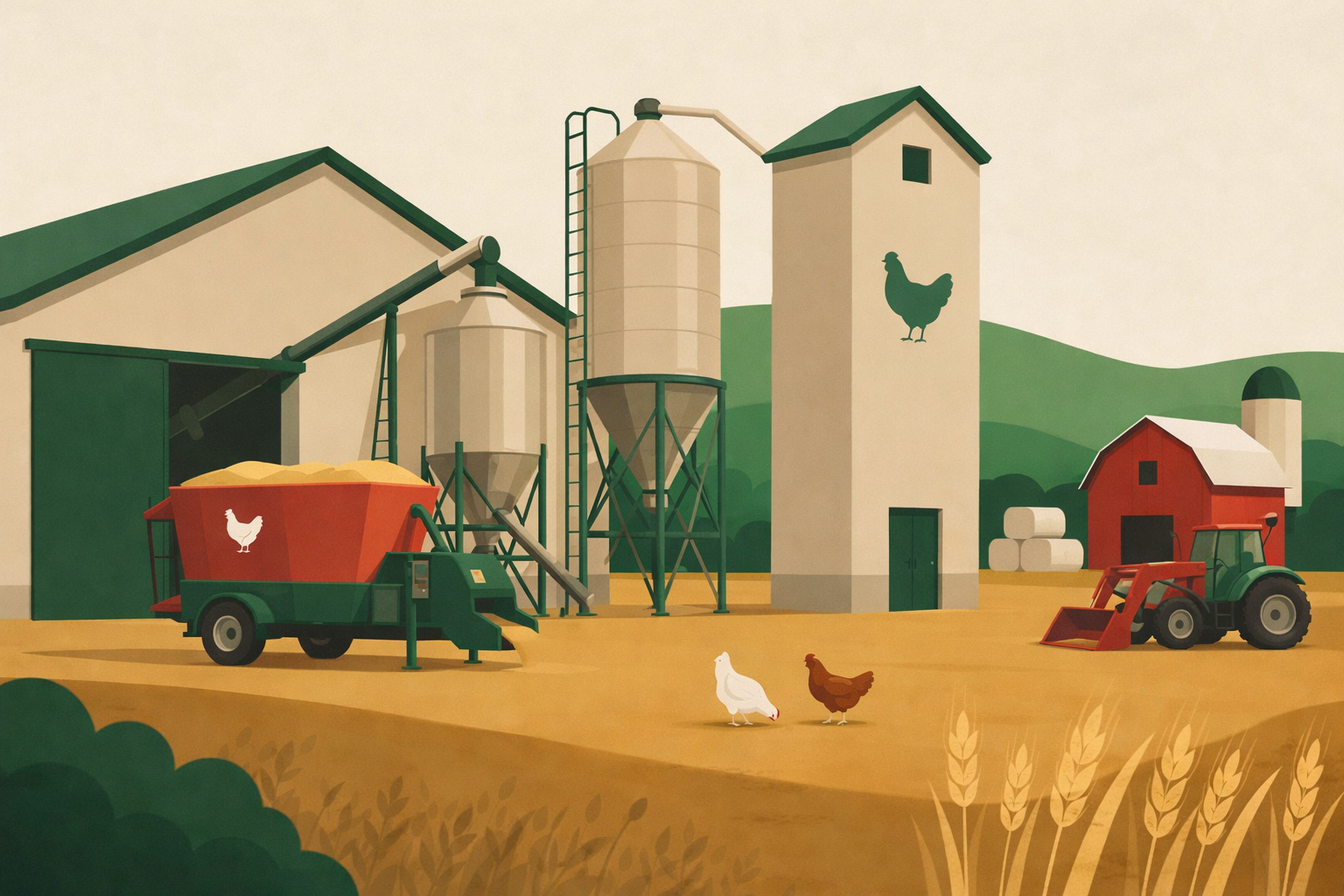
Feed concentrates and premixes are made for keepers who grow their own grain (wheat, corn, barley) and want to turn it into a complete poultry feed, instead of buying ready-made complete feed. The economics are simple: you already have the grain. What you lack are the things you cannot produce on the farm: protein with the right amino acid profile, and vitamins and minerals in the right amounts. A concentrate and a premix both fill that gap, but in different ways.
Feed concentrate: protein and vitamins in one product
A concentrate is a ready mix of protein sources (for example soybean meal and rapeseed meal) together with vitamins and minerals. You mix it with your own grain in a larger share, so the concentrate makes up a noticeable part of the ration and your grain makes up the rest. Because the concentrate already contains the protein part, you do not buy meal separately or work out its share. You just mix the concentrate with grain in the ratio the manufacturer gives.
Premix: only the micro-additive, no protein
A premix is a more concentrated product. It contains only vitamins, minerals and sometimes amino acids, with no protein source at all. You add it to the ration in a much smaller amount than a concentrate, because it is a pure micro-component. This means that with a premix you must add a separate protein source yourself (for example soybean or rapeseed meal). A premix cannot replace it.
Poultry feed concentrate: how to use it
Typical mixing ratio
Manufacturers usually give a rough share of concentrate in the ration somewhere between a dozen and several dozen percent. A common guide is 20–30% concentrate to 70–80% of your own grain. The exact ratio depends on the product, the poultry species and the growth stage (it differs for growing chicks, layers and broilers in the final fattening phase). Follow the label of your concentrate rather than one universal number.
What to mix concentrate and grain with
Once you mix more than a few kilograms, feed mixing equipment helps to blend concentrate and grain evenly. Mixing by shovel easily leaves the ingredients unevenly spread through the ration. More on choosing and running such equipment: feed mixer.
Concentrate vs building a ration from raw meal
The alternative to a ready concentrate is to build the ration yourself from a separate protein source (for example rapeseed meal) and a separate vitamin-mineral premix. This gives you more control over the composition, but you need to know more about what poultry need at each stage. We describe one such protein ingredient in rapeseed meal for hens.
Poultry premix: how it differs from a concentrate
Smaller dose, narrower composition
You add a premix to the feed in a much smaller amount than a concentrate, because its only job is to supply vitamins, minerals and sometimes amino acids, not protein. So with a premix you must provide a separate protein source in the ration, such as a suitable meal. Only then do you add the premix to that base (grain plus meal) to cover the micro-nutrients.
When to choose a premix and when a concentrate
A premix suits keepers who want full control over the choice and share of the protein source (for example they mix their own grain with a specific meal to their own recipe) and only need to add vitamins and minerals. A concentrate is the simpler two-in-one option: protein and micro-nutrients in one product, mixed straight into the grain, with no need to buy and dose meal separately.
Frequently asked questions
What premix is best for laying hens?add
Layer premixes are a separate product category, matched to the vitamin and mineral profile of birds in egg production. They usually have more calcium (needed for the shell) and vitamins that support laying. We do not name a brand. Check the label and declared composition, and ask a feed adviser or your supplier.
What does a poultry premix contain?add
A premix contains vitamins, minerals (macro- and trace elements) and sometimes amino acids. Unlike a concentrate, it has no protein source. That is the difference: a concentrate combines protein with vitamins and minerals, while a premix is only the vitamin-mineral component in a smaller dose.
What can I feed hens so they lay better?add
No single additive, neither a concentrate nor a premix, replaces a balanced ration as a whole. Laying depends on the full diet (energy, protein, calcium, vitamins), not on one product added to grain. If you are looking for causes of a drop in laying, see why hens stop laying eggs. For ways to support laying, read feed for layers to boost egg production.
What types of feed premix are there?add
Feed premixes are divided mainly by species and growth stage: one for fattening broilers, another for growing chicks, another for layers. What they share is that they are a concentrated vitamin-mineral additive without protein, added to a ration of grain and a separate protein source. A concentrate, by contrast, already contains protein.
Sources & resources
- linkInstitute of Animal Science PIB (Instytut Zootechniki) — poultry feeding standards
- linkNational Federation of Cereal Producers (Krajowa Federacja Producentów Zbóż) — quality and use of feed grain
- linkMinistry of Agriculture and Rural Development — feed and feed additives
Prepared by: DlaFerm Team based on data from the sources listed · Publisher: INSTA-TECH sp. z o.o.
Do you mix feed from your own grain on a larger scale?
DlaFerm helps you track feed use and feeding costs for your flock with its <a href="/program-do-zarzadzania-ferma-drobiu">farm management program</a>. Create a free farm account or get in touch and we will show you how it works.
Phone
+48 796 258 151