Rapeseed meal for chickens: nutrition and use
Rapeseed meal is a home-grown protein feed. It is a by-product of pressing oil from rapeseed, and farms increasingly consider it as a partial alternative to imported soybean meal. It is an ingredient of a ready, balanced feed mix, not something you scatter for chickens like grain. We explain where it comes from, what it offers nutritionally and why the feed formulator sets the amount.
verifiedFrom the team that has organised work on poultry farms for years.
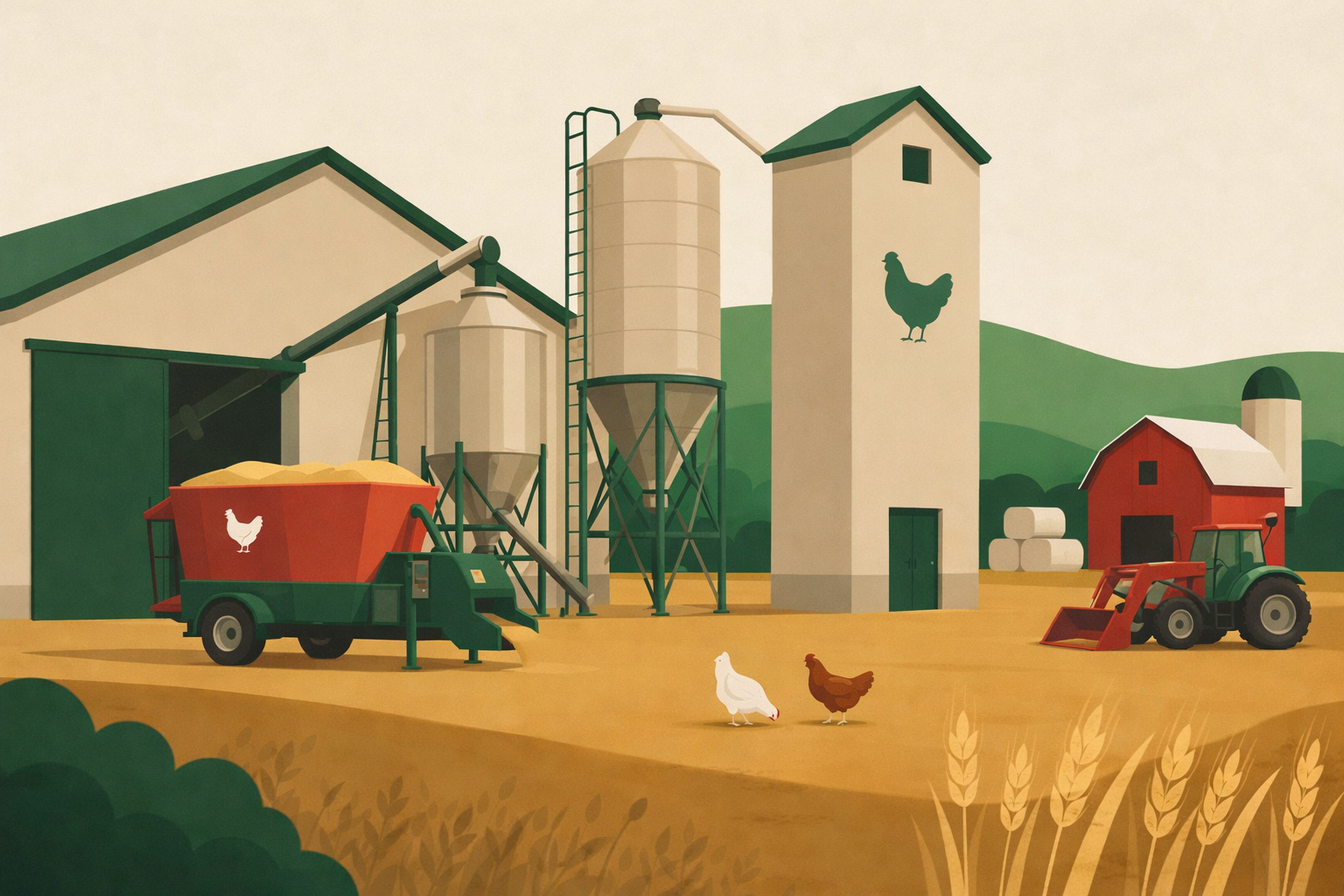
Rapeseed meal is a by-product of pressing and extracting rapeseed oil. After the oil is recovered from the seeds, a protein-rich residue is left, and it is processed into feed for farm animals, including poultry. The form you usually find on the market is extracted meal, meaning it went through an extra solvent extraction that recovers still more oil. It is a real home-grown protein feed in Poland, unlike soybean meal, which largely comes from imports.
A limit in the past, a smaller problem today
Older rapeseed varieties contained a lot of glucosinolates and, to a lesser degree, tannins and erucic acid. In larger amounts these compounds make feed less palatable and can affect thyroid function in poultry. For this reason rapeseed meal was used cautiously and in small amounts in chicken feed for years. Today's "00" (double-low) varieties contain far fewer of these compounds than varieties from decades ago, so modern rapeseed meal can be used more widely in poultry feed than before.
A mix ingredient, not a loose supplement
This difference matters: rapeseed meal is a feed raw material used to build the recipe of a complete feed mix. A backyard keeper does not add it to the feeder by eye, as many do with corn or wheat. We write about this difference between an energy supplement and a protein ingredient in our guide to corn for chickens, and the general rules of a balanced hen diet are in what to feed chickens.
Nutritional value and use of rapeseed meal
Where rapeseed meal comes from
Rapeseed meal is a by-product of the oil industry. Rapeseed is pressed and extracted to recover oil, and the residue (extracted rapeseed meal) goes on as a feed raw material. In Poland it is one of the more available home-grown protein raw materials. Oil-industry plants produce it, and it is sold under various trade names by known producers and farm suppliers.
How much protein rapeseed meal has
Rapeseed meal is a valuable protein source, though it generally has less protein than soybean meal and a somewhat different amino acid profile. In practice it rarely replaces soybean meal one to one. More often it partly supplements it in a recipe, next to other protein raw materials. The exact balance of protein, energy and amino acids in a ready mix is set when the recipe is formulated, not by eye at feeding time. See also soybean meal for chickens.
Rapeseed meal vs soybean meal
Soybean meal has been the main protein source in poultry feed worldwide for decades, but in Poland and Europe much of it is imported. Rapeseed meal, produced locally from domestic rapeseed crops, is a real option for reducing dependence on imported soy, which explains the growing interest in the sector. The aim is not to swap one raw material completely for the other, but to balance both in the feed recipe.
Not only poultry
Rapeseed meal is used more widely than in poultry feed alone. It also goes into pig and cattle feed. Here we focus only on its use in feed for chickens and other poultry.
Limits and dosing of rapeseed meal
Why its share in feed is limited
Even modern low-glucosinolate rapeseed varieties still contain some anti-nutritional compounds. That is why the share of rapeseed meal in poultry feed stays limited and is chosen with care, not left unlimited. Going over the right level can affect palatability (how willingly birds eat the feed) and, with a long-term excess in the diet, thyroid function.
Who sets the dose
The exact percentage of rapeseed meal in a feed mix is a decision for the feed formulator or poultry nutritionist. They take into account the age and production group of the birds (broilers, laying hens, turkeys), the other raw materials in the recipe and the quality of the particular batch of meal. This is not a value to set by trial and error in a backyard, so we deliberately give no fixed percentage here. For laying hens see laying hen nutrition.
Who it matters for in practice
Rapeseed meal as a single raw material matters mainly for larger farms and keepers who formulate or commission a complete feed recipe, not for someone with a few hens in a garden coop. The latter uses ready commercial feed, where the feed maker has already accounted for any rapeseed meal in the composition.
Frequently asked questions
Can chickens eat rapeseed meal?add
Yes, rapeseed meal is a real ingredient in chicken feed, but as part of a ready, balanced feed mix, not served on its own without control. It is a protein raw material whose share in the recipe is chosen by the feed formulator, not a supplement to scatter loose like grain.
Is rapeseed meal good for chickens?add
Yes, in the right, measured amount it is a valuable protein source in the diet. Modern "00" rapeseed varieties contain far fewer anti-nutritional compounds (glucosinolates) than varieties from years ago, so today's rapeseed meal can be used more widely in poultry feed than before.
Can you give rapeseed to chickens?add
It depends what you mean. Raw whole rapeseed is not the same as rapeseed meal. The meal is a feed raw material and is not used as raw seed thrown to hens. The form widely used in poultry nutrition is processed rapeseed meal, left after pressing and extracting oil from the seeds, not the seed itself.
What does rapeseed meal give chickens?add
Mainly feed protein. It is a valuable home-grown raw material, usually somewhat lower in protein than soy, and it can partly supplement imported soybean meal in a feed recipe. For the Polish feed market it is a practical way to reduce dependence on imported plant protein.
Sources & resources
- linkNational Agricultural Library (USDA) — Backyard Poultry Nutrition
- linkMerck Veterinary Manual — Nutrition of Poultry
- linkFeedipedia (INRAE/CIRAD/AFZ) — Rapeseed meal
Prepared by: DlaFerm Team based on data from the sources listed · Publisher: INSTA-TECH sp. z o.o.
Formulating feed for a larger flock?
DlaFerm helps you plan feed use and feed costs for your flock with the <a href="/program-do-zarzadzania-ferma-drobiu">poultry farm management software</a>. Create a free farm account or get in touch and we will show you how it works.
Phone
+48 796 258 151