Pigeon parasites: ticks, lice and fleas
The pigeon tick, lice and fleas are external parasites that weaken birds and ruin clutches. The tick hides in the building and feeds at night, lice live on the feathers, and fleas move between birds and nests. We explain how to recognize them and limit them in the loft. Treatment is left to your vet.
verifiedFrom the team that has organised work on poultry farms for years.
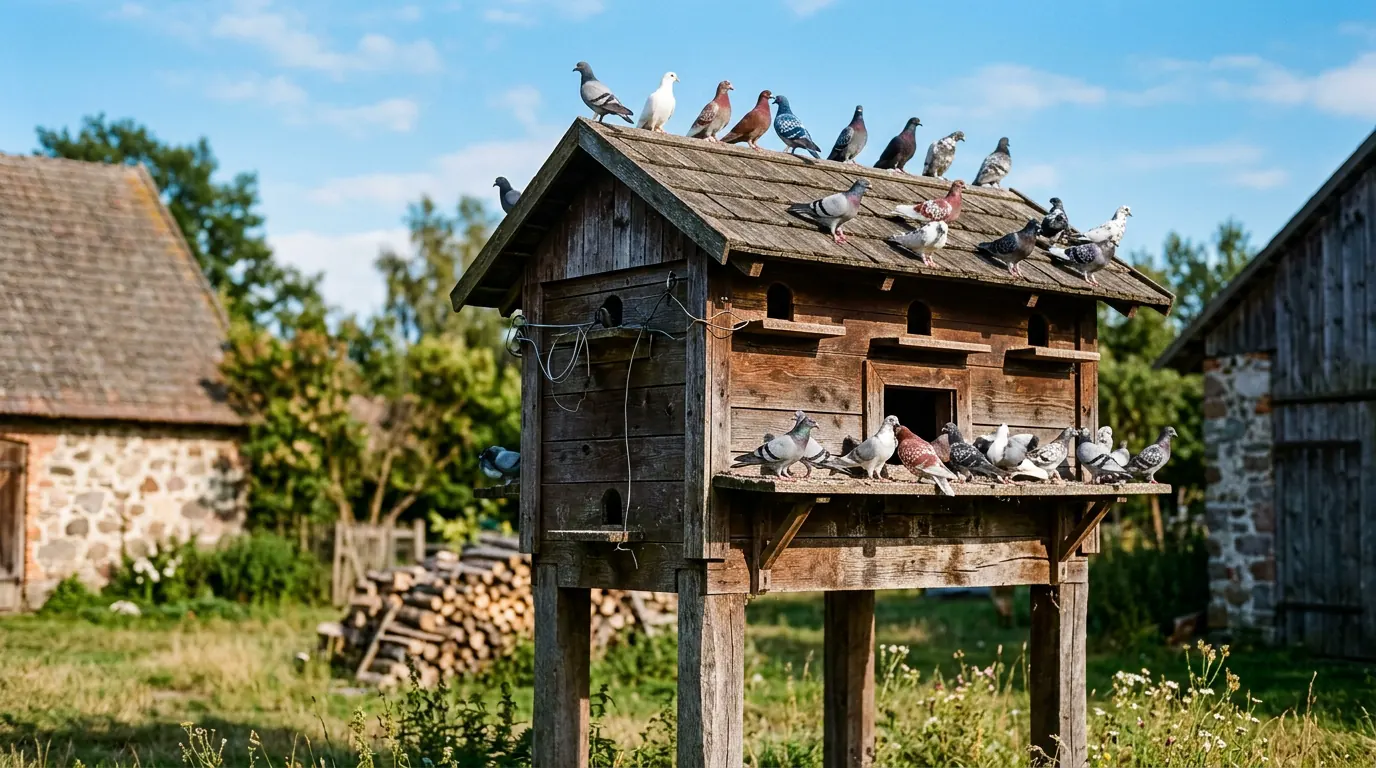
The pigeon tick, lice and fleas are external parasites that take blood, rest and strength from your pigeons. The pigeon tick (Argas reflexus) hides in cracks in the building and comes out to feed at night. Lice spend their whole life on feathers and skin. Fleas jump between birds and nests. Keepers usually notice restless birds, plucked feathers and dirt in the nest. To limit them you must check the whole loft, not just one bird. We describe loft layout and equipment that make it easier to keep things clean in pigeon loft equipment.
Why parasites threaten the whole flock
External parasites rarely kill a pigeon right away. A weakened bird eats less, gains weight more slowly, and a hen is more likely to abandon a clutch. In young pigeons, parasites can slow growth and prolong the molt. Ticks and fleas can also carry other disease agents, so a flock with a clear parasite problem needs a vet's advice. The problem grows in summer and in a warm, damp loft. Parasites also live through winter if the building is heated and has cracks where they can hide.
The pigeon tick: the worst of the three
Biology and hiding places
The pigeon tick is a soft tick. It does not climb on the bird by day. It feeds at night and spends the rest of the time in wall cracks, under eaves, in roof corners and in wooden parts of nests. It survives long periods without a meal, so an abandoned loft is not free of parasites. They return when new birds arrive. The tick avoids light, so inspect in the evening or at night with a flashlight, with cracks open.
Signs in the bird
The most common signs are a pale comb and wattles, restlessness and leaving the nest at night, weakness and weight loss. Young birds may stop growing. Dark spots appear on walls and bedding. They may be tick droppings or blood from night feeding. These signs are not specific to ticks, so work out the cause with your vet before treating.
How to check for ticks in the loft
At night, put a white sheet of paper or cardboard under the nests and on the floor under the perches. In the morning, look for small dark spots and scratches. Then in the evening walk through with a flashlight and check cracks, corners and the undersides of nests. You will see ticks in cracked plaster, under strips and in gaps between boards. Write down every place you find, because these decide how far your action must go.
Pigeon lice: life on the feathers
Where they live and how they spread
Pigeon lice are small, light brown and move fast between feathers. They stay on the bird for their whole life cycle and eat feathers, skin flakes and bits of food. They spread by direct contact, shared perches, nesting material and litter. So a pigeon treated in one place can quickly pick up parasites from the birds it shares a perch with.
Signs
Birds scratch a lot and peck at their feathers, especially on the neck, under the wings and on the belly. Feathers lose their shine, look ragged and are thin in places. The pigeon is less active, and the nest litter has small white dots. If you see this, part the feathers in daylight and check for small insects moving between them.
Why treating one bird is not enough
If you treat only the bird that looks sickest, the others can reinfect it. Lice and their eggs stay in the nest and on the walls of the nest box. So treatment covers the whole flock, all nests and the litter. Your vet decides how it is done and which product to use.
Pigeon fleas: in the nest and on the floor
How they get into the loft
Free-flying birds, sparrows and wild pigeons bring fleas into the loft when they enter through ventilation openings. Fleas also arrive with litter, straw, sand and new nesting material. Fleas do not live long without a host, but their eggs and pupae can survive in cracks and dusty floors. That is why you should not leave litter in the corners of the building after cleaning the nests.
Signs and nest check
Pigeons are restless and scratch, and young birds may have pale skin and grow more slowly. In the nest you see dark specks of flea droppings, which turn brown when moistened. Replace the litter, clean the nests and collect dust from strips and cracks. Compare this with the description of parasites in hens in hen fleas, because the way they spread is often similar.
A parasite-free loft: cleanliness and isolation
Cleaning and cracks
Remove litter and droppings regularly, clean nests and perches, then seal cracks in plaster and gaps in wood. Use disinfectants according to the label and the maker's instructions, and keep the breaks required before birds go back in. Wear gloves and a mask when cleaning, because loft dust can carry parasites and germs.
Quarantine for new birds
A new pigeon is the most common source of parasites in a loft. Keep it apart, watch it for a few days, and check its feathers and skin before it joins the flock. We describe how to bring in new birds in getting started with pigeon keeping. Before you start, also look over the simple flock protection rules in a biosecurity plan.
Biosecurity plan
Write down in one document who enters the loft, in what footwear, when you clean and what you do with dead birds. This makes it easier to find the cause if a problem appears. You can prepare a ready scheme in the biosecurity plan generator. Poultry flocks are also covered by requirements in national law.
Vet-led treatment and the withdrawal period
Who chooses the product
Do not pick products yourself based on forum opinions. A vet will judge which parasite is in your loft, how bad the problem is and whether the whole flock can be treated. Before buying, check that the product is approved for birds and read the label. We describe the legal position as of 22.11.2026. You can check the rules on veterinary medicinal products in ISAP (Poland's online legal acts system).
Withdrawal period when pigeons go for slaughter
If pigeons are meant for meat, you must respect the withdrawal period after giving a medicine. Agree it with your vet and write down the treatment date and the earliest slaughter date. For keepers of meat pigeons, it also matters to know when a bird can be sold. Keep treatment records in the treatment and withdrawal module so no detail is missing.
Parasites and other poultry species
Flea-type and mite-type parasites can pass between bird species, especially when they share rooms or nests. If you also keep hens, separate the buildings and the work for each flock. You can read more about external parasites in hens in external parasites in hens.
Frequently asked questions
Can pigeon ticks bite humans?add
Yes. A pigeon tick can bite a person, especially when you clean an abandoned loft or work in cracks. The bite can hurt and itch. After a bite, see a doctor, and protect your hands and clothing in the loft.
How do I check if my pigeons have lice?add
Part the feathers in daylight, especially under the wings, on the neck and on the belly. Lice are small and move fast, so they are easier to see on a light sheet of paper where you briefly place the bird. Heavy scratching and pecking at feathers are a signal to tell your vet.
Can I treat pigeons with home remedies?add
We do not recommend home methods without advice. A wrongly chosen product can harm birds, and the wrong concentration makes treatment less effective. The vet always chooses the medicine and dose, and knows the situation in your loft.
Can parasites pass from pigeons to chickens?add
Some parasites can pass between birds of different species, especially with a shared building or nesting material. So keep the pigeon loft and the henhouse separate, use separate tools and clean each one on its own. We also cover this in the article on hen fleas.
How often should I check the loft for parasites?add
Check the loft regularly, and more often after new birds arrive. Checking cracks and nests after dark matters most, because the pigeon tick feeds at night. Write down the results, so after a few weeks you can see whether things are improving.
How long must I wait after treatment before selling a pigeon for meat?add
The waiting time depends on the product used. It is set by the manufacturer and in your vet's advice. Before selling, check the withdrawal period on the label and in the treatment record. Writing down the date of the medicine helps you avoid mistakes.
Sources & resources
- linkChief Veterinary Inspectorate (Główny Inspektorat Weterynarii) — gov.pl/web/wetgiw
- linkMinistry of Agriculture and Rural Development — gov.pl/web/rolnictwo
- linkNational Research Institute of Animal Production (Instytut Zootechniki PIB) — izoo.krakow.pl
- linkInternet System of Legal Acts (ISAP) — isap.sejm.gov.pl
Prepared by: DlaFerm Team based on data from the sources listed · Publisher: INSTA-TECH sp. z o.o.
Do you keep a pigeon loft alongside a poultry farm?
The DlaFerm treatment and withdrawal module helps you record treatments, dates and withdrawal periods for each flock. Create a free farm account in DlaFerm.pl or get in touch, and we will show you how it works in practice.
Phone
+48 796 258 151