External parasites in chickens: lice, mites and scaly leg
The most common external parasites of chickens are chicken lice, feather lice, red mites and scaly leg mites. Each lives in a different place: on the feathers, in cracks in the coop, or under the scales of the legs. That is why the signs and the way you check for them differ. We describe how to recognize them, how to limit them, and why treatment always needs a vet.
verifiedFrom the team that has organised work on poultry farms for years.
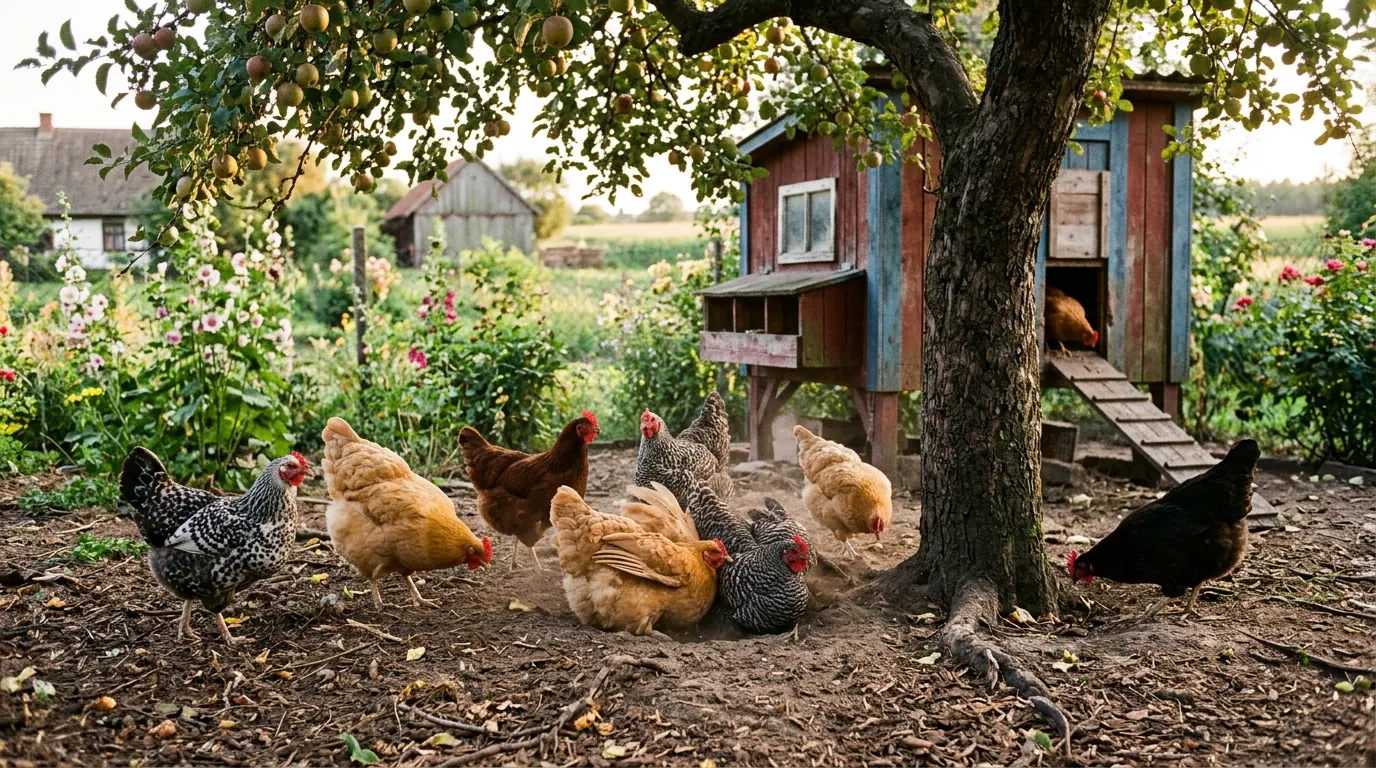
Chicken lice, feather lice, red mites and scaly leg mites are the external parasites keepers meet most often. Lice live on the feathers and skin of the bird, red mites hide in cracks in the coop, and scaly leg mites burrow under the scales on the legs. All of them cut egg production, weaken the flock and call for both treatment and cleaning of the house. Diagnosis starts with looking at the birds and the coop, not with buying a product. Record each treatment in the treatment and withdrawal period module, so you can review it if the problem comes back.
Why parasites come back to the flock
External parasites rarely vanish after one treatment, because part of their development happens off the bird. Chicken lice spend their whole life cycle on the hen, so they are easy to eliminate, but they also spread easily when new birds join. Red mites hide by day in cracks, on perches and in litter, and return to the hens at night to feed. So treating without cleaning the coop often ends in a relapse. Similar rules apply to internal infections, which we cover in our guide to worms in laying hens.
Chicken lice and feather lice on the feathers
Where to look for lice
Chicken lice and feather lice live mainly on the feathers, especially around the vent, under the wings and on the neck. Infested birds are restless, scratch more and peck at their feathers. Blow the feathers apart on the back and under the wings and you will see small pale or dark insects moving between them, and nits stuck to the feather base. Feather lice eat bits of skin and feather, while biting lice that suck blood also exist, so the signs vary. Also watch for loose feathers lying in the coop and on the litter, as they are often the first signal of a problem.
Effect on the flock
Heavy lice infestation makes hens lose feathers, their appearance worsens and egg production falls. Birds spend more time scratching and less time eating, which hurts production. Because other problems look similar, do not assume it is only lice. If in doubt, ask a vet to assess the birds and choose the medicine, and check the feeding rules for laying hens to see whether the diet contributes to feather loss.
Red mites in the coop
Why red mites are hard to detect
The red mite (Dermanyssus gallinae) feeds at night and hides by day in cracks in wooden walls, perches, nest boxes and under covers. That makes it easy to miss until the birds start to be restless. In the evening or at night, walk through the coop with a flashlight and check the cracks and the underside of the perches. Dark or reddish specks on light-colored parts, such as the belt under the perches, are a common sign of mites. Finding the parasite does not always mean treating the birds right away, but it does mean further checks.
Cleaning and changing litter
Effective mite control starts with thorough removal of litter, deposits and feed residue from the coop. Do not leave used bedding on the farm, as it is a source of further infection. We explain how to handle manure in our guide to chicken manure management. When planning a coop, choose smooth surfaces that are easy to clean and avoid cracks where parasites can hide. You will find more on this in the coop requirements for laying hens.
Scaly leg mites in chickens
What scaly leg looks like
Scaly leg is caused by mites that burrow under the scales of the skin on the legs, and sometimes on the comb and wattles too. Gray, thickened, uneven scales appear on the legs and in time lift away, and the toes may become deformed. Birds with advanced lesions walk reluctantly and go up to the perches less often. Such changes need a vet's assessment, because other diseases and skin injuries can look similar. Do not use medicines made for other animal species on your own.
Treatment and withdrawal period
The vet, who knows the state of the flock and which products are authorized for poultry, chooses the medicine and how to give it. For the keeper, the key point is the withdrawal period: the time after the last dose when eggs and meat must not be sold. Its length depends on the specific product, so always check the leaflet or the vet's instructions. Write down the date, the name of the medicine and the date the withdrawal period ends. The DlaFerm.pl treatment and withdrawal module makes this easy and tracks the dates for each group of birds.
How to check the flock step by step
Checking the birds
Go through the flock regularly, ideally at the same time of day, and watch how the birds behave. Hens that scratch, have bare patches or changes on the legs, or sit in one spot need a closer look. Check around the vent, under the wings and on the neck, and the underside of the perches. Note the result of each check, because comparing later shows whether the problem is growing. Enter your observations in the coop records, where you can easily see when the first signs appeared.
Records and entry control
Anyone entering the coop, whether a worker, vet or supplier, can bring in parasites on clothing or footwear. So keep a log of entries and exits, and change footwear and protective clothing before entering the livestock building. The QR entry and exit log makes this easier by recording who was on the farm and when. These records also help you trace the source if parasites return.
Prevention that limits relapses
Quarantine for new birds
Bring new hens into the flock only after observing them in a separate place. Check the birds for lice, feather lice and leg changes before you join them with the rest of the group. When you buy birds from another farm, ask about the flock's health history and any recent treatments. The risk of bringing in parasites is highest when new animals arrive. We cover the rules that protect a farm from disease in the biosecurity plan.
Biosecurity and the run
A biosecurity plan combines rules for entry to the site, cleaning equipment, rodent control and handling dead birds. Hens in the run have access to soil and sand, where some parasites develop, so keeping the run tidy matters too. When planning the run, look at the dust-bathing spots and at features that make cleaning easier, which we describe in the guide to the chicken run. You can prepare your own plan in the biosecurity plan generator.
Frequently asked questions
How do you tell if chickens have lice?add
Lice and feather lice are easiest to see if you blow the feathers apart near the vent, under the wings and on the neck. Infested birds often scratch and pull out feathers. If in doubt, ask a vet to assess the birds.
What is the difference between red mites and lice?add
Red mites live in the coop, in cracks and on perches, and go onto the bird mainly at night. Lice and feather lice live directly on the feathers and skin of the hen. That is why treating the bird without cleaning the coop often is not enough.
Are scaly leg mites dangerous for the whole flock?add
Scaly leg mites cause painful changes on the legs and weaken the birds, and in the advanced stage make it hard for them to move. The lesions can look like other skin diseases, so a vet needs to assess them. Do not use medicines on your own.
How long after treatment can you sell the eggs?add
The withdrawal period depends on the specific medicine and is set in its leaflet or in the vet's instructions. Write down the date of treatment and the end of the withdrawal period before eggs go on sale. The DlaFerm.pl treatment and withdrawal module helps you track these dates.
Can you get rid of chicken parasites just by cleaning the coop?add
Cleaning and changing litter are the basis of control, but they are usually not enough once the birds are infested. The birds need treatment chosen by a vet, and the coop must be cleaned at the same time. Do both together to limit relapses.
Can chicken lice move on to people?add
Chicken lice are adapted to life on birds and usually do not stay on people, but they can cause discomfort when you work in an infested coop. Wash up after working with the birds and change your clothes. For more information, ask your vet or see the materials of the GIW (Główny Inspektorat Weterynarii, Poland's Chief Veterinary Inspectorate).
Sources & resources
- linkGłówny Inspektorat Weterynarii (Chief Veterinary Inspectorate) — gov.pl/web/wetgiw
- linkInstytut Zootechniki PIB (National Research Institute of Animal Production) — izoo.krakow.pl
- linkEFSA — efsa.europa.eu
- linkInternetowy System Aktów Prawnych (Internet System of Legal Acts) — isap.sejm.gov.pl
Prepared by: DlaFerm Team based on data from the sources listed · Publisher: INSTA-TECH sp. z o.o.
Do you keep laying hens and want all treatment records in one place?
The treatment and withdrawal module in DlaFerm.pl records the medicines given, the dates and the withdrawal periods for each group of birds. Create a free farm account and see how it works in practice.
Phone
+48 796 258 151