Pigeon loft equipment: nests, nest bowls, drinkers and feeders
A pigeon loft needs four basics: a nest for every pair, nest bowls, drinkers, and feeders protected from dirt and damp. How many you need and where they go depends on the number of birds, and on whether you keep them in a closed loft or an aviary. Below we cover what to fit out first and what to look for when you choose.
verifiedFrom the team that has organised work on poultry farms for years.
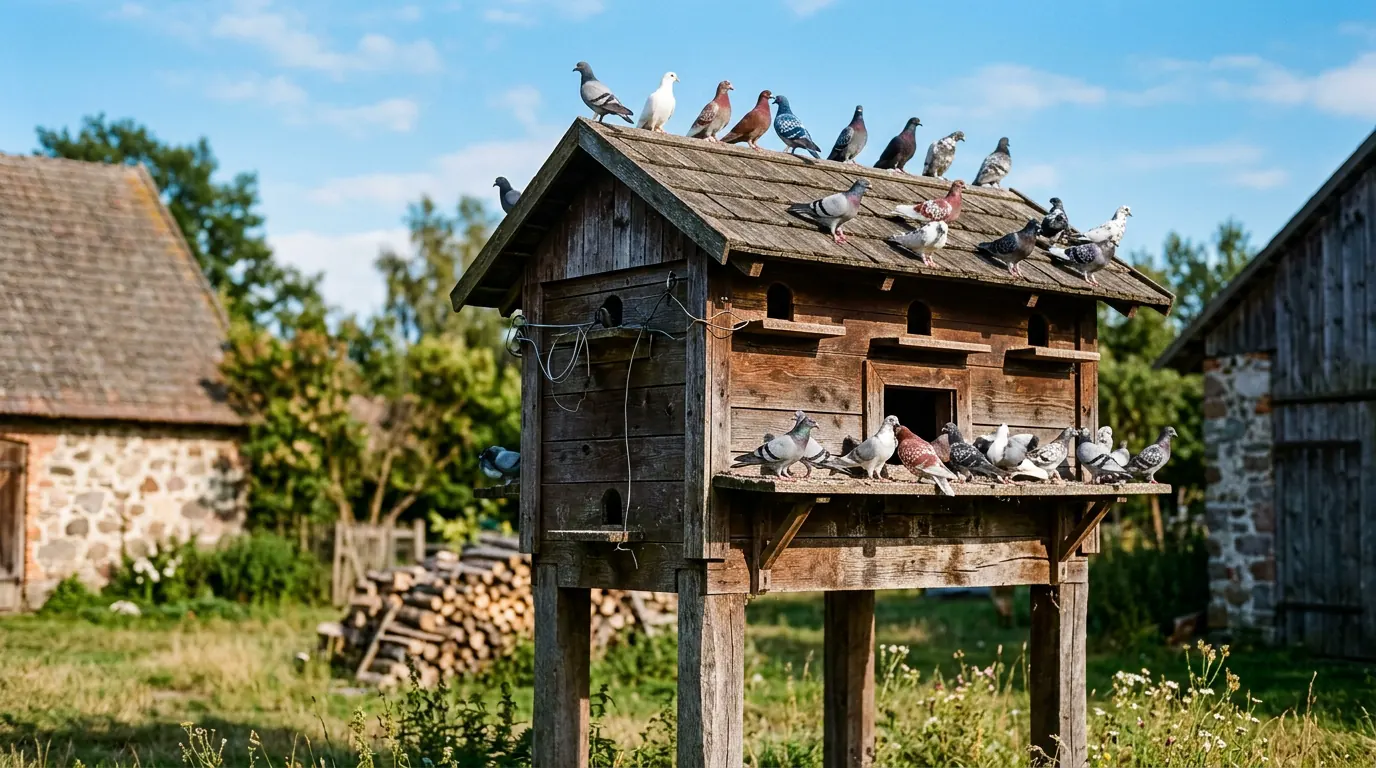
You fit out a pigeon loft with nests, nest bowls, drinkers and feeders. Each does a different job, but all of them affect the same things: bird health, cleanliness and how easy the daily work is. The nest and nest bowl decide whether a pair can prepare for breeding without stress. The drinker and feeder decide whether water and feed stay clean and feed losses stay small. If you are just starting, read pigeon keeping: how to start first.
How to plan the equipment
Start with a list of your birds: how many pairs, how many young birds, and which type of pigeon you keep. Different types need different flock sizes and a different approach to nests, so plan for your actual birds, not a generic template. Draw the loft with space for nests, drinkers and feeders, and make sure every item is easy to reach for cleaning. Well-planned equipment saves time, because you do not have to move everything each time the flock changes.
Nests and nest bowls for pairs
One nest per pair
Pigeons are monogamous and take a shared, clearly separate spot when breeding. Each pair should have its own nest and should not be forced to share with a neighboring pair. Shared space leads to fights, broken eggs and abandoned clutches. When you plan, count pairs, not single birds, and add spare nests for young birds that may reach breeding age.
Nest bowl: material and cleanliness
A nest bowl should be stable, smooth and easy to clean. Wood or dense plastic works better than thin cardboard, which soaks up moisture and molds quickly. Change the bedding after every clutch, or when it gets damp or soiled with droppings. Do not lay down too thick a layer of straw, because it holds moisture and parasites. We describe nest building for poultry in how to make nest boxes for hens, but pigeons need different dimensions and build their nests differently, so check the results against your own observation.
Where to put nests
Put nests in a quiet, dark corner, away from drafts and from the door you use most. Birds like cover at the side and above. Set the height so a pair can get in easily, but the nest is not an easy target for predators. Do not place nests under a drinker, because dripping water will soon ruin the bedding.
Drinkers for pigeons: keep the water clean
Open or closed drinker
An open drinker is cheap and simple, but pigeons easily foul it with droppings, feathers and bits of feed. Covered or closed drinkers reduce this risk, because birds drink through a narrow opening. The rule for choosing is close to the one in automatic waterers for chickens: water should always be available, clean and easy to wash.
Check the water daily
Check drinkers every day: water level, cloudiness, algae and film on the sides. Change the water daily and wash drinkers regularly, especially in hot weather, when water warms up and spoils faster. A change in how the birds drink is one of the first signs that something is wrong in the flock. Write these observations down, because they make the conversation with your vet easier.
Water and medicines
If you give a medicine in the water, do not leave the solution out longer than your vet says. The vet always decides the dose and the way it is given, not the keeper. Record the withdrawal period in the treatment and withdrawal period log, so you do not mix up dates for birds intended for further sale.
Feeders: less waste, less dirt
Closed feeders with a cover
A feeder with a roof and closed sides cuts down on spilled grain and keeps wild birds out. Open bowls on the floor soon get fouled with droppings and feathers, and the feed soaks up damp. We describe how to choose feeders for poultry in poultry feeders. Space them so every pair can reach the feed without pushing.
Dry feed and storage
Feed stored in damp conditions molds, and mold in a feeder is dangerous to bird health. Keep feed containers tightly closed, in a dry room, away from rodents. Throw out old portions instead of topping up with fresh feed on top. Also check that dust and grain powder do not build up in the feeder.
Placing feeders
Put feeders in a dry, clearly visible spot, but not right next to the drinkers. If water spills onto the feed, losses grow. It is better to set up several small feeders than one large one: the birds argue less, and you can more easily see which spot needs cleaning.
Aviary and loft: how to combine them
Closed loft or aviary
A closed loft protects against rain, wind and predators, but needs good ventilation, because damp air favors respiratory disease. An aviary gives birds room to fly and move, but exposes them to weather and outside threats. Most keepers combine both: a closed space for the night and for breeding, and an aviary as the flight area. You can find aviary solutions for laying hens in aviary systems for laying hens, and their principles can be carried over to pigeons with caution.
Ventilation and light
Pigeons do not like drafts at nest level, but they need fresh air. Set up ventilation so air changes without a cold stream blowing straight onto the birds. Daylight through windows or openings helps keep a natural day and night rhythm. Switch off artificial light at night so the birds can rest.
Loft hygiene and biosecurity
Cleaning the equipment
Clean nests, bowls, drinkers and feeders regularly. Remove droppings, feathers and leftover feed, then wash and disinfect with a product made for poultry. Follow the manufacturer's instructions, including contact time and concentration. Do not mix different products without asking your vet.
New birds and visitors
Keep new pigeons apart before you add them to the flock. Limit visits by strangers to the loft and have them wear clean footwear or gloves. The biosecurity plan generator helps you build a biosecurity plan for your farm. You can log entries and exits in the QR entry and exit log, so you know who was near the birds and when.
Rules and oversight for a pigeon loft
Where to find the rules
You can find legal acts on animal keeping, health protection and welfare in the Internet System of Legal Acts (isap.sejm.gov.pl). Check the legal state as of 22.11.2026 against the current version of the text, because rules change. Guidance for keepers is published by the Chief Veterinary Inspectorate (Główny Inspektorat Weterynarii, gov.pl/web/wetgiw).
Talking to your vet
The district veterinarian will tell you which requirements apply to you for registering birds, reporting deaths and flock inspections. Ask before you buy equipment, because the layout of nests, drinkers and the flight area can matter during an inspection. Do not assume that the rules for hens apply unchanged to pigeons.
Records
Keep a record of medicine purchases, treatments and deaths in one place. At an inspection it is easier to show unbroken documentation when every entry is dated. Materials on animal breeding that can help with flock planning are published by the National Research Institute of Animal Production (Instytut Zootechniki PIB, izoo.krakow.pl).
Frequently asked questions
How many nests does a pigeon loft need?add
The rule is simple: one pair, one nest. Do not share nests, because it leads to conflict during breeding. Count the pairs in your flock and add spare nests for young birds that may reach breeding age.
How often should you clean pigeon nest bowls?add
Change the bedding after every clutch, or when it is wet or soiled. Wash and disinfect the bowl with a product made for poultry, following the manufacturer's instructions. A clean nest lowers the risk of skin disease and parasites.
What kind of drinker is best for pigeons?add
Choose a drinker that limits fouling with droppings and feathers, because water should always be clean. A covered or closed drinker works. Check it daily and change the water every day.
Can a pigeon feeder stand on the floor?add
It is better not to. A feeder on the floor quickly gets fouled with droppings and damp, and feed is wasted. Hang it or set it on a stable base so birds can eat without spilling grain.
Can pigeons live in an aviary all year round?add
An aviary gives birds room to move, but it needs a roof and protection from wind and predators. In rain and strong wind, birds need a dry shelter to retreat to. Watch ventilation and keep bedding dry, because they decide the health of the flock.
Who decides medicines and withdrawal periods for pigeons?add
Your vet decides medicines, doses and withdrawal periods. Do not give medicines on your own, even if you know the product from keeping hens. Record every treatment in a log, which makes inspections easier and helps you keep to the dates.
Sources & resources
- linkChief Veterinary Inspectorate (Główny Inspektorat Weterynarii) — gov.pl/web/wetgiw
- linkInternet System of Legal Acts (Internetowy System Aktów Prawnych) — isap.sejm.gov.pl
- linkMinistry of Agriculture and Rural Development (Ministerstwo Rolnictwa i Rozwoju Wsi) — gov.pl/web/rolnictwo
- linkNational Research Institute of Animal Production (Instytut Zootechniki PIB) — izoo.krakow.pl
Prepared by: DlaFerm Team based on data from the sources listed · Publisher: INSTA-TECH sp. z o.o.
Do you run a pigeon loft next to a poultry farm?
In the DlaFerm coop records module you can log equipment, treatments and deaths in one place. Create a free farm account and add your first entry, or get in touch and we will show you how it works in practice.
Phone
+48 796 258 151