Chicken feeder from PVC pipe or a barrel: how to make one
A PVC pipe chicken feeder is an upright hopper with a small trough at the bottom. A barrel feeder works the same way, just bigger. Feed drops down by itself, so you refill less often and waste less. We cover both builds step by step, plus feeder types, size and placement in the coop.
verifiedFrom the team that has organised work on poultry farms for years.
To make a PVC pipe chicken feeder, take an upright length of wide pipe with the bottom cut at an angle, and attach an elbow or a small trough to it. Feed drops from the hopper as the birds eat. A barrel feeder works the same way, but holds more feed and serves a bigger flock.
Why use a gravity feeder
A feeder has two jobs: give birds steady access to feed and limit waste. Hens love to scratch in feed, so a feeder that is too shallow, overfilled or has no lip ends up with feed thrown across the litter. That wastes money and feeds rodents. In a gravity (hopper) feeder, a large container drops feed into a shallow trough. You refill every few days instead of several times a day, and with hoppers around 50 kg even less often.
Buy or build
You can buy ready-made metal and plastic feeders at farm supply stores, pet shops or online. A homemade feeder from PVC pipe or a barrel works on the same principle, and you often already have the material. For the diet itself, see our guide on what to feed chickens.
Types of feeders for chickens and other poultry
The table below compares the four most common feeder types and what they are used for.
| Feeder type | How it works | What it suits |
|---|---|---|
| Gravity (hopper) | A hopper above a shallow trough, feed drops by itself | Flocks left without a refill for longer |
| Trough (gutter) | An open gutter or bowl | A few birds, an extra feeder |
| PVC pipe | An upright pipe with an angled bottom and a trough | Small and medium flocks, cheap homemade kit |
| Barrel | A barrel with holes near the bottom and troughs around it | Larger flocks, less frequent refilling |
Gravity (hopper) feeders
Feed drops down by itself, and birds cannot reach the whole supply at once. That cuts scratching and fouling with droppings. We recommend this type most for flocks left without a refill for longer, for example during a working day.
Trough (gutter) feeders
A simple open gutter or bowl is easy to make and wash. It needs more frequent refilling and attention to the feed level, because with a full trough birds are more likely to dig feed out. It suits a small number of birds or works as an extra feeder.
Chicken feeder from PVC pipe: how to make it
How to make a chicken feeder from PVC pipe
Take an upright length of wide PVC pipe. At the bottom, cut an angled opening or fit an elbow to act as the feed trough. The pipe is the hopper: feed drops into the elbow as birds eat. Close the top with a cap or plug so rain and dirt stay out. Fix the feeder to the coop wall or a post so the hens cannot knock it over. We do not give a standard pipe size. Choose one to suit your flock and how long the feeder should go without a refill.
PVC pipe feeder: what to watch
Keep the trough only partly filled, so hens scratch less feed onto the litter. Smooth the cut edges so birds do not get hurt. Put the pipe feeder in a dry spot, because wet feed molds very fast. It is cheaper than a store-bought one, but the pipe holds a limited amount, so with a bigger flock place several of them in different spots in the coop.
Chicken feeder from a barrel: how to make it
How to make a chicken feeder from a barrel
Take a plastic or metal barrel and cut several holes near the bottom. Screw a small trough to each hole around the barrel. Feed drops into the troughs just as in a pipe feeder, only on a larger scale. The lid must fit tightly so rain and rodents cannot get to the feed. This feeder holds a lot of feed at once, so it suits bigger flocks and anyone who wants to refill less often.
Which barrel to choose
Barrels that held chemicals or oil must be washed and disinfected very thoroughly before they go near feed. The safest choice is a barrel that previously held food products. Smooth the edges of the holes. Stand the barrel on a stable base so birds cannot tip it, and fit the troughs at a height where hens can eat without climbing in. With a large feeder, do not let feed sit at the bottom for weeks, where it can get damp.
Large feeder and 50 kg of feed
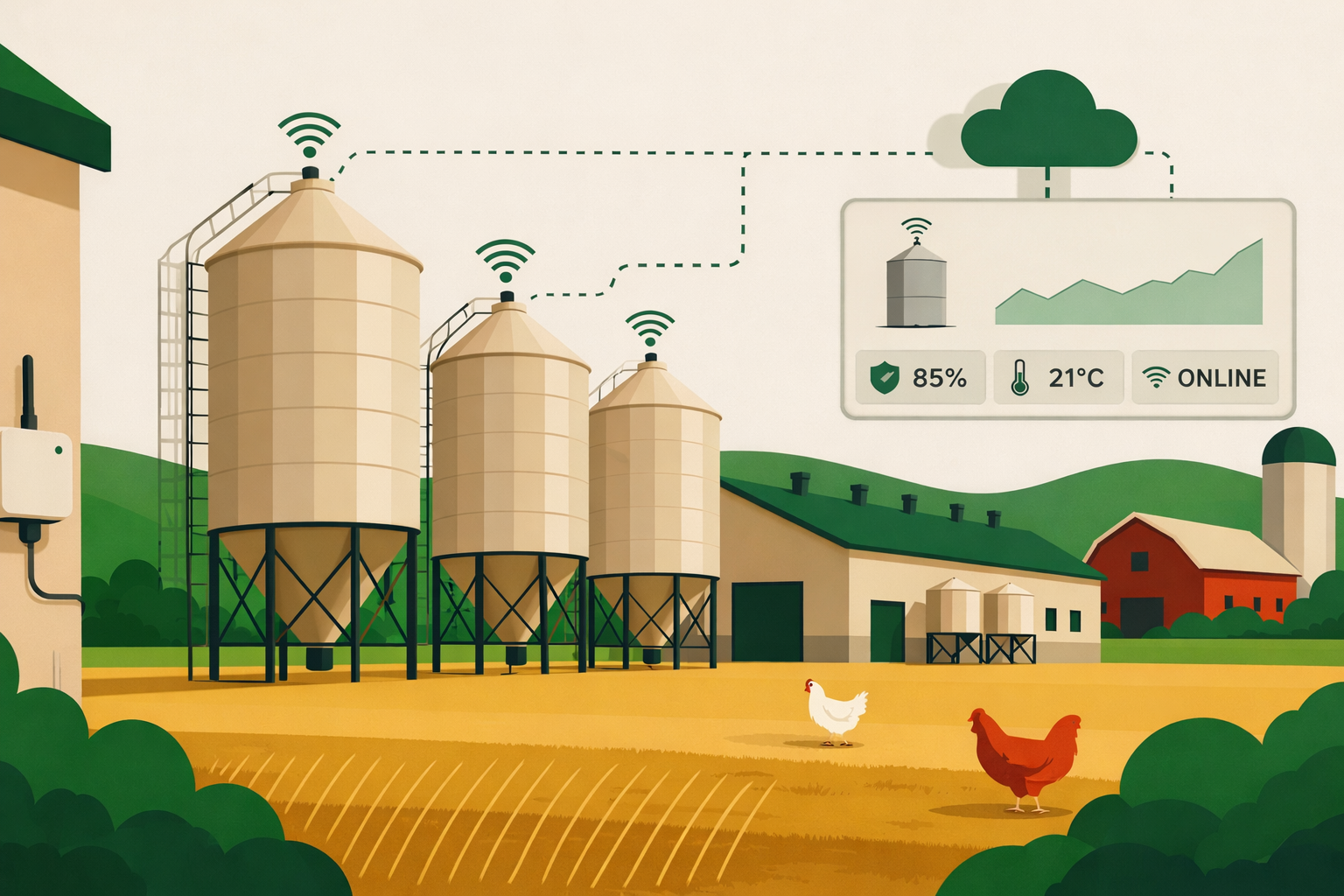
A capacity around 50 kg makes sense for a larger flock, where topping up a flat bowl by hand would be a chore. You can buy a large hopper feeder or build one from a barrel. You can record feed use per flock in the coop records module, and on big farms feed silo monitoring helps too.
Choosing feeder size and location
How many chickens per feeder
Instead of a fixed number of birds per feeder, count the length of feeder edge available per hen, as you do with perches. As a rough guide, give each bird a few centimeters of free access to feed, so several hens can eat at once without shoving. With larger flocks, set up two or three smaller feeders in different parts of the coop rather than one big one in a corner. That cuts queues and the risk that weaker birds get pushed away from the food. Space and equipment requirements for the coop are covered in our article on laying hen coop requirements.
Where to put the feeder
Place the feeder where it is sheltered from rain, because wet feed molds fast and is not fit to feed. If it stands outside, add a small roof or put it under the eaves. Raise the feeder a little off the ground on a few bricks, a pallet or a low stand. That keeps litter and droppings out of the feed and makes it harder for rodents to reach. For a feeder in the run, make sure the fencing is sound, as we describe in our guide to the chicken run.
What feed costs in the feeder
A well-placed feeder cuts feed loss, which is a real saving, since feed is the biggest part of the cost of keeping birds. Exact prices change every week, so we do not quote them here. Check current feed prices with your suppliers. You can work out feed use per flock and feeding cost in farm management software.
Frequently asked questions
How do you make a chicken feeder from PVC pipe?add
Take an upright length of wide PVC pipe. Cut an angled opening at the bottom or fit an elbow to serve as the trough. Close the top with a cap and fix the feeder to a wall or post. Feed drops by gravity into the trough.
How do you make a chicken feeder from a barrel?add
Cut several holes near the bottom of the barrel and screw troughs to them around the outside. A barrel with a tight lid works as the hopper. Wash and disinfect barrels that held chemicals or oil. A barrel that held food products is best.
Is a barrel feeder better than a PVC pipe feeder?add
It depends on the flock. PVC pipe is cheaper and enough for a small or medium flock. A barrel holds more feed, so it suits more birds and less frequent refilling.
What types of chicken feeder are there?add
You will most often meet gravity (hopper) feeders and simple open trough feeders. Popular homemade options are PVC pipe and barrel feeders. Both work like store-bought models, on gravity.
How many chickens per feeder?add
There is no single fixed number. Look at the length of feeder edge per bird and allow a few centimeters of space per hen. With a larger flock, set up several smaller feeders instead of one big one.
Where should I put a chicken feeder?add
Somewhere sheltered from rain, ideally under a roof or eaves. Raise it off the ground on bricks or a pallet. That keeps the feed cleaner and makes it harder for rodents to reach.
What is the best feed for chickens?add
It depends on the age of the birds, the purpose of the flock and the season. Details on feed types are in our article on what to feed chickens.
Sources & resources
- linkPolish Poultry Council: good practice in poultry keeping
- linkNational Research Institute of Animal Production: feeding recommendations and coop equipment
- linkRSPCA Welfare Standards for Chickens: guidance on feeders and access to feed
Prepared by: DlaFerm Team based on data from the sources listed · Publisher: INSTA-TECH sp. z o.o.
Keep track of feed use in your coop
The coop records module in DlaFerm lets you log feed use and feeding costs for your flock in one place. Create a free farm account or get in touch, and we will show you how it works in practice.
Phone
+48 796 258 151