Chicken fleas: do they move to humans and how to get rid of them
Your hens are pulling at their feathers and you find itchy bites on your skin? We explain what people mean by "chicken fleas", whether chickens really get fleas, whether chicken lice move to humans, and how to clean the coop.
verifiedFrom the team that has organised work on poultry farms for years.
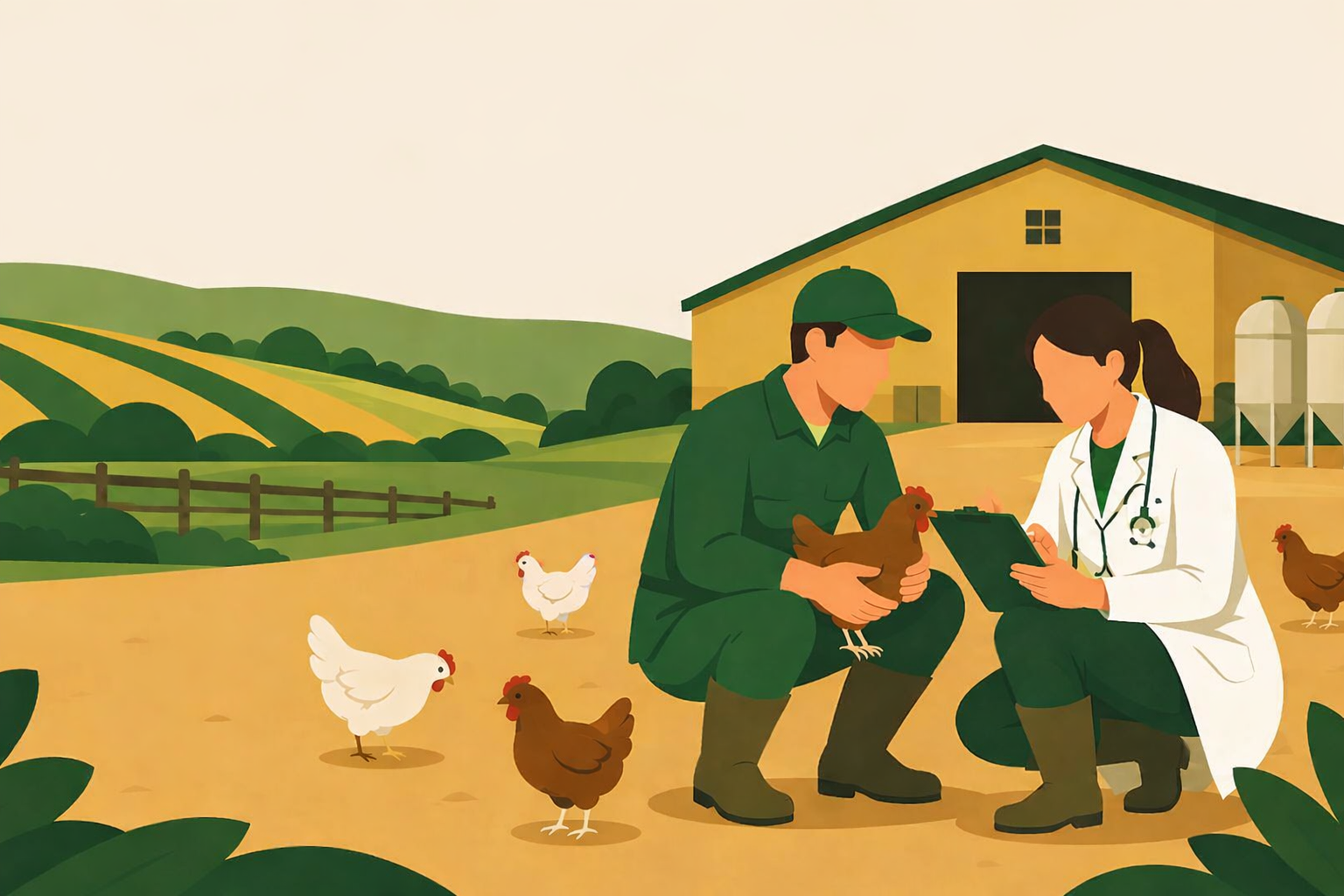
"Chicken fleas" is a common name for small parasites of poultry. Chickens can get true bird fleas, but they are more often attacked by the poultry red mite or by lice. In a heavy infestation these parasites may feed on people for a while and cause itching, but they do not settle on human skin. The problem fades once you clean the coop and treat the flock.
Do chickens get fleas
Yes, but backyard keepers use the name "chicken fleas" for several different parasites. Most often it is the poultry red mite, a mite that feeds on blood and is active mainly at night. To identify the exact species you need to look under a magnifying glass or ask a vet. You do not have to wait for a diagnosis, though, because what you do in the coop is very similar in every case.
How to tell your chickens have parasites
The first sign is behavior: hens pick at themselves too much, peck their own feathers and skin, dust bathe for a long time, or are restless in the evening when parasites become most active. Check the feathers at the base and the skin around the vent and under the wings. Tiny dark or rusty specks on skin, feathers and roosts are often parasite droppings or the mites themselves. In a heavy infestation the comb and wattles turn pale, birds lose condition and lay fewer eggs. This comes from blood loss and is especially dangerous for young and weaker birds.
Chicken fleas on humans and chicken lice on humans
Chicken fleas on humans
In a heavy coop infestation, parasites (most often red mites, less often true fleas) may feed on people for a while. This happens especially when the coop stands close to the house or the birds have been out of it for some time. The bites itch and are annoying. But these parasites need bird blood to complete their life cycle, so they do not settle on people for good. The problem goes away when you clean the coop and treat the flock.
Chicken lice on humans
Chicken lice are chewing lice. They feed mainly on feathers and dead skin of the birds, not on blood. Contact with people is rare and usually harmless. Even after brief contact, they are not dangerous to humans. Chicken lice do not multiply on people, and symptoms pass once you clean the coop and flock properly. If the itching continues or your skin is irritated, see a doctor.
How to tell the parasites apart
The table sets out the main features of these parasites. Leave exact species identification to a vet.
| Parasite | What it feeds on | When it is active | Where it lives |
|---|---|---|---|
| Poultry red mite | Bird blood | Mainly at night | Coop crevices, roosts |
| Bird fleas | Bird blood | On the birds and in their surroundings | Birds and litter |
| Chicken lice | Feathers and dead skin | All the time | Feathers and skin of the birds |
How to treat and control chicken fleas
Diatomaceous earth for chicken fleas
Food-grade diatomaceous earth is a non-chemical way to reduce external parasites. It works mechanically: microscopic, sharp diatom shells damage the outer coat of insects and mites, and they dry out. Sprinkle it in dust baths and into cracks, corners and under roosts, where parasites and their eggs hide. Use it with care and avoid breathing the dust, both for the birds and for yourself.
Products against external parasites
Pet and farm stores sell ready-made powders, sprays and liquids for use on birds and for treating the coop. Check that the product is approved for poultry and read the label for the egg withdrawal period. The vet chooses the medicine and how to use it, so ask if you are unsure. You can record treatments and withdrawal dates in the Treatment and withdrawal module.
Clean the whole coop
Treating the hens alone is not enough, because red mites spend most of their time in coop crevices, not on the birds. Clear out the litter, scald or wash roosts and nest boxes, and spray or dust the cracks in the structure. You usually need to repeat the treatment after a few to a dozen or so days to catch parasites that hatched from eggs after the first cleaning. Lice are controlled with the same methods.
How to prevent a return
Clean the coop regularly
Changing litter often, removing droppings and airing the coop reduce the places where parasites multiply. Set a steady cleaning routine instead of cleaning only when the problem is already visible.
Dust bath in sand and ash
Access to a dry dust bath (sand, soil, wood ash, possibly with some diatomaceous earth) lets birds cut down the parasites on their feathers and skin themselves. Make this easy for them especially in warmer seasons, when infestations grow fastest.
Quarantine and biosecurity
Keep newly bought hens apart for a few to a dozen or so days before they join the flock. This is the simplest way not to bring an infestation into a healthy coop. Equipment and visitors can carry parasites too, so prepare a plan in the biosecurity plan generator and log farm visits in the QR visitor log.
Why you should act right away
The longer parasites feed unnoticed, the harder and longer the coop cleanup becomes. Blood loss weakens birds and lowers laying, and itchy bites make work around the flock unpleasant. If you are just starting out, also read how to become a poultry keeper.
Frequently asked questions
What should I do if my chickens have fleas?add
Treat the birds and the coop at the same time: clear out the litter, scald or wash roosts and nest boxes, spread diatomaceous earth in dust baths and cracks, or use a product approved for poultry. Repeat the treatment after a few to a dozen or so days.
Can chicken fleas bite humans?add
In a heavy infestation they may feed on people for a while, most often as red mites. The bites itch, but the parasites do not settle on people. The problem goes away after you clean the coop and treat the flock.
Do chickens get fleas?add
They can get true bird fleas, but red mites and lice are more common. A vet can identify the species, and what you do in the coop is similar.
Are chicken lice on humans dangerous?add
No. Lice feed on the birds' feathers and skin, not blood, so contact with people is rare and usually harmless. If itching continues, see a doctor.
How do I get rid of chicken fleas?add
Clean the coop thoroughly, use diatomaceous earth or a product for poultry, and repeat after a few to a dozen or so days. Then keep up regular prevention.
Does diatomaceous earth work on chicken parasites?add
It works mechanically: it damages the outer coat of insects and mites, and they dry out. Use food-grade earth and avoid breathing the dust.
Can I eat the eggs after treatment?add
It depends on the product. Check the egg withdrawal period on the label, and choose the medicine and how to use it with your vet.
Sources & resources
Prepared by: DlaFerm Team based on data from the sources listed · Publisher: INSTA-TECH sp. z o.o.
Want treatments and withdrawal periods under control?
The Treatment and withdrawal module in DlaFerm lets you record treatments and track withdrawal dates. Create a free farm account or get in touch, and we will show you how it works.
Phone
+48 796 258 151