Listeria and listeriosis: the risk on the farm, in milk and in meat
Listeria (Listeria monocytogenes) is a bacterium that lives in the farm environment, gets into feed, milk and meat, and causes severe infections in people. We explain where it is found, how dangerous it is for people and what you can do on your farm, including a poultry farm.
verifiedFrom the team that has organised work on poultry farms for years.
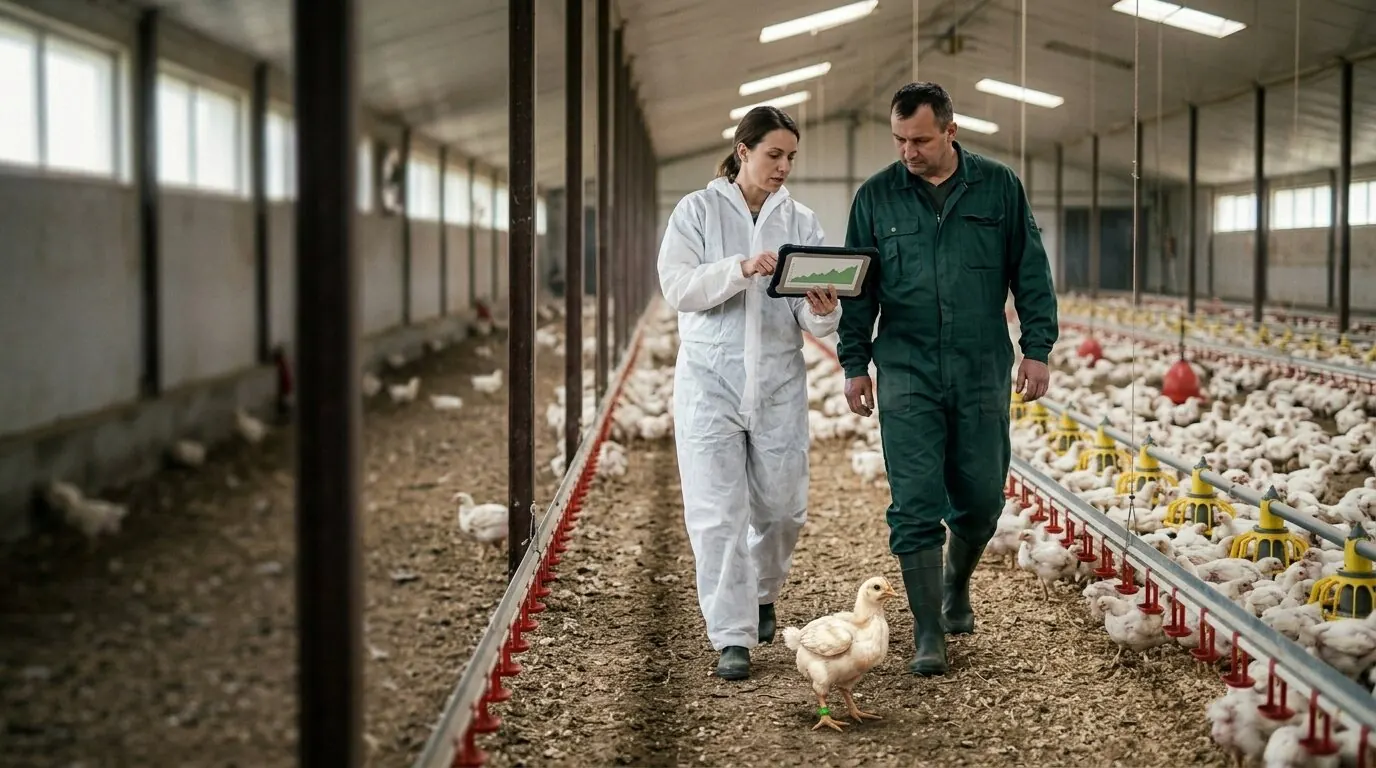
Listeria is a bacterium found in cattle, sheep, goats and pigs, in feed and in ready-to-eat food. The disease it causes is called listeriosis. In people it causes invasive infections. According to the EFSA and ECDC report for 2023, 27 EU member states reported 2952 confirmed invasive cases in people, or 0.66 cases per 100 000 inhabitants.
Why a farmer should know about listeria
You are responsible for what leaves your farm: milk, eggs, meat. Listeria rarely causes clear signs in the animal, yet it reaches the table with food. That is why hygiene of feed, bedding and the slaughter area counts as much as treatment. We describe hygiene rules for selling from the farm on the page about selling poultry from the farm.
Listeria in numbers: what European data show
Infections in people
According to the One Health 2023 report (EFSA and ECDC), the listeriosis notification rate in the EU was 0.66 cases per 100 000 inhabitants. That is a 5.8% rise on 2022, when the rate was 0.63. The report calls it the highest rate and the highest number of cases since 2007. The trend over 2019–2023 is rising in a statistically significant way. Listeriosis is a growing problem, not a historical one.
Ready-to-eat food
EU countries reported 186 997 samples of ready-to-eat food, taken in production and distribution. In distribution, in 6 of the 10 categories tested the share of positive samples was zero, below 0.1%, or in the range 0.1–1.0%. The highest share, 14.8%, was found in fermented sausages. Microbiological criteria are set by Commission Regulation (EC) No 2073/2005. The data show that the risk concentrates in meat products, not equally in every product.
Farm-level testing
At primary production level, 12 countries reported 15 422 samples in 2023. In 2021 there were 23 564, and in 2020 there were 22 370. The report also notes that in 2023 data from Poland were missing, although a year earlier Poland supplied 36% of the ready-to-eat food samples. The takeaway for you: farm-level data are thin, so your own hygiene checks matter a lot.
Listeria in farm animals
Which species are tested most often
According to the table in the EFSA and ECDC report, the share of positive samples at primary production was 1.5% in cattle (7127 samples), 4.2% in sheep and goats (4762 samples) and 0.26% in pigs (2672 samples). For the group "other" it was 0.58% (861 samples), and in the EU overall 2.1% of 15 422 samples. Sheep and goats have the highest result. For poultry the principle is the same: the bacterium occurs in the environment, and your vet will judge the level of risk in your flock based on tests.
Abortions and signs
The Teagasc manual lists Listeria among silage-related infections that can cause abortions. Most such infections come from poorly preserved forage, and far less often from bedding. An aborting cow usually shows no signs of illness unless the placenta is retained and the uterus becomes infected. No signs does not mean no risk, and diagnosis needs a laboratory test.
What to do after an abortion
Teagasc advises isolating the aborting cow from other cattle, especially pregnant cows, for 2–3 weeks until the discharge stops. Samples go to the laboratory, including blood tested for brucellosis, salmonellosis and leptospirosis. Treatment and the choice of drug are always set by a vet. Drugs carry a withdrawal period, which you record in the Treatment and withdrawal module.
Where listeria comes from on the farm
Feed and silage
Teagasc points to poorly preserved forage as the main source of silage-related infections. For you this means checking the quality of every batch: appearance, smell, signs of mold and how it was stored. Take feed you doubt out of the ration. We describe storing and mixing feed in the article on on-farm feed mixing.
Bedding, water and damp
According to Teagasc, bedding is a less frequent source of infection than feed, but you should not ignore it. Wet, stagnant spots near drinkers and in building corners favor bacteria. Replace bedding, remove feed leftovers and keep drinkers clean. Adjust exact frequencies to the species and housing system, and ask your vet if in doubt.
People and equipment moving around
Bacteria can be carried on boots, clothing and equipment. A record of entries to the farm helps you work out who entered the buildings and when if an infection is suspected. The QR entry and exit log helps with this. You can prepare a hygiene plan for the whole farm in the biosecurity plan generator.
Listeria in milk, eggs and meat
Milk and cheese
An infected animal can shed the bacterium in milk, and products that are not heat-treated carry a higher risk. If you sell milk or cheese from the farm, check the requirements for direct sales and registration. We cover them in the article on selling goat milk and cheese. Because sheep and goats have the highest share of positive samples in EFSA data, pay special attention to milking hygiene.
Meat and slaughter
At slaughter the bacterium passes from the gut, skin and surfaces to the carcass. That is why a clean area, clean knives and tables, and keeping raw meat apart from cooked meat all count. The highest share of positive samples in distribution was in fermented sausages, so processed products need special care. We describe the rules for home slaughter on the page about slaughtering farm animals for your own use.
Eggs and poultry
When selling eggs and poultry, clean shells, storage and registration requirements matter. You will find details in the articles on selling eggs from the farm and selling poultry. Check specific limits and procedures with the Chief Veterinary Inspectorate (Główny Inspektorat Weterynarii) and your county vet (powiatowy lekarz weterynarii).
How to reduce the risk of listeria on your farm
Action list
Inspect feed before feeding and reject batches with mold. Keep bedding dry and drinkers clean. Separate animals after an abortion for the period your vet advises. Clean and disinfect equipment after every batch. Limit visits by outsiders. Write each of these points into the farm hygiene plan. We describe general flock management in the article on keeping poultry on the farm.
Records and reporting
Record abortions, deaths, test results and the treatment given. When a laboratory test confirms infection, or when you suspect a risk to consumers, contact your county vet. Check your reporting duties with the Chief Veterinary Inspectorate. A well-kept poultry house record shortens the time needed to find which batch the problem concerns.
Frequently asked questions
What is listeriosis?add
Listeriosis is a disease caused by the bacterium Listeria monocytogenes. In people it can cause an invasive infection. In animals, for example cattle, it can be linked to abortions and poorly preserved feed.
How many cases of listeriosis are reported in the European Union?add
In 2023, 27 member states reported 2952 confirmed invasive cases in people. The rate was 0.66 cases per 100 000 inhabitants, according to the EFSA and ECDC report.
Is there listeria in silage?add
The Teagasc manual lists Listeria among silage-related infections. Most of these infections come from poorly preserved forage.
Does an infected animal always get sick?add
No. According to Teagasc, an aborting cow usually shows no signs unless the placenta is retained and the uterus becomes infected. That is why the disease is diagnosed by a laboratory test.
What should I do with a cow after an abortion?add
Isolate her from other cattle, especially pregnant cows, for 2–3 weeks until the discharge stops, and send samples to the laboratory. A vet decides on treatment and chooses the drug and dose.
Which foods most often contain listeria?add
In EFSA data for 2023, the highest share of positive samples in distribution, 14.8%, was in fermented sausages. In 6 of the 10 categories of ready-to-eat food, results were zero or very low.
Sources & resources
- linkThe European Union One Health 2023 Zoonoses Report (EFSA Journal / ECDC)
- linkTeagasc — Teagasc Beef Manual — Section 7: Animal Health
- linkChief Veterinary Inspectorate (Główny Inspektorat Weterynarii) — gov.pl/web/wetgiw
- linkEFSA — efsa.europa.eu
Prepared by: DlaFerm Team based on data from the sources listed · Publisher: INSTA-TECH sp. z o.o.
Record treatment and withdrawal periods in DlaFerm
The "Treatment and withdrawal" module lets you record treatments, drugs and withdrawal dates for each flock in one place. Create a free farm account in DlaFerm or get in touch.
Phone
+48 796 258 151