Selling eggs from your farm in Poland: rules, marking, RHD
You can sell eggs from your own farm, but the rules depend on who you sell to and in what form. The simplest route is RHD (rolniczy handel detaliczny, Poland's farm direct retail scheme): selling straight to the final consumer. We describe the legal status as of 22.11.2026 and show what to check before your first sale.
verifiedFrom the team that has organised work on poultry farms for years.
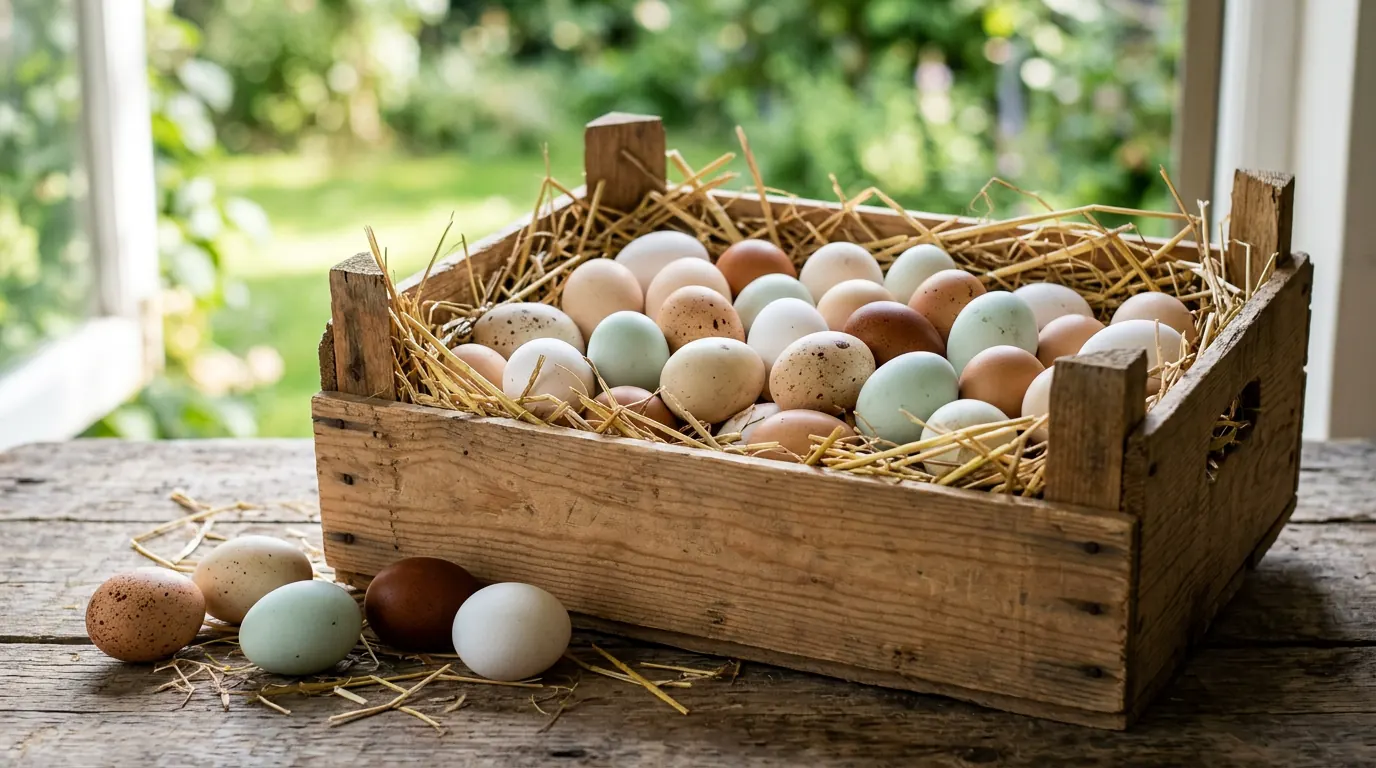
You can sell farm eggs legally if you meet the requirements of the sales route you choose. The most common route is RHD, which means selling products made on your farm directly to the final consumer. Selling to a shop, restaurant or wholesaler brings other requirements, including marking and veterinary supervision. You find act numbers and their publication details in ISAP (Poland's online database of legal acts). Confirm the current interpretation with your county vet (powiatowy lekarz weterynarii).
Why the rules apply even to small-scale sales
An egg spoils easily and, in poor conditions, can carry infection, including Salmonella. That is why the rules cover not only price and place of sale, but also shell cleanliness, storage, marking and records. A marking error or missing records can lead to an inspection and, in the worst case, a stop on sales. Below we go through the rules step by step, without numbers we cannot confirm.
RHD and selling eggs
What RHD covers
RHD covers selling farm products made on your own holding, with the producer selling directly. The buyer is a consumer, not the next link in the chain such as a shop. You can sell on the farm, at a market or in another place that meets the legal conditions. The act sets the range of products and the limits, so check the current text in ISAP before you start. We also describe selling poultry and eggs in our guide to selling poultry from the farm and in the entry on farm direct retail (RHD).
Notifying the authority
In practice, inspectorates expect the producer to notify the activity to the right authority before selling, usually the county vet. Do it before your first sale, not after your first inspection. Also ask whether your form of sale needs any extra registration. Keep the authority's reply with your farm documents, because you will need it at an inspection.
Marking hen eggs
What belongs on the egg
EU marking rules apply to egg sales: the shell carries the producer code and a mark for the hen housing method. Check the exact list of elements and how to print them in the current rules in ISAP. We cover the technical details in our guide to marking hen eggs. The mark must be legible and durable, not a sticker that falls off in transport.
Loose eggs and market sales
Rules for eggs sold directly to consumers can differ from those for eggs supplied to shops. Still, do not assume you can skip marking. Before your first sale, ask your county vet what marking looks like in your case. If you sell in cartons, check that the packaging also gives the required details about the producer and storage.
Egg quality at the point of sale
Collection and shell cleanliness
Collect eggs often, ideally several times a day, to cut the time they lie in the nest. Set aside dirty, cracked or damaged eggs and do not sell them. The rules on washing eggs are strict, so do not scrub them with water and a cloth on your own. On larger farms, mechanical collection helps, as does grading with an egg grader; see our guides on egg collection systems and egg graders.
Cooling and storage
Store eggs in a clean, cool, dry room, away from light and strong smells. Do not leave them in the sun at a market or in a hot car. Agree exact temperatures and storage times with your vet or in the instructions of your buyer. Hatching eggs have different requirements from table eggs, so do not mix them in one store. We cover this in our guide to storing hatching eggs.
Egg sales records
What to record for each sale
For every sale, record the date, the number of eggs, the lay or collection date of the batch and the place of sale. This shows where the eggs came from if anyone asks about their quality. Keep records in one place instead of several notebooks. A poultry farm management system lets you link collection, flock status and sales in one database.
Invoices and receipts
In retail sales to a consumer you often issue a receipt. You need an invoice when the buyer asks for one or when you sell to a business. The rules for electronic invoices come from the KSeF regulations (KSeF is Poland's national e-invoicing system). Check whether your sales need an invoice in KSeF before you issue the first document. The KSeF invoicing module can help.
Flock health and selling eggs
Stopping sales when the flock is ill
If the flock shows signs of disease, laying drops or test results worry you, stop selling eggs and contact your vet. Always leave diagnosis, treatment and the choice of medicine to the vet. Flock health supervision in Poland belongs to the Chief Veterinary Inspectorate (Główny Inspektorat Weterynarii), and EFSA publishes basic information on poultry diseases.
Withdrawal periods and eggs
After every treatment a withdrawal period applies, and you must not sell eggs during it. Your vet or the product leaflet gives the length, not a default rule. Record the date of treatment, the product name and the date the withdrawal ends. The treatment and withdrawal module helps, because it watches the deadlines before you sell.
Frequently asked questions
Can I sell eggs from my own farm without notifying anyone?add
No. Before you start selling, notify the activity to the right authority, usually the county vet. In practice, inspectorates expect this notification for RHD. Confirm the requirements before your first sale.
Do eggs sold at a market have to be marked?add
Marking rules also apply to direct sales, although their scope can differ. Do not skip marking until you confirm the requirements with the authority. The producer code and the housing method mark are the basic elements.
Can I wash eggs before selling them?add
Washing eggs is strictly regulated, so do not do it on your own. Set dirty eggs aside and agree cleaning rules with your vet. Keep nests clean to cut dirt on the shells.
How much do farm eggs sell for?add
The price depends on region, housing method, batch size and season, and on whether you sell directly or through a middleman. Market prices change often, so check them with local buyers and in trade publications. Do not set a price without knowing your feed and labor costs.
Can I sell eggs to a shop under RHD?add
RHD covers sales to the final consumer, so a shop or restaurant needs a different route and different documents. Ask the buyer and your county vet which form suits you. Do not assume an RHD notification is enough for wholesale.
How long can I store eggs before selling them?add
Storage time depends on conditions and the buyer's requirements, and your vet should give specific advice. The rule is simple: the sooner eggs reach a cool place after laying, the better. Record collection dates so you know which eggs are freshest.
Sources & resources
- linkChief Veterinary Inspectorate (Główny Inspektorat Weterynarii) — gov.pl/web/wetgiw
- linkInternet System of Legal Acts (ISAP) — isap.sejm.gov.pl
- linkMinistry of Agriculture and Rural Development — gov.pl/web/rolnictwo
- linkEFSA — efsa.europa.eu
Prepared by: DlaFerm Team based on data from the sources listed · Publisher: INSTA-TECH sp. z o.o.
Selling eggs from your farm? Keep sales and records in one place
The DlaFerm.pl <a href="/program-do-zarzadzania-ferma-drobiu">poultry farm management system</a> links collection, flock status and sales records, and the KSeF invoicing module helps with documents. Create a free farm account and see how it works on your farm.
Phone
+48 796 258 151