On-farm feed mill: mobile or stationary
A mobile feed mill comes to your farm and mixes feed on site. A stationary mill stands next to your silos and runs on its own schedule. The right choice depends on how many farms you run, how big your batches are and how often you issue feed. Below we compare both options on cost, mix quality, logistics and formal requirements.
verifiedFrom the team that has organised work on poultry farms for years.
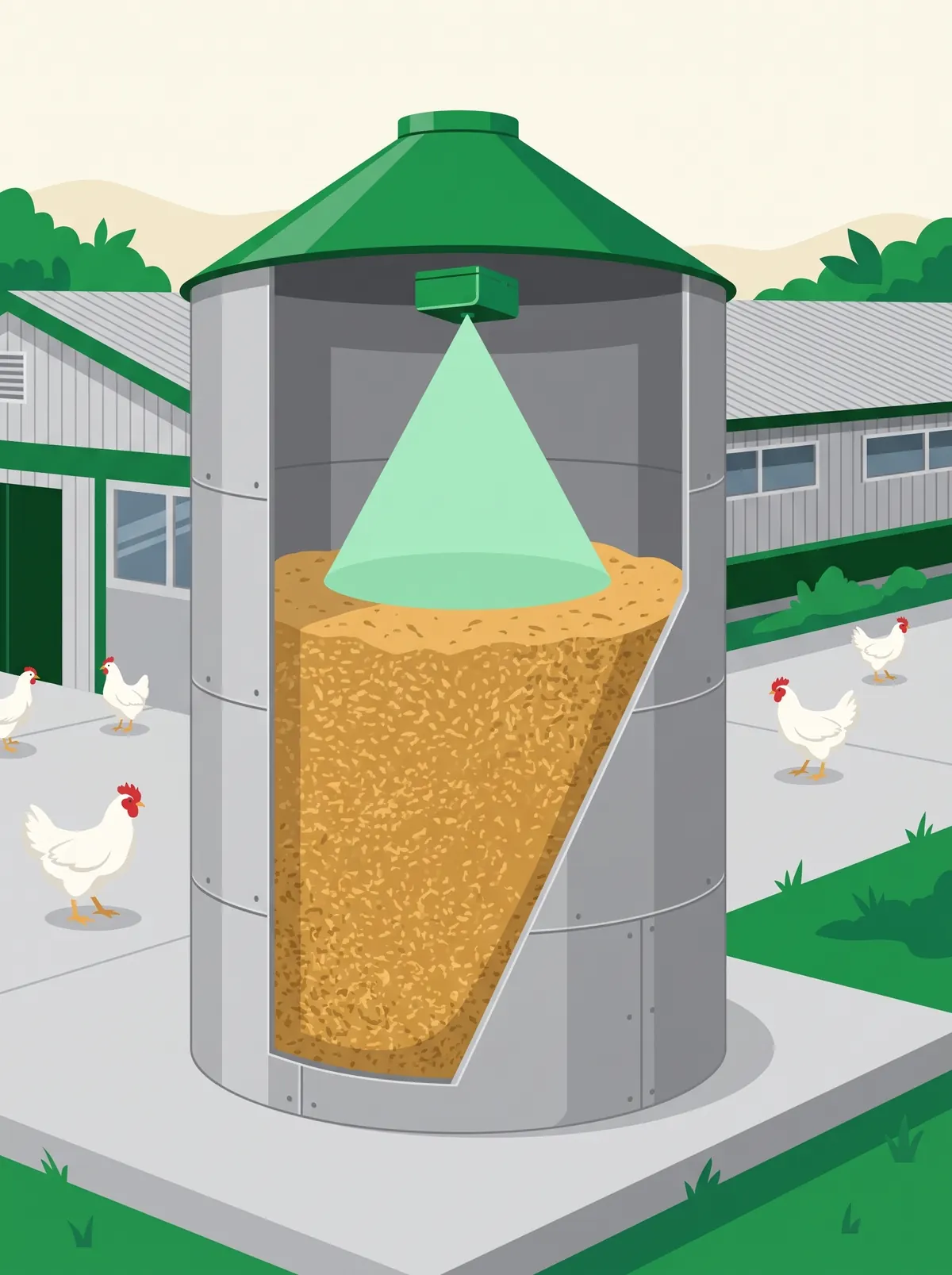
On a poultry farm with one site and a steady flock size, a stationary mill usually gives you more control over the process and a shorter time from ordering ingredients to issuing feed. A mobile mill works better when you mix feed from time to time, serve several sites or want to keep the investment small. There is no single right answer. What decides it is how many feed runs you need per week, the distance between the houses and the store, and whether you have silos and room for a vehicle to maneuver. For a general description of the machine, see our article on the feed mixer.
How the two options differ
A mobile mill is usually a unit mounted on a trailer or chassis. It drives up to your silos or store and works in one place for a set time. A stationary mill is an installation with a foundation, conveyors and a permanent power connection, linked to an ingredient store. Both need the same discipline: a written recipe, weighed ingredients and a record of every batch. They differ mainly in where and when the ingredients reach the mill, and in who handles the travel and the operation.
Cost and output of both options
Investment and running costs
A stationary mill needs a prepared site: a foundation, electrical installation, a roof and a link to the silos. This is a one-off cost spread over years of use. A mobile mill needs no building work, so it starts with a smaller outlay. But running costs include travel, operator time and possibly paying for an outside service. Prices depend on the size of the unit, its equipment and the region, and they change often, so we give no amounts. Compare offers from several suppliers and base your calculation on your own feed use.
Output and scheduling
A stationary mill works whenever you need it, because the ingredients sit in silos next to it. It handles frequent smaller batches well and lets you prepare feed just before a diet change. A mobile mill needs a plan: you have to book the visit, match it with the delivery of ingredients and prepare larger batches so the trip is worth it. With several farms nearby, one unit can serve them in turn. Feed intake depends on the age of the birds and on temperature, so you need to adjust the batch plan from time to time.
Recipe, dosing and checking composition
Dosing and flock uniformity
The Ross Parent Stock Management Handbook 2023 stresses that feed formulation and feeding management must go together to reach target body weight and flock uniformity. It covers parent stock, but the principle of checking composition applies widely. According to this handbook, you should take sub-samples of diets on the farm and run routine laboratory analysis to see whether the expected nutrient content is being achieved. A mobile unit changes location more often, so scale calibration and a record of each batch matter even more. Log batch data straight away in your poultry farm management software.
Energy values for broilers
According to the Ross 308 / 308 FF Broiler Nutrition Specifications 2022, feed energy for broilers with a target live weight of 2.0–3.5 kg is 2975 kcal/kg in the starter phase (0–10 days), 3050 kcal/kg in grower (11–24 days), 3100 kcal/kg in finisher 1 (25–39 days) and 3125 kcal/kg in finisher 2 (from day 40 to slaughter). The breeder says these values are a guide and must be adjusted to local conditions and regulations. The same document says withdrawal feed should meet local requirements for withdrawal periods. A vet always chooses the medicine and dose, and you record withdrawal dates in your treatment and withdrawal records.
Silos, delivery and feed issue
Stock and ingredient delivery
A stationary mill usually stands by the silos, so grain and meal travel a short way. A mobile mill needs space to maneuver the trailer and safe access, and ingredients often have to be hauled from a store. Keep a constant eye on silo levels, because an empty bin stops all feeding. Check stocks regularly and log levels in the feed silo monitoring module so you can plan deliveries ahead.
Feed issue and waste
According to the Ross Broiler Management Handbook 2025, with poor feed conversion you should check the feed formulation and quality and the feeder settings. The same handbook advises letting birds clear the feeders once a day from 10–12 days old. For you, this means the mill should supply feed on time, not build a stockpile. Oversized batches sit, lose freshness and increase waste. Compare feed use with weight gain in the FCR and EPEF online module.
Formal requirements, legal state as of 22.11.2026
What to check before you buy
Before starting a mill on your farm, check the veterinary oversight requirements and the rules for keeping feed records. The sources are the Main Veterinary Inspectorate (Główny Inspektorat Weterynarii) and the Internet System of Legal Acts (Internetowy System Aktów Prawnych, ISAP), where you find current texts of the law. We give no act numbers here, because requirements change and their scope depends on the type of activity. If you plan a stationary installation, also ask ARiMR (Poland's Agency for Restructuring and Modernisation of Agriculture) whether the investment can get support, and check the agency's current announcements.
Biosecurity with a mobile mill
A mobile mill drives into several farmyards, so it can carry pathogens on its wheels, in containers and on the operator's clothing. Set rules: entry only to a designated area, cleaning and disinfection after every farm, and no contact with the birds. A stationary mill has simpler rules, because it never leaves your farm. Write your safeguards in the biosecurity plan generator and agree them with your vet.
Which mill to choose
When to choose a stationary mill
A stationary mill makes sense when you issue feed regularly, have silos on site and run one farm or several close together. Then the investment pays back in the labor you no longer spend on travel. Consider it also when you want constant control of the process and have room for a building that meets the requirements. Before you decide, work out your feed use over a year and compare it with the output of the machine you plan to buy.
When to choose a mobile mill
A mobile mill suits you better when you issue feed from time to time, serve several farms or do not want to tie up capital in a build. Check that access and a maneuvering area are possible, that the operator will be free on the planned date and that the service mixes to your recipe. Start with what you actually want to produce, which means poultry feed mixes, and only then choose how to prepare them.
Frequently asked questions
Is a mobile feed mill cheaper than a stationary one?add
It depends on scale and use. A mobile mill needs a smaller investment because there is no building work, but you add travel costs and the effort of matching visits to deliveries. Compare yearly costs at your own feed use, not just the purchase price. Current amounts change, so ask several suppliers.
Does a mobile feed mill need veterinary approval?add
The requirements depend on the type of activity and the scope of feed production on the farm. Check them with the Main Veterinary Inspectorate and in ISAP, Poland's legal acts database, as of 22.11.2026. The surest answer comes from your county vet (powiatowy lekarz weterynarii), to whom you report the planned activity.
How do I check that a feed mix has the declared composition?add
Take feed samples and order routine laboratory analysis, as the Ross Parent Stock Management Handbook 2023 advises. Compare results with the recipe and record them for each batch. If results differ from the recipe, discuss the composition with a nutrition adviser.
How much energy should broiler feed have?add
The Ross 308 / 308 FF Broiler Nutrition Specifications 2022 give guide values for each phase, for example 2975 kcal/kg in the starter phase (0–10 days). These are guidelines, not a requirement. Adjust them to local conditions and to the advice of a nutritionist who knows your flock.
Does withdrawal feed need a separate mill?add
Withdrawal feed must meet local requirements for withdrawal periods, and the rules for issuing it are set by law and by your vet. A vet always chooses the medicine and dose. Record every batch and withdrawal date in your treatment records to avoid mistakes when issuing feed.
What decides between a mobile and a stationary feed mill?add
The main factors are the number of farms, how often you issue feed, whether you have silos and whether there is room to maneuver. A mobile mill suits occasional work and several sites, and a stationary one suits steady, large output on one site. Base your decision on your own feed use data.
Sources & resources
- linkRoss Parent Stock Management Handbook 2023 (Interactive)
- linkRoss 308 / 308 FF Broiler Nutrition Specifications 2022
- linkRoss Broiler Management Handbook 2025
- linkMain Veterinary Inspectorate (Główny Inspektorat Weterynarii) — gov.pl/web/wetgiw
- linkInternet System of Legal Acts (Internetowy System Aktów Prawnych) — isap.sejm.gov.pl
Prepared by: DlaFerm Team based on data from the sources listed · Publisher: INSTA-TECH sp. z o.o.
Want to keep feed stocks under control even with a mobile mill?
The silo monitoring module helps you plan ingredient deliveries, and batch records go into your farm log. Create a free farm account on DlaFerm.pl and see how it works on your own farm.
Phone
+48 796 258 151