Guinea Fowl and Duck Egg Incubation: Settings and Hatch Times
You hatch guinea fowl and duck eggs under the same basic conditions as chicken eggs: stable temperature, the right humidity and turning. The main difference is a longer hatch time than chickens. Below we describe the settings to watch and the mistakes that most often ruin a hatch.
verifiedFrom the team that has organised work on poultry farms for years.
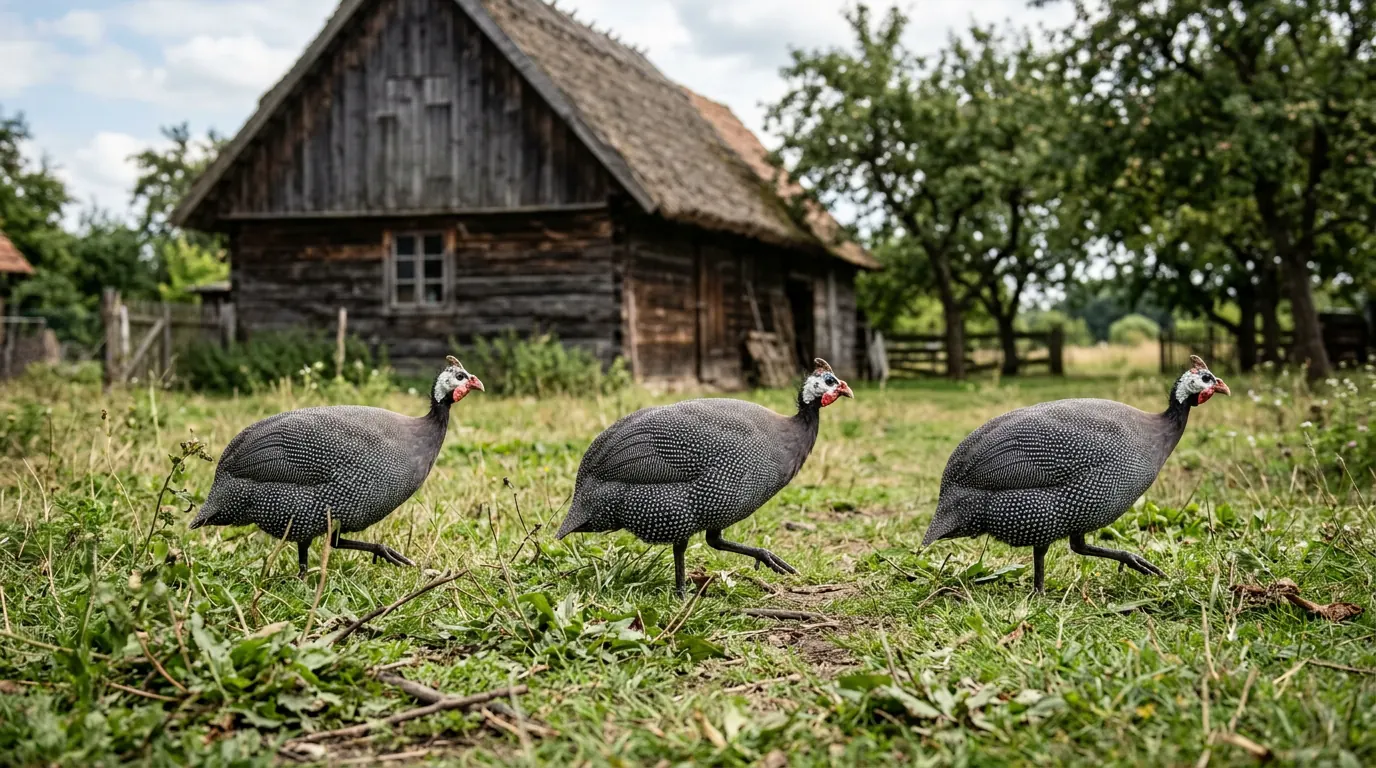
Incubating guinea fowl and duck eggs follows the same rules as incubating chicken eggs, but with a longer hatch period. Guinea fowl usually take about 26 to 28 days, Pekin ducks about 28 days, and Muscovy ducks can take as long as about 35 days. The exact time depends on breed and line, so before you set eggs, check it in species literature or with the breeder the eggs come from. The machine alone will not deliver a good hatch if you do not know these dates and do not keep records.
What is up to you in the incubator
A hatch depends on four things: temperature, humidity, egg turning and hygiene. Each setting has its tolerance, and deviations add up over time. According to the Ross Broiler Management Handbook 2025, incorrect incubation temperature and excessive moisture loss are common causes of poor chick quality and dehydration. The handbook covers broiler chickens, so treat this as a general principle, not a ready-made norm for guinea fowl. If you are just starting, choose an incubator with temperature and humidity control, because a cheap unit without stable control often spoils results.
Hatching eggs: preparing them before setting
Weight and shell quality
Egg size and shell quality affect hatchability. The Ross Parent Stock Management Handbook 2023 lists early egg weight, egg quality and the level of peak production as factors that influence hatch results in parent birds. So pick eggs of a weight typical for your flock, with no cracks, dirt or deformities. Very small or very large eggs are usually not the best material. The handbook covers chickens, so use it as a reference point for your own observations. Record egg weights from successive days, because they show the trend in the flock. If you are not sure how to tell the sexes apart in a breeding flock, see our guide on telling male and female guinea fowl apart.
Storage before setting
The Ross Broiler Management Handbook 2025 lists incorrect egg storage among the causes of poor chick quality: store temperature and humidity, and how eggs are handled during transport. In practice that means a clean, cool room that is not too dry, no exposure to sun, and setting the eggs quickly. Avoid washing eggs, because it removes the natural protective coating of the shell. Clean dirty eggs dry. Storing eggs too long lowers the chance of hatching, and the exact maximum time depends on species and conditions, so agree it with a vet or adviser. More in our guide on storing hatching eggs.
Temperature, humidity and turning
Temperature
Incubation temperature must be stable, not just correct at the moment you read it. The Ross Broiler Management Handbook 2025 links incorrect incubation temperature to a wide spread of hatch time and poor chick condition. Keep a control thermometer separate from the incubator display and compare readings at least once a day. After every change of setting, wait until the unit stabilizes. The target value for a given species comes from the equipment maker and species literature. If you are unsure, ask an adviser or a vet. Do not change settings during the hatch without a clear reason, because sudden swings disturb embryo development.
Humidity and weight loss
Eggs lose water through the shell during incubation. According to the Ross Broiler Management Handbook 2025, incorrect moisture loss and too wide a spread of hatch time lead to dehydrated chicks. In practice, checking weight loss helps: weigh some eggs at the start of incubation and check whether the loss falls within the range given by the equipment maker or species literature. Humidity that is too low dries the eggs out, and humidity that is too high limits drying. The right humidity for guinea fowl and ducks can differ, so run the two species in separate batches.
Turning eggs
Turning stops the embryo from sticking to the shell membrane. Turning by hand needs regularity, while automatic incubators do it on a set cycle. If you choose a unit with turning, check that the angle and frequency are adjustable. We describe the differences in our guide to the automatic incubator with turning. In the final stage of the hatch, turning is usually switched off according to the unit's instructions, and the eggs stay in a quiet place.
Hatch period and checks along the way
Counting days
The day of setting is day 0 in the batch record. From it you count the expected hatch date, using the range from species literature for guinea fowl and ducks. Write down the setting date in the format 18.03.2026 and label the batch: species, breed, number of eggs and source. Once the hatch date is in your calendar, you can plan to collect the chicks and prepare their place. The same record helps when you settle a batch and assess results. Keep entries in one place, not on slips of paper, because they are easy to lose. See also our guide to incubation day by day.
Candling
Candling, which means checking eggs with a torch, lets you remove infertile and dead eggs. Do it at several set checks, not just once. Eggs removed early do not take up space in the incubator and do not disturb conditions for the rest of the batch. Record results as numbers: how many eggs were set, how many removed at each check and how many died. After the hatch you then see at which stage you lose eggs, not just the final percentage.
Spread of the hatch
Chicks should not stay in the incubator too long, because those that have already hatched dry out. The Ross Broiler Management Handbook 2025 lists an excessive spread of hatch time and late removal of chicks as causes of dehydration. If eggs hatch over a very long window, check temperature and humidity from the previous days. Take chicks out once they are dry and give them time in a warmer, clean place before they go into the brooder.
Differences between guinea fowl and ducks
Hatch time
Guinea fowl and Pekin ducks hatch in a similar time, roughly four weeks. Muscovy ducks take clearly longer, about a week more than Pekins. Enter this time in the batch calendar separately for each species and breed. Do not assume the chicken incubation schedule will fit. In mixed batches the hatches drift apart, so it is better to incubate species in separate runs.
Humidity for duck eggs
Duck and guinea fowl eggs lose water at a different rate than chicken eggs, so keepers often choose humidity separately for each species. Muscovy ducks may need different humidity in the final phase than Pekins. Do not take these values on trust from forums. Compare them with the incubator maker's recommendations and species literature, and change them gradually, noting the effect on weight loss and hatch.
Feeding the breeding flock
The quality of hatching eggs depends on what you feed the flock. Guinea fowl have their own nutritional needs, described in our guide to feeding guinea fowl. For ducks, see feeding geese and ducks. Write down every feed change together with hatch results. If results drop after a feed change, check the data first, and only then change incubator settings.
An incubator for guinea fowl and ducks
Capacity and control
Choose an incubator for the number of eggs you really hatch per cycle, not for plans of a bigger scale. Before the first batch, run the unit for a few days without eggs and check that temperature and humidity stay within the set limits. Compare readings with your own thermometer. A home unit suits a small flock but needs more frequent checks. If you are just starting, read our guide to a homemade egg incubator and pay attention to what you can check and measure.
Matching the unit to the species
An incubator for duck and guinea fowl eggs should hold its settings steadily through the whole hatch period, including humidity control. When choosing, read our guide how to choose an egg incubator. Compare the temperature stability stated in the documentation and whether the maker describes how to calibrate. Do not choose a unit by price alone, because the cost of failed hatches quickly exceeds it.
Incubator hygiene and batch records
Cleaning between batches
After each hatch remove leftover shell pieces and damaged eggs, then clean and disinfect the incubator with a product approved for use in poultry keeping. Do not mix products without instructions, because residues can harm embryos in the next batch. When working with several species, do not carry dirt between trays. Clean the sensors and fans too, because a dusty fan changes the temperature distribution. Write the cleaning date in the unit's log.
Recording results and paperwork
A batch record is not a formality. Enter the setting date, species, number of eggs, candling results and the number of chicks hatched. The data lets you compare successive hatches and spot the moment results start to fall. If you sell eggs from your farm, we describe the rules on marking and sale in our guide to selling eggs from the farm. Check veterinary supervision duties on the website of the Chief Veterinary Inspectorate (Główny Inspektorat Weterynarii), and if in doubt contact your county veterinarian (powiatowy lekarz weterynarii).
Frequently asked questions
How many days do guinea fowl eggs take to hatch?add
Guinea fowl eggs usually hatch after about 26 to 28 days, depending on breed and line. Species sources and many keepers give this range, but check it with the source of your eggs before the first batch. Count from the setting date, not the laying date.
How many days does it take to incubate duck eggs?add
Pekin ducks usually hatch after about 28 days, and Muscovy ducks take longer, about a week more. The breeder or species literature gives the exact value for a particular breed. Do not mix species in one incubation run.
What temperature and humidity do guinea fowl and duck eggs need?add
The target values come from the incubator maker and species literature, and deviations quickly show up in the result. The most important thing is that temperature is stable and egg weight loss stays in the recommended range. If you are unsure about the settings, check them with a vet or adviser.
Why do eggs not hatch at the same time?add
An uneven hatch most often comes from temperature differences in the incubator, humidity that is too low or too high, or swings in settings during the hatch. The Ross Broiler Management Handbook 2025 lists an excessive spread of hatch time as a cause of chick dehydration. Check the logs from previous days and compare readings with a separate thermometer.
Can I hatch guinea fowl and duck eggs in the same incubator?add
You can, but not in the same run, because hatch times differ and the hatches will drift apart. Incubate species separately, each with its own schedule and record. Also compare humidity, because recommendations for each species can differ.
How long can I store eggs before setting them?add
The shorter, the better. The Ross Broiler Management Handbook 2025 links weak chicks to incorrect egg storage, meaning store temperature and humidity. The exact maximum time depends on species and conditions, so agree it with a vet or adviser, and in practice set eggs as soon as possible.
Sources & resources
- linkRoss Broiler Management Handbook 2025
- linkRoss Parent Stock Management Handbook 2023 (Interactive)
- linkChief Veterinary Inspectorate (Główny Inspektorat Weterynarii): gov.pl/web/wetgiw
- linkNational Research Institute of Animal Production (Instytut Zootechniki PIB): izoo.krakow.pl
Prepared by: DlaFerm Team based on data from the sources listed · Publisher: INSTA-TECH sp. z o.o.
Planning guinea fowl or duck hatches in several runs?
The Flock and cycle planning module helps you lay out setting and hatch dates in one place. Create a free farm account in DlaFerm.pl or get in touch, and we will show you how it works in practice.
Phone
+48 796 258 151