Male vs. Female Guinea Fowl: How to Tell Them Apart
You can tell a male guinea fowl from a female by the look of the head and wattles, by the call and by behavior, but only adult birds give a reliable answer. Chicks look very much alike, so we do not rely on the eye alone with them. Below we describe the signs to watch and say when it is better to ask for a sure assessment.
verifiedFrom the team that has organised work on poultry farms for years.
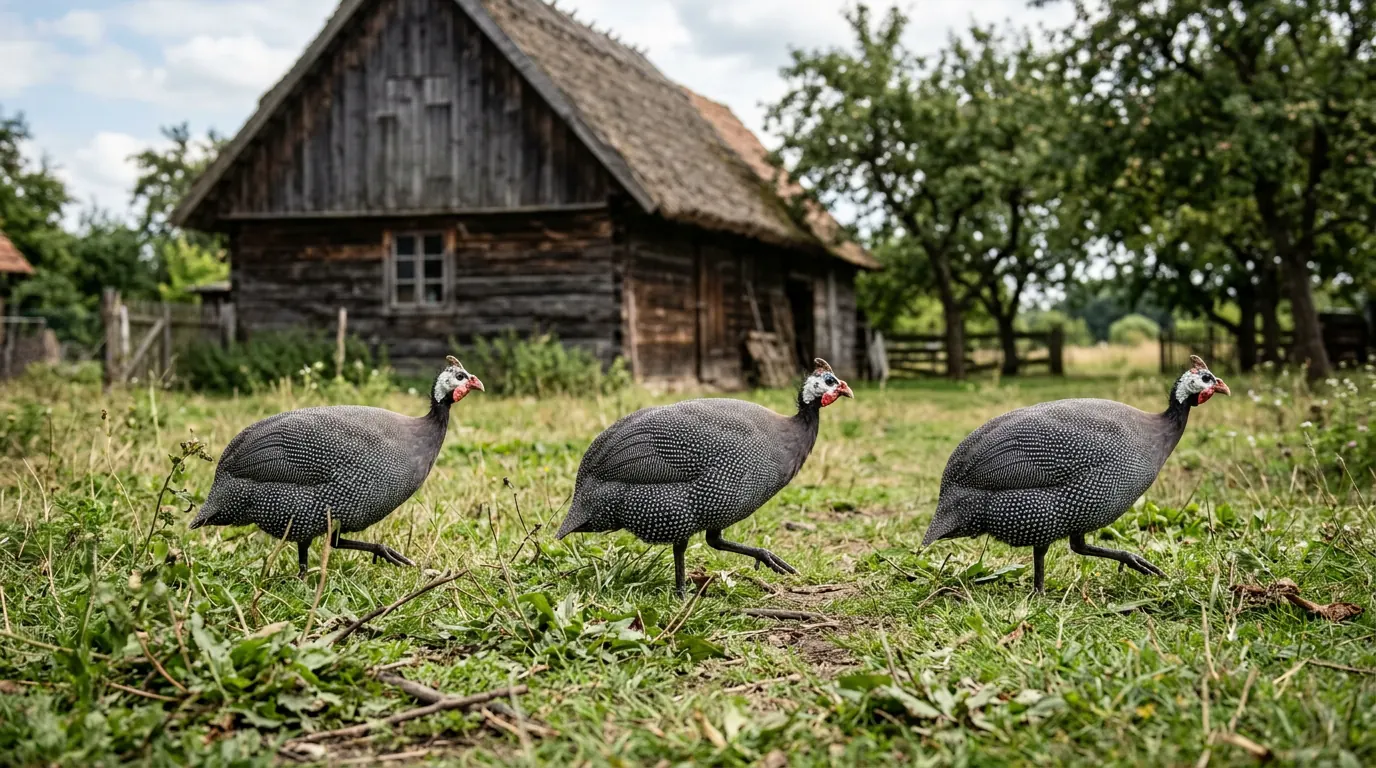
The surest way to tell male and female guinea fowl apart is the look of the head, the wattles and the call, once the birds are adult. Males usually have a more developed helmet and larger wattles, while females make loud, repeated calls. No single sign is certain on its own, so we judge them together. Before you start, it helps to know the basics of the species: guinea fowl keeping and facts covers the bird's biology and the main production types.
Why knowing the sex pays off
Knowing the sex of your birds affects the planning of the whole farm. You set stocking differently, keep records differently and read laying results differently. Many flocks keep fewer males than females, but the ratio is chosen for the purpose of the flock and the bird line. We give no specific number here, because it depends on conditions on your farm. Good records let you check later whether the make-up of the flock matches what you wrote down.
Helmet, wattles and build in adult birds
The helmet on top of the head
The helmet is the horny growth on top of the head. In adult males it is usually more developed, heavier and wider than in females. Compare birds of the same age group standing side by side, because differences are easier to see in a pair than in one bird. The helmet changes with age and condition, so a judgment based on an old photo can be wrong.
Wattles and build
Wattles are the folds of skin by the beak. In males they are often larger and more pronounced. In females they are usually smaller. This sign needs good light and a calm approach, because it is easy to miss when the bird moves. Males can also be a little heavier, but the difference in weight is small and depends on the breeding line, so do not treat it as proof of sex on its own.
Telling sex by call and behavior
The call
Female guinea fowl make loud, piercing, repeated calls, often described as "buck-wheat" or "kwa-kwa". Males are usually quieter and more often give shorter, whistling signals. You notice this most when the flock is active. Still, a single bird sometimes makes sounds that are unusual for its sex, so judge the call over several days, not one moment.
Behavior in the flock
Behavior differs in the flock. Males more often guard a spot and react to strange birds, while females more often look for a hidden place and hide when laying. These observations are only a guide. Write them down with the date and a short description, so you can later compare your conclusions with the assessment of looks. Do not feed the birds during observation, because it changes their behavior at the feeder.
Sex of young guinea fowl: why the eye is not enough
Guinea fowl chicks look very much alike. Differences in the helmet and wattles appear only with age, so judging sex by looks in young birds is unreliable. If you want to know the sex from the start, ask the hatchery whether it offers sexing, how it does it and whether the result can be confirmed.
When to ask for an assessment
A sure assessment of sex is done by a trained person or a laboratory. This matters most when you plan to choose birds for breeding. Leave the method to the specialist and check that the provider says how the result is confirmed. For bird health and any procedures, always consult a vet.
What knowing the sex gives you in managing the flock
Stocking and requirements
The make-up of the flock affects density in the house and the space needed on the range. Before you change stocking, check the species requirements in guinea fowl housing requirements and the guinea fowl stocking plan. Plan changes with a margin, so you do not crowd the flock during the season.
Feeding
Groups of birds can have different needs, especially in the breeding period. So when you set up the diet, it helps to know which birds are males and which are females. The details are in the article guinea fowl feeding. Discuss changes in the feed with someone who knows your flock and your production results.
Sex records
Record the sex for each bird or group, with the date of the first assessment and the name of the person who made it. In the farm management software you keep flock records in one place, which makes it easier to check changes. When birds are lost, the record helps you work out which bird it was and what sex it was.
The most common mistakes in sexing guinea fowl
Judging by one sign
The most common mistake is calling a bird a male just because it has a more pronounced helmet or a louder call. Signs can overlap, especially in younger birds or birds in poor condition. Judge several signs at once and compare birds side by side, not each one alone.
Judging at the wrong moment
Haste when catching birds and stress change their looks and behavior. Judge calmly, in good light and without long chasing of the flock. Injuries from pecking, described in cannibalism in guinea fowl, can hide the helmet and wattles. If a bird is sick or weak, first talk to a vet about its condition.
No records
A sex assessment kept only in your memory fades fast. Without records you cannot compare results with previous months or find the cause of losses. Set a fixed way of recording and keep to it at every check of the flock.
Frequently asked questions
How do you tell a male guinea fowl from a female?add
Most reliably by the helmet and wattles in adult birds standing side by side. Males usually have a more developed helmet and larger wattles, while females make louder, repeated calls. A single sign is not enough, so judge several at once.
Can you tell the sex of a guinea fowl by its call?add
In many cases yes, but not always. Females usually make a loud, piercing sound, and males quieter and shorter signals. Judge the call over several days, because single sounds can mislead.
How do you sex young guinea fowl?add
Chicks look very much alike, so a judgment by eye is usually not reliable. Ask the hatchery about sexing and how it confirms the result. For health matters, consult a vet.
At what age can you see the difference between male and female guinea fowl?add
Differences in the helmet and wattles appear with age, so in young birds they are hard to read. When the signs develop depends on the line and the rearing conditions, so we give no specific age. Judge birds that have clearly developed.
Are male guinea fowl bigger than females?add
Males can be a little heavier, but the difference in weight is small and depends on the breeding line. Do not treat weight as proof of sex on its own. Compare birds of the same age group.
How do you record the sex of guinea fowl in farm records?add
Record the sex for each bird or group, with the date of assessment and the person who made it. Set a fixed format. This makes it easier to compare the flock make-up with results and to find the cause of losses.
Sources & resources
- linkNational Research Institute of Animal Production (Instytut Zootechniki PIB) — izoo.krakow.pl
- linkChief Veterinary Inspectorate (Główny Inspektorat Weterynarii) — gov.pl/web/wetgiw
- linkEFSA — efsa.europa.eu
- linkMinistry of Agriculture and Rural Development (Ministerstwo Rolnictwa i Rozwoju Wsi) — gov.pl/web/rolnictwo
Prepared by: DlaFerm Team based on data from the sources listed · Publisher: INSTA-TECH sp. z o.o.
Do you keep guinea fowl and want the make-up of your flock at hand?
In the DlaFerm.pl farm management software you record the sex of your birds and changes in the flock in one place. Create a free farm account and see how it works in practice.
Phone
+48 796 258 151