Automatic egg incubator with turning: how to choose
An automatic incubator holds temperature and humidity in the chamber and turns the eggs at set intervals. When you choose one, three things matter: a capacity that fits your batches, reliable control of the settings and a turning mechanism that works. Below we explain what to check before you buy and while the machine runs.
verifiedFrom the team that has organised work on poultry farms for years.
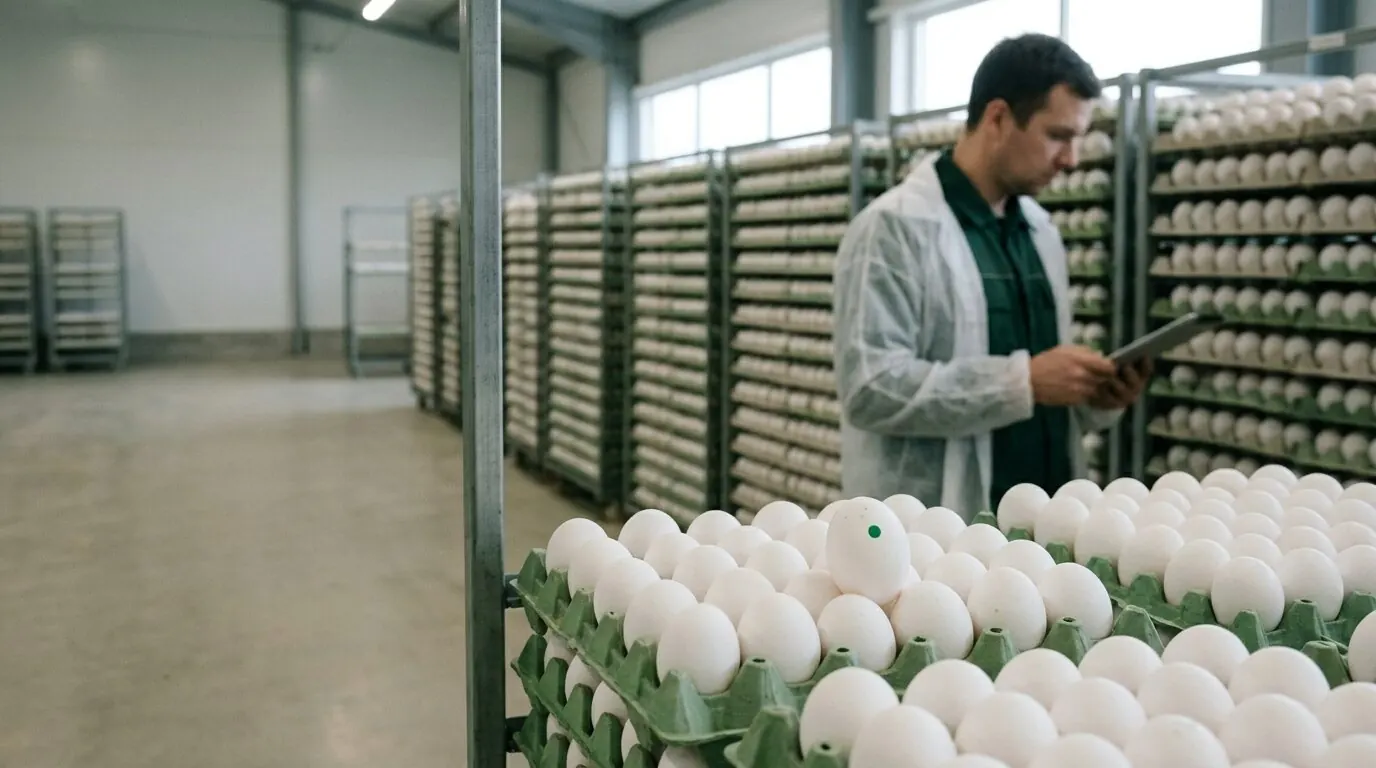
An automatic egg incubator holds temperature and humidity on its own and turns the eggs at set intervals. Start by checking that turning works without your help, how evenly the chamber heats and whether the controller lets you set humidity precisely. A model with turning saves you from moving the eggs by hand every day, a job that is easy to skip with a larger batch. We also cover the basics of hatching in our guide to egg incubators.
Why turning the eggs matters
If an egg lies still for long, the embryo can stick to the shell membrane. That is why eggs are turned regularly through the day, usually every few hours. An automatic machine does this on the cycle you set on the controller, without opening the chamber and without a break at night. In the last phase of incubation turning usually stops, as the manual for your model says. When you choose a machine, check that the maker describes this stage and that you can set it by hand.
What to check before you buy
Capacity and batch pattern
Judge capacity in chicken eggs, because makers often quote it for another species or for a different egg layout. Think about whether you set eggs in one batch or every week. If you set often, a smaller model or two chambers works better than one big incubator that fills only once every few months. An empty part of the chamber changes conditions for the other eggs, so do not buy a large machine for a small batch without a reason.
Temperature and humidity control
The controller should show actual values and let you correct them. The panel reading does not always match conditions at the eggs, so check the thermometer and hygrometer with your own independent instrument in several places in the chamber. Humidity is the setting keepers get wrong most often. You will find details in our guide to setting humidity in an incubator.
Egg turning in practice
Types of mechanism
You will most often meet motor-driven rotating trays and frames that tilt the whole batch one way and then the other. When you assess a model, check that all the eggs turn the same way, that the mechanism does not jam with a full load and that the trays come out easily for washing. Also check whether the machine restarts its cycle by itself after a power cut or needs a manual restart.
Checking that the machine works
A turning failure can go unnoticed for hours. At each check, see whether the eggs have changed position, and keep the records from setting day in one place so you know which batch is at which stage. We describe the day-by-day plan in our guide to egg incubation day by day.
Temperature, humidity and ventilation
Temperature for chicken eggs
Incubation of chicken eggs usually lasts 21 days. Over that time the controller should hold a steady temperature close to the values used in breeding practice. Do not copy values from another model or from a forum without checking your own manual. We describe the hatching stages step by step in our guide to incubating chicken eggs.
Ventilation and fresh air
A developing embryo needs air exchange, so the chamber must have open inlets and outlets. A sealed incubator makes hatching conditions worse. Check that you can adjust the vents without opening the lid during the hatch, because every opening changes temperature and humidity in the chamber.
What affects the hatch result
Storing eggs before setting
According to Aviagen (Ross 308 / 308 FF Broiler Performance Objectives 2022), good chick quality starts with good management of hatching, egg storage and transport. Keep eggs at a steady, cool temperature in a clean room, and discard cracked or dirty eggs before setting. More in our guide to storing hatching eggs.
Assessing the hatch afterwards
When the hatch ends, count the unhatched eggs and note the causes: dead embryos, cracked shells, weak chicks. These figures show whether the problem lies in the incubator, in the eggs from the flock or in storage. Enter batch results in your records, for example in the DlaFerm coop records module, so you can compare results after a few cycles.
The purchase price is not the whole cost
What the price depends on
The price depends on capacity, type of turning, type of control and how the casing is made. We give no amounts, because they change often. Compare current offers from two or three sellers and ask for the technical data in writing, including the range of temperature and humidity control.
Power, parts and service
Estimate energy use over a long run across the whole hatch, the cost of replacing the heater, sensors and turning motor, and the delivery time for parts. Ask the seller about the warranty and who does servicing in your area. A machine whose parts take weeks to arrive can wreck your whole setting plan on the farm.
Frequently asked questions
Do I need an incubator with egg turning?add
You do not need one, but with larger batches it is more convenient and more reliable. An automatic machine turns the eggs regularly and never skips a turn. Turning by hand means opening the chamber several times a day, and that changes temperature and humidity.
How do I choose an automatic egg incubator?add
Start with a capacity that fits your planned batches. Then check temperature and humidity control, the turning mechanism and whether service is available. Ask for the technical data in writing and compare it with your own needs.
How much does an automatic incubator with turning cost?add
We give no amount, because prices change often. They depend on capacity, controls and equipment. Check current prices with sellers and in makers' offers, and add the cost of power and parts when you buy.
How many days does chicken egg incubation take?add
In a typical hatch, chicken eggs incubate for 21 days. Other poultry species take different times, so check the material for the species you keep. Set the exact schedule from your machine's manual.
Can an incubator run without ventilation?add
No. The chamber needs air exchange through inlets and outlets, because the embryos need it. Do not change the vent settings during the hatch without a clear reason, and ask the maker if you are unsure.
How often should I turn eggs in an incubator?add
Eggs are turned several times a day, and an automatic machine usually does it every few hours on the cycle you set. In the last phase turning usually stops, as your model's manual says. Check that the mechanism works for the whole hatch.
Sources & resources
- linkRoss 308 / 308 FF Broiler Performance Objectives 2022
- linkNational Research Institute of Animal Production (Instytut Zootechniki PIB) — izoo.krakow.pl
- linkChief Veterinary Inspectorate (Główny Inspektorat Weterynarii) — gov.pl/web/wetgiw
Prepared by: DlaFerm Team based on data from the sources listed · Publisher: INSTA-TECH sp. z o.o.
Planning more settings through the year?
The DlaFerm module for <a href="/planowanie-wstawien-i-cyklu">planning flock placements and cycles</a> keeps your setting and hatch dates in one place. Create a free farm account and see how it works in practice.
Phone
+48 796 258 151