Chickens on pasture: how to raise pasture-raised chickens
Pasture-raised chickens get daily access to grass and spend the night in a closed coop or a movable pen. This system lengthens the grow-out and takes more work on the range, the fencing and flock health. We explain when to let chicks out, how to rotate the pasture and what to watch in your records.
verifiedFrom the team that has organised work on poultry farms for years.
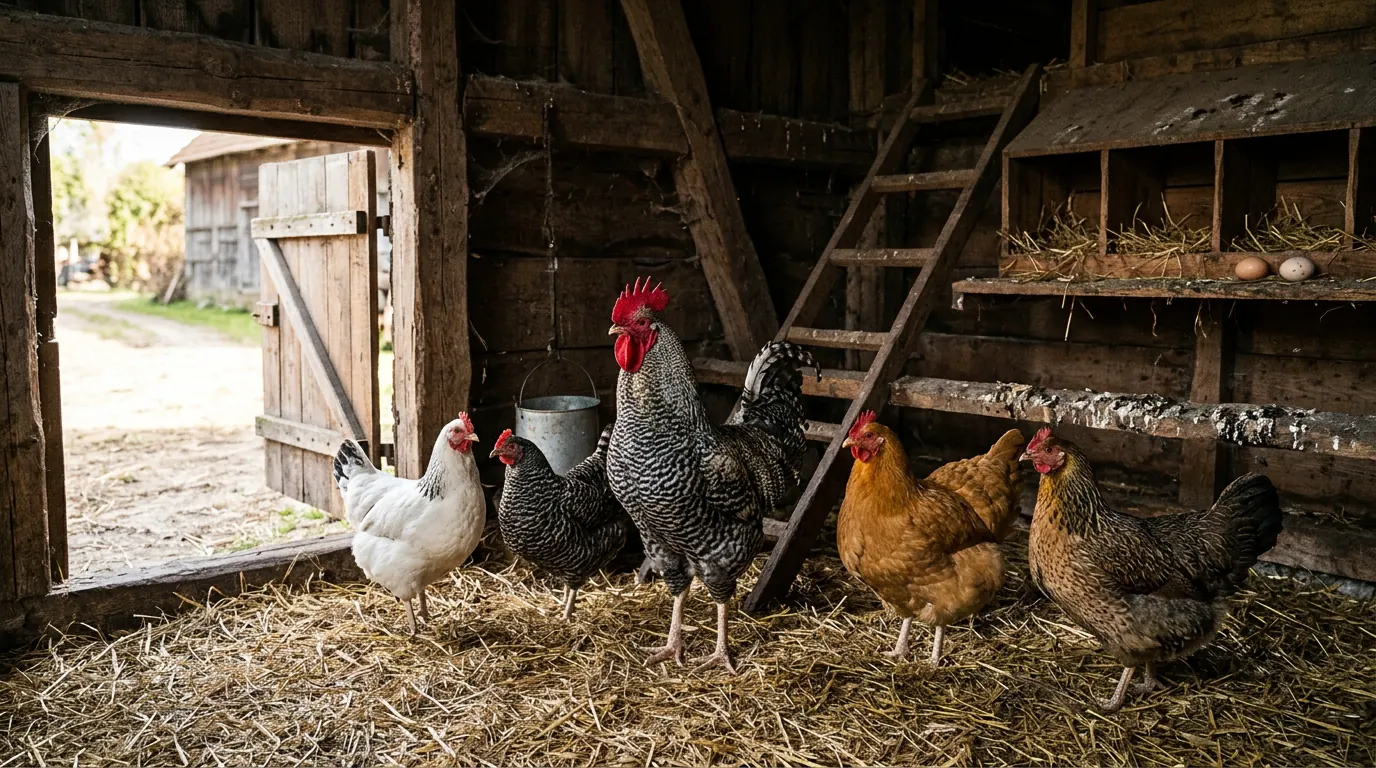
Raising chickens on pasture means that after brooding in a heated room, the chicks go out on the grass during the day and return under a roof or to a movable pen at night. The system gives birds exercise and access to greens, but they gain weight more slowly than in intensive production. Slow-growing birds, described in our article on slow-grow chickens, suit it well because they cope with the range better than fast-growing broilers.
Why growth rate matters
The Ross 308 / 308 FF Broiler Performance Objectives 2022 table gives an intensively raised broiler about 214 g at day 7 (0.471 lb) and about 2.06 kg at day 34 (4.544 lb). These values describe production in controlled conditions, not pasture, so expect slower gain on the range and do not compare results directly. We converted the values from pounds to grams (1 lb = 0.4536 kg). The takeaway for you is simple: record weight and gain every week, because only your own measurements show whether the flock is on plan.
When to let chicks out on pasture
Brooding under a roof
At first, chicks need warmth and controlled temperature, so they spend the first weeks in a brooder with a heat lamp. Plan the move outside for when the birds are well feathered and eat and drink on their own. Check the weather and temperature on the day you let them out, and keep the flock inside on a cold, windy day. We cover heating in the article on the brooder and heat lamp for chicks.
The first days on the range
On the first day, open the range for a short time and check that the chicks return to the coop at night. Extend the time outside step by step, watching how the flock behaves. Keep water and feed available on the range too, in a shaded spot, so birds do not overheat in the sun. Do not mix new groups with older birds, because the age gap leads to fights over space and access to the drinker.
Fencing and pasture rotation
Fencing
The range must protect birds from predators on the ground and from the air. Bury the netting or fold it outward so a fox cannot get underneath, and use a cover that partly protects against birds of prey. Movable pens, shifted every few days, work well for smaller flocks. Grazing cattle follows similar rotation and stocking principles, so ideas from the article on grazing cattle on pasture will help you plan your plots.
Rotation and stocking
Change plots before the grass is trampled down to bare soil. Birds eat the greens and scratch the ground, so mud and droppings build up quickly in one place, and with them the risk of disease. Set the number of birds per hectare from your observation of the pasture and your experience, not from a ready-made formula. After the flock leaves a plot, give it time to regrow. Record the dates you move, so you know when to return to a given spot.
Feed and supplements on pasture
Complementary feed
On pasture, chicks eat some greens and insects, but this does not replace a full ration. Keep feed in the feeder all day, away from rain and rodents. Record changes in the recipe and amounts, because this makes it easier to assess growth and costs later. When comparing results, convert feed use to feed per kilogram of gain. In DlaFerm, the FCR and EPEF online module does this.
Vitamins and minerals
Vitamin supplements are usually given in water, but the dose and timing are chosen by a vet or a nutrition adviser, not by the keeper by eye. Giving them too long or overdosing harms as much as a deficiency. We describe the schedule and examples in the article on vitamins for chickens and laying hens. Record what you gave and when, because it matters during a flock inspection.
Vaccination, treatment and withdrawal periods
Vaccination calendar
A vet sets the vaccination program for your flock and region. Birds on the range may face different risks than birds kept indoors, because they meet wild birds and standing water. Record the vaccination plan with the date, the vaccine batch and the person who did the job. You will find a calendar for a backyard flock in the article on vaccinating chickens in a backyard flock, but in a commercial flock the vet makes the decisions.
Withdrawal period after treatment
Every medicine has a withdrawal period: the time from the last dose until meat or eggs are safe to sell. The vet chooses the medicine and dose, and the keeper is responsible for observing the withdrawal period set for that product. On pasture it is easy to make a mistake when part of the flock stays on the range and part in the coop, so record which group was treated. It is best to keep these records in one place, for example in the treatment and withdrawal period module.
Predators, weather and biosecurity
Predators
Foxes, hawks and dogs usually cause the biggest losses on the range. Check the fence every few days, especially after a storm and after nights with strong wind. Shut the birds in the coop no later than dusk and open it only after dawn. Record the bird count at every closing, because a difference in numbers is the first sign of a loss.
Biosecurity on the range
The range is not sterile. Wild birds, rodents and outside visitors can carry pathogens. Limit access for outsiders, set a clean zone and change footwear at the coop entrance. You can prepare a plan for these steps in the biosecurity plan generator, and it is worth logging farm visits as they happen.
What to check in the rules and your records
Legal status
Poultry keeping rules come from national law, and the current text is published by ISAP (Internetowy System Aktów Prawnych, Poland's online database of legal acts). Check the legal status as of 22.11.2026 in ISAP and in the announcements of the Chief Veterinary Inspectorate (Główny Inspektorat Weterynarii). Do not rely on rules from memory. Before you start, talk to the county veterinary officer (powiatowy lekarz weterynarii) about the range requirements in your case, because in practice the inspectorates mainly assess compliance with documentation.
Litter and waste
The Ross Broiler Management Handbook 2025 recommends not storing litter on the farm or spreading it on land next to the farm. It also recommends removal to a distance of at least 3.2 km from the farm, in line with local law. These rules describe intensive production, but waste control matters on pasture too. Check the local requirements and record where and when the litter was taken away.
Frequently asked questions
When can chicks go out on pasture?add
Decide based on feathering, the age of the birds and the weather. Chicks must eat and drink on their own, and the temperature on the day you let them out must not endanger young birds. If in doubt, keep the flock under a roof for a few more days.
Do pasture-raised chickens grow as fast as broilers?add
Usually not. The Aviagen tables for Ross 308 cover intensive production, where birds get constant feed and controlled conditions. On pasture, gain is slower, so compare results with your own measurements from earlier cycles.
How many chickens can you keep on one range?add
Set the number based on area, type of pasture and flock health, not on one universal norm. Watch how trampled the grass is and the state of the soil, because this shows fastest that stocking is too high. If in doubt, ask an adviser or a vet to assess it.
Do pasture-raised chickens need vaccinations?add
A vet sets the vaccination program for the specific flock. Birds on the range may be more exposed to wild birds and standing water, so the plan needs separate thought. Record every treatment.
How do you protect chickens from foxes on the range?add
Start with a fence that is buried or folded outward, because a fox looks for a way in near the ground. Shut the birds in the coop at night and check the netting after every storm. Record the bird count at closing to spot a loss quickly.
Do you have to report pasture-raised poultry to the authorities in Poland?add
Duties depend on the size and type of production, so check them in the current rules in ISAP and with the county veterinary officer. Do not assume the rules are the same as for backyard keeping. You will find information on support programs on the website of ARiMR (Poland's Agency for Restructuring and Modernisation of Agriculture).
Sources & resources
- linkRoss 308 / 308 FF Broiler Performance Objectives 2022
- linkRoss Broiler Management Handbook 2025
- linkChief Veterinary Inspectorate (Główny Inspektorat Weterynarii) — gov.pl/web/wetgiw
- linkARiMR — gov.pl/web/arimr
- linkInternet System of Legal Acts (ISAP) — isap.sejm.gov.pl
Prepared by: DlaFerm Team based on data from the sources listed · Publisher: INSTA-TECH sp. z o.o.
Running a pasture flock and want your data in one place?
The digital flock record module keeps your broiler flock data on one card, and the treatment and withdrawal period module tracks the deadlines. Create a free farm account on DlaFerm.pl and see how it looks for your own flock.
Phone
+48 796 258 151