Fowl pox in chickens: symptoms and vaccination
Fowl pox is a viral disease of the skin and mucous membranes. It occurs in a skin form and a membrane form, and vaccination is the main way to prevent it. If a flock shows signs, first isolate the sick birds and talk to your vet.
verifiedFrom the team that has organised work on poultry farms for years.
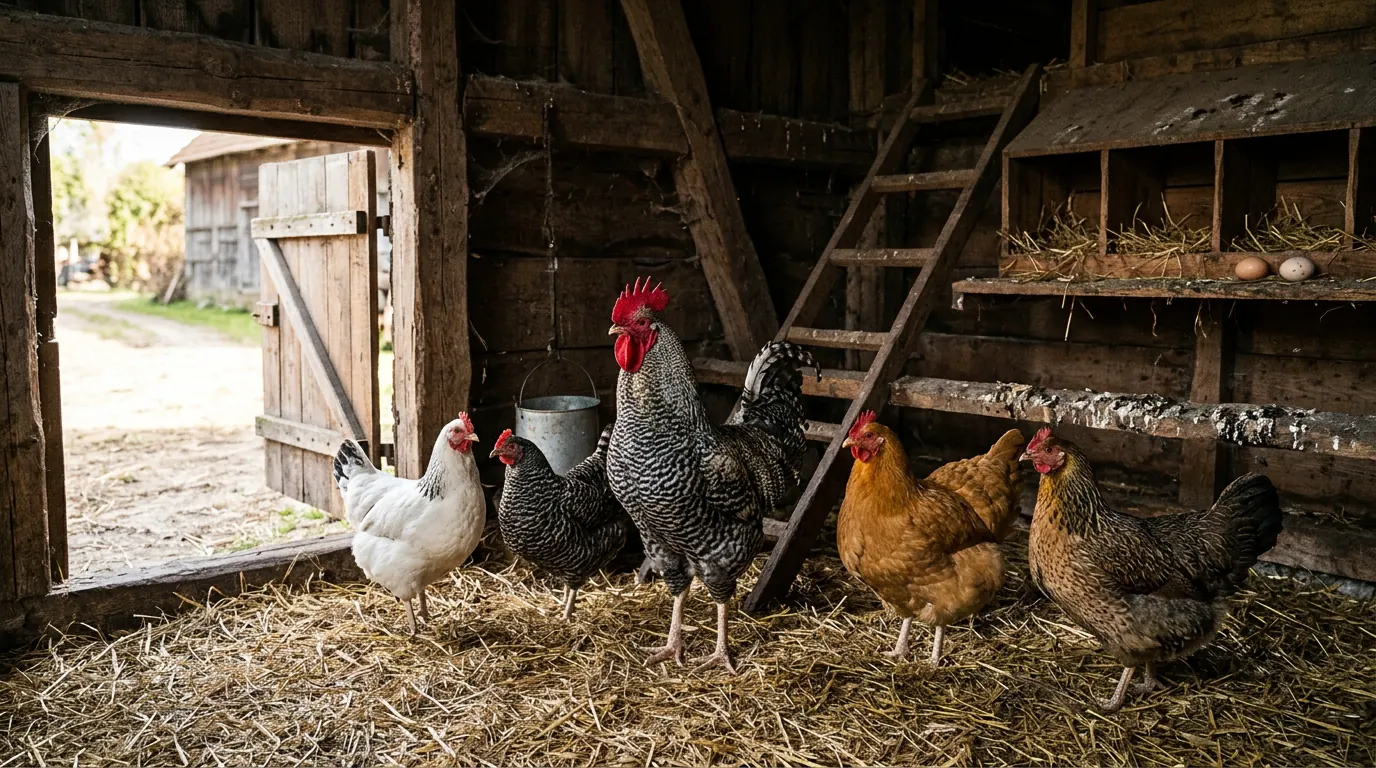
Fowl pox (avian pox) is a viral disease of the skin and mucous membranes caused by viruses of the genus Avipoxvirus. Poultry of any age can get it, and it hits young birds and flocks with weak immunity hardest. Vaccination is the best protection. On a farm where the disease has already appeared, the key steps are to isolate sick birds and call a vet quickly. You need to tell fowl pox apart from other diseases that cause lesions on the comb and in the mouth, for example Marek's disease, which runs a different course.
Two forms of the disease
Fowl pox occurs in two forms. The skin form causes wart-like lesions or scabs on bare parts of the body: the comb, the chin, the earlobes and around the eyes. They turn brown and fall off over time. The membrane form, also called wet or diphtheritic pox, settles in the mouth, throat and upper airways. Yellowish, cheesy deposits form there and make it hard to breathe and eat. Both forms can occur in the same flock at the same time. The course depends on the birds' immunity, their age and any secondary bacterial infections.
How the disease spreads
The virus passes through direct contact between healthy and sick birds, and through contaminated surfaces, equipment and litter. Insects, especially mosquitoes, are an important route because they can carry the infection from bird to bird. The virus survives in the environment for a long time. Disinfection after an outbreak is not enough unless you also remove sources of infection and limit contact with insects.
How to recognize fowl pox in a flock
Skin lesions
The first sign is often small red bumps on the comb, wattles and around the eyes. Over the following days the bumps grow, form scabs and may merge into larger, dark lesions. Birds with large lesions on the head eat less, look dull and often stay away from the rest of the flock. Lesions usually heal slowly, and scars can stay for a long time. Check your birds every day, especially when insects are around. Write down every new lesion with the date, as it helps when you talk to your vet later.
Lesions in the mouth and throat
The membrane form often starts with a light cough, noisy breathing and discharge from the beak. When you open the beak you can see yellowish deposits on the mucous membrane. The bird may struggle to swallow, lose appetite and lose weight. Lesions in the throat make breathing harder and in extreme cases lead to suffocation. This picture is easy to confuse with a respiratory infection or an eye infection. So at the first worrying signs always talk to a vet rather than diagnose by looking from a distance.
Eye signs
Fowl pox can affect the eyelids and the area around the eye, causing swelling, watering and stuck eyelids. This looks like conjunctivitis in chickens. To tell them apart, look at the whole flock: with fowl pox, lesions on the skin and in the mouth usually appear in more birds and show up in stages. An eye lesion alone is not enough to name the cause.
Fowl pox vaccination: how it works and when to use it
How the vaccine works
Fowl pox vaccines contain a weakened virus or preparations made from it. They are usually given by puncturing the skin on a bare spot, most often the inner side of the wing. After the procedure a small lesion forms at the puncture site. It shows the virus is multiplying and immunity is building. For full protection, store the vaccine correctly, dilute it as the leaflet says and have a trained person do the vaccination. The lesion at the vaccination site is not a sign of disease, but note the date so you can tell it from real pox.
When to vaccinate
You set the date with your vet, taking into account the birds' age, the type of production, the disease situation in your area and the flock's history. Birds are usually vaccinated before the period of higher risk, that is before the insect season, and before they go into lay. Keep in mind that vaccination does not guarantee complete protection. Its success depends on the quality of the vaccine, the condition of the birds and correct application. Check the product leaflet for advice on age groups and any contraindications.
Cost of vaccination
The price of a vaccine depends on the type of product, the pack size and the supplier, and on whether a vet or the keeper does the job. Prices change over time, so we give no amounts. Check current prices with a distributor or at a vet clinic. When you plan your spending, compare the cost of vaccination with the cost of losing a flock. We cover the details in the article on poultry vaccines: types and price.
What to do if you suspect fowl pox in your flock
Isolation and reporting
Separate sick birds from the rest of the flock and limit access to the area where they are kept. Limit the movement of equipment, feed and litter between buildings. Contact your vet, who will decide on the next steps. You report a suspected infectious disease of poultry to the competent veterinary services. Information on duties and procedures is on the website of Poland's Chief Veterinary Inspectorate (Główny Inspektorat Weterynarii). Do not wait for confirmation if birds are dying in large numbers or the lesions are spreading fast.
Symptomatic treatment
Fowl pox itself has no cause-based treatment. Your vet may advise symptomatic care, including support when birds struggle to eat and breathe, and treatment of secondary bacterial infections. The vet always chooses the medicine and dose, not the keeper working from a forum post. For every product given, find out the withdrawal period for meat and eggs. Record every treatment so that you know when products can be used once the course ends. The Treatment and withdrawal periods module helps with this.
Stopping the spread
After a case of fowl pox, step up disinfection of equipment, change footwear and clothing at the house entrance and limit visits from outside. Make sure staff do not carry the infection between buildings. When the disease is over, plan a thorough clean and a proper empty period before new birds arrive. The virus can survive in the environment for a long time, so do not shorten empty periods without asking your vet.
Lowering the risk of fowl pox in the house and on the range
Insect control
Because mosquitoes can carry the virus, reduce the places where they breed. Remove standing water near buildings, fit screens on windows and fans, and check that doors seal well. Insect control is not fully effective, but it clearly lowers the risk of infection. A well-planned house makes this easier and keeps down the damp that insects like. You can read more about building requirements in the article on poultry house requirements for laying hens.
Biosecurity
Biosecurity is a set of rules that keep the flock away from sources of infection: control of entry, change of clothing, disinfection of vehicles and equipment, and quarantine for new birds. Consistency matters at every entry to the farm, because even one person without protection can carry the virus. Write the rules into a plan and show it to your staff. The Biosecurity Plan Generator in DlaFerm walks you through the plan step by step.
Range and contact with wildlife
On the range, limit contact between poultry and wild birds and rodents. Fencing, closed runs and control of feed spilled outside lower the risk of infection. Wild birds can carry many diseases, so protecting the range is part of a wider strategy and not only a safeguard against fowl pox.
Records of vaccinations and events on the farm
What to record
For every vaccination, note the date, the group of birds, the number of birds vaccinated, the name and batch number of the vaccine and who did the job. For every case of suspect lesions, note the first signs, the number of sick birds and the action taken. This information also helps later when you analyze the flock's production results.
Tools for keeping records
You can keep records in a notebook, but in larger flocks it is easier to make mistakes and lose data. The Poultry house records module lets you log events building by building, and the digital flock card organizes a group's history from placement to sale. You can link vaccination and withdrawal data with the farm management software, which collects all records in one place.
Frequently asked questions
Is fowl pox in chickens dangerous to humans?add
Fowl pox is caused by bird-related viruses and usually does not pass to people. Still, always follow hygiene rules, wash your hands and change clothes after working in the house. If in doubt, ask your vet.
How do you tell fowl pox from other chicken diseases?add
Fowl pox causes typical lesions on the comb, around the eyes and in the mouth. Other diseases can look similar, such as respiratory infections or Marek's disease. A vet confirms the diagnosis and may order lab tests.
Does the fowl pox vaccine give full protection?add
Vaccination clearly lowers the risk of disease and how bad the signs are, but it does not guarantee full protection. Success depends on the quality of the vaccine, the condition of the birds and correct application. Agree the vaccination plan with your vet.
Can you treat fowl pox with antibiotics?add
Antibiotics do not work on viruses, but a vet may order treatment for secondary bacterial infections. The vet chooses the medicine and dose, not the keeper. With every product, keep to the withdrawal period for meat and eggs.
How long is the flock at risk after the disease?add
The virus can stay in the environment for a long time, so the risk does not end when the lesions heal. After the disease, plan cleaning, disinfection and empty periods. Agree the date for restocking with your vet.
Can fowl pox appear in a vaccinated flock?add
Yes, although in a vaccinated flock the disease usually runs milder. Vaccinated birds can respond poorly if the vaccine was stored or applied badly. Watch the flock and report worrying signs right away.
Sources & resources
- linkChief Veterinary Inspectorate (Główny Inspektorat Weterynarii), gov.pl/web/wetgiw
- linkMinistry of Agriculture and Rural Development, gov.pl/web/rolnictwo
- linkNational Research Institute of Animal Production (Instytut Zootechniki PIB), izoo.krakow.pl
- linkEFSA, efsa.europa.eu
Prepared by: DlaFerm Team based on data from the sources listed · Publisher: INSTA-TECH sp. z o.o.
Do you keep vaccination and withdrawal records for your flock?
The Treatment and withdrawal periods module lets you log vaccinations and treatments and keep track of withdrawal periods. Create a free farm account in DlaFerm.pl and try it with your own data.
Phone
+48 796 258 151