Deep litter barn for beef cattle and pigs
A deep litter barn is a simple system for beef cattle: the animals lie on a thick layer of straw or sawdust, and the manure is processed on the spot. The system needs good ventilation, an even floor and steady checks of bedding moisture. Below we cover construction, bedding management, stocking of finishing cattle and herd health.
verifiedFrom the team that has organised work on poultry farms for years.
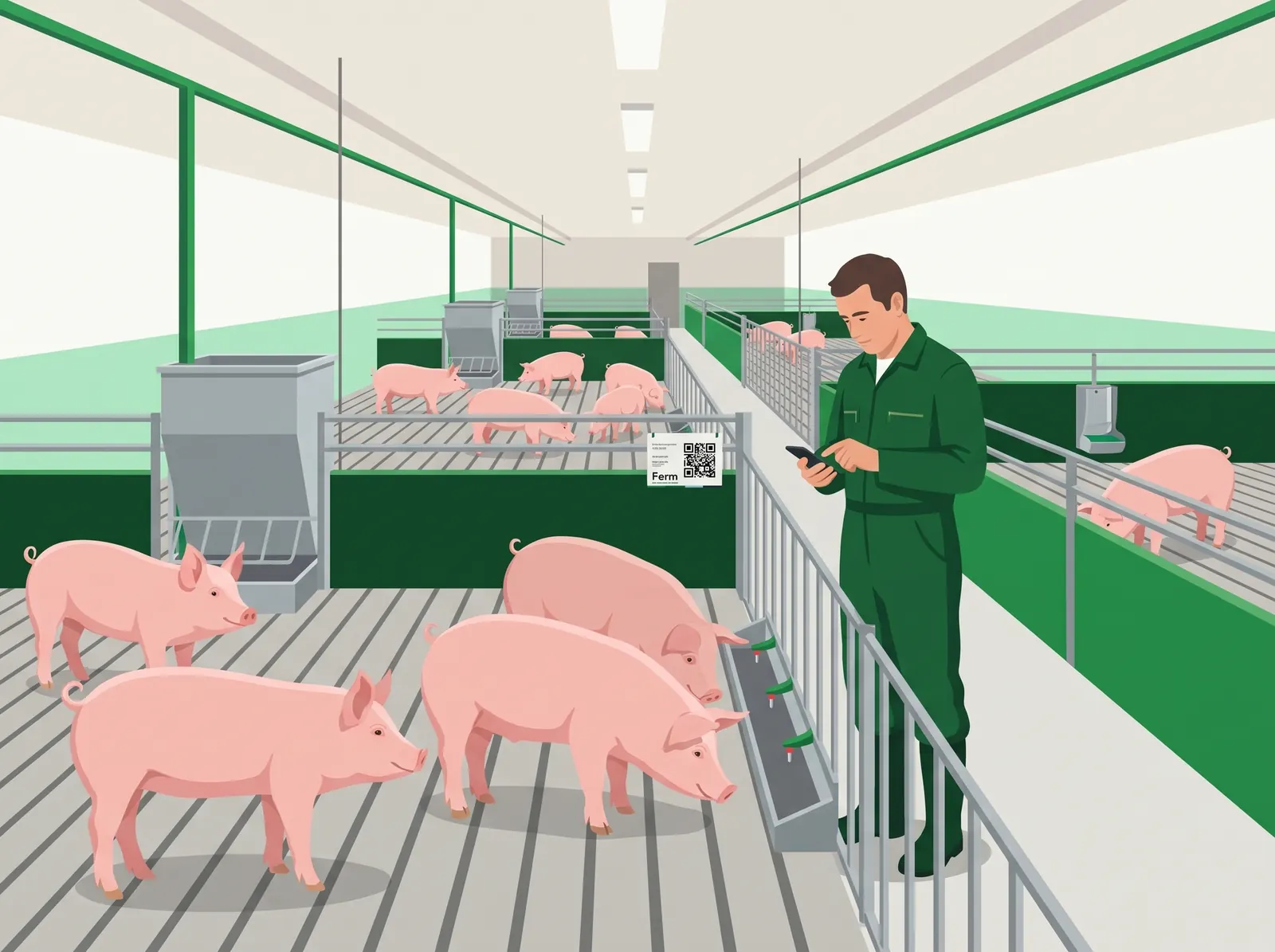
A deep litter barn is a building for beef cattle in which the animals lie and walk on a thick layer of straw or sawdust. Manure and bedding break down in place, so the system is usually simpler to build than a barn with slatted floors and a slurry tank. A publication of IZ PIB (Poland's National Research Institute of Animal Production) on the herd at its Kołbacz experimental station shows beef cattle kept on deep litter. We describe how to design such a building, how to manage the bedding and what to watch so animals stay dry, healthy and gain well. General housing rules are also in our guide to the beef cattle barn.
Pig house and cattle barn: one principle, different needs
The deep litter principle is the same in a cattle barn and a pig house: animals lie on a dry, well-prepared base, and the bedding absorbs urine and part of the moisture from droppings. The differences come from the species and the technology. Beef cattle need more space and different ventilation than pigs. In both cases the farmer decides every day what state the bedding is in and where it needs topping up. We cover pig house equipment, meaning troughs, drinkers and pens, in a separate review.
Barn construction and ventilation
Zones in the building
A good layout splits the barn into a lying zone, a feeding zone and an exercise zone. Keep the bedded area apart from where animals eat and drink, and out of any draft. The exercise zone lets animals move, which affects leg condition and weight gain. Place troughs and drinkers so water does not flood the bedding. When you plan, check that equipment such as drinkers and driving aids fits the plan without narrowing the alleys.
Ventilation without drafts
Bedding only works if the air in the barn carries moisture away. Natural or mechanical ventilation should remove water vapor from above the animals, but must not blow a cold stream onto lying cattle. Weak ventilation means high humidity and high ammonia, which irritates the airways. Check gas levels with a sensor, not only by smell, because your nose gets used to the stench faster than lungs do. We explain how to monitor it in our article on the ammonia sensor. For fan choice, see barn ventilation.
Floor and drains
In a deep litter barn the floor does not have to be as tight as with slurry, but it should be even and impermeable where urine collects. Too steep a slope makes the bedding slide to one side and leaves dry and wet strips. Plan an exit that makes it easy to clear manure with a tractor or loader. Have the design of a specific barn checked by an ODR adviser (Poland's agricultural advisory center), because dimensions depend on head count and local conditions.
Bedding: choice and management
Straw or sawdust
Barns most often use straw, because it is cheap and easy to get on farms that grow cereals. Long straw gives a good structure, and the layer that builds up as you add more starts to break down at the bottom. Sawdust absorbs moisture better, but needs a different way of adding and clearing. We compare both materials in straw vs sawdust. The choice depends on supply and on how you want to collect the manure.
Adding and replacing
Fresh bedding added on top keeps the bed dry, especially where animals lie most. Clear and refill wet, compacted spots before they become a source of smell and hoof problems. Set the adding schedule from watching the herd, not from the calendar. With more head, adding bedding by hand quickly eats time, so work out the labor before you buy equipment. Our guide to forks, spreaders and bedding machines may help.
Moisture as a warning sign
Wet bedding rarely appears suddenly. First wet spots multiply near drinkers, then along walls, and finally the bedding starts to stick to the coat. We describe causes and effects in our article on wet bedding. Some farms check moisture with sensors or radar, which lets them react earlier. You will find more in our study on bedding moisture.
Finishing barn: stocking and groups
Stocking and floor area
How many head fit in the barn depends on their weight, category and whether they go out to a yard. In the Teagasc Beef Manual, for systems where cattle go out of the barn, stocking rates range from 3.0 to 7.5 finished head per hectare, depending on category and age. These figures describe grazing systems in Ireland, so do not carry them straight over to a Polish barn. They do show that stocking per hectare and the number of places in the building are two different measures. When you plan a finishing barn, start from the number of places and from how much space each animal needs in its finishing phase.
Groups by age and weight
Animals of similar age and weight should go in the same group. Differences in strength mean younger cattle get pushed off the bed and end up in a wet spot. Grouping also makes bedding easier to manage, because one layer breaks down evenly. When you add new head, make sure they have a dry bed from day one. Record every group change in the herd register.
Choosing a system: loose housing or tied
On deep litter, cattle are usually kept in loose housing, because the animals can move freely and choose where to lie. Tying restricts movement and needs different work routines and a different floor. We compare the differences and costs in our article on loose-housing and tie-stall barns. The decision depends on the building, the work organization and the production goal. For breeds and profitability, see beef cattle.
Herd health and quarantine
Quarantine for new animals
In its section on herd health, the Teagasc Beef Manual recommends isolating newly bought animals and animals returning from shows or markets. According to the manual, the isolation unit should stand near the farm entrance, must not double as a sick pen, and quarantine usually lasts at least 28 days. The advice comes from the Irish system, so settle the details in Poland with your vet. You prepare the biosecurity plan together. Our biosecurity plan generator helps you build the checklist.
Treatment and withdrawal period
Treatment starts with a diagnosis by a vet. The vet chooses the medicine and dose, and the farmer records each treatment with the date and the withdrawal period given in the instructions or on the package. Without a record it is hard to prove that an animal was not sent to slaughter before the withdrawal period ended. In DlaFerm you keep this in the Treatment and withdrawal module, so records sit in one place. Always confirm the withdrawal rule with your vet.
Watching the bed and the legs
A daily walk through the barn shows more than a report. Look for animals that avoid lying down, go lame or have dirty sides and legs. These signs are often linked to a wet bed or a draft. Note the place and date, and report repeat cases to the vet. Observation does not replace an exam, but it lets you act before the problem grows.
Records and barn routines
What to record
For a deep litter barn, keep a few simple records: dates of adding bedding, clearing manure, moisture and ventilation checks, and group weights and gains. The records let you compare which batch of bedding works better and when animals began to gain worse. When you choose software, check whether the data can be exported later. Keep records ready for settlements and inspections.
Linking with sensors
If the barn has temperature, humidity or gas sensors, compare their readings with your observation notes. The Integrations with IRZplus and sensors module of DlaFerm collects sensor data and links it with the farm register. IRZplus is ARiMR's online animal register (ARiMR is Poland's Agency for Restructuring and Modernisation of Agriculture). The comparison shows whether a rise in humidity matched adding bedding or a change in weather. Data helps decisions, but does not replace judging the animals, which stays with the farmer.
Teamwork
Several people often work in the barn: the farmer, hired help and sometimes an outside crew. Each should know the same rules for adding bedding and reporting wet spots. The worker app lets you pass on tasks and mark them done before details fade. That makes it easier to check who did what, and when.
Frequently asked questions
Does a deep litter barn need a slurry tank?add
No. In this system manure collects in the building, and the bedding forms one layer with the droppings. A slurry tank is needed in a system without bedding. Settle manure storage with an adviser and in line with local requirements.
How often should you replace bedding in a beef cattle barn?add
There is no universal interval. It depends on the material, the number of animals, ventilation and moisture. Set it by watching the bed, not by the calendar. Refill wet and compacted spots right away.
Is straw or sawdust better for deep litter?add
It depends on supply, how you clear manure and the barn conditions. Straw is more common on farms that grow cereals. Sawdust absorbs moisture better, but needs different work routines. See our straw vs sawdust comparison.
Do cattle on deep litter need a yard?add
Many farms keep cattle indoors all year, but animals need room to move and a dry bed. In its opinion on cattle transport, EFSA notes that beef cattle can be kept in more or less intensive conditions. So judge the housing for your own farm.
How long should newly bought animals stay in isolation?add
The Teagasc Beef Manual recommends quarantine of usually at least 28 days for bought animals. The advice comes from the Irish system. Settle the length and rules of isolation with a vet, who will prepare the biosecurity plan.
Who decides on treating cattle in the barn?add
The vet chooses the medicine and dose. The farmer records the treatment, the date and the withdrawal period. Records protect you from selling an animal before the withdrawal period ends. In the Treatment and withdrawal module you keep them in one place.
Sources & resources
- linkIZ PIB — WZ — Beef cattle keeping on the organic farm in Glinna — ZD IZ PIB Kołbacz
- linkTeagasc (Ireland) — Teagasc Beef Manual — Section 3: Beef Systems
- linkTeagasc — Teagasc Beef Manual — Section 6: Nutrition
- linkEFSA AHAW Panel — Welfare of cattle during transport (EFSA Journal 20(9):7442)
Prepared by: DlaFerm Team based on data from the sources listed · Publisher: INSTA-TECH sp. z o.o.
Running a deep litter barn?
The Integrations with IRZplus and sensors module collects sensor data and links it with your barn records. Create a free farm account or get in touch, and we will show you how it works in practice.
Phone
+48 796 258 151