Ammonia sensor for pig and cattle barns
An ammonia sensor shows how much NH3 is in the air around your animals. According to IZ PIB (Poland's National Research Institute of Animal Production), the allowed concentration in livestock buildings is 20 ppm. We explain where to mount the sensor, how to read it and what to do when the value rises.
verifiedFrom the team that has organised work on poultry farms for years.
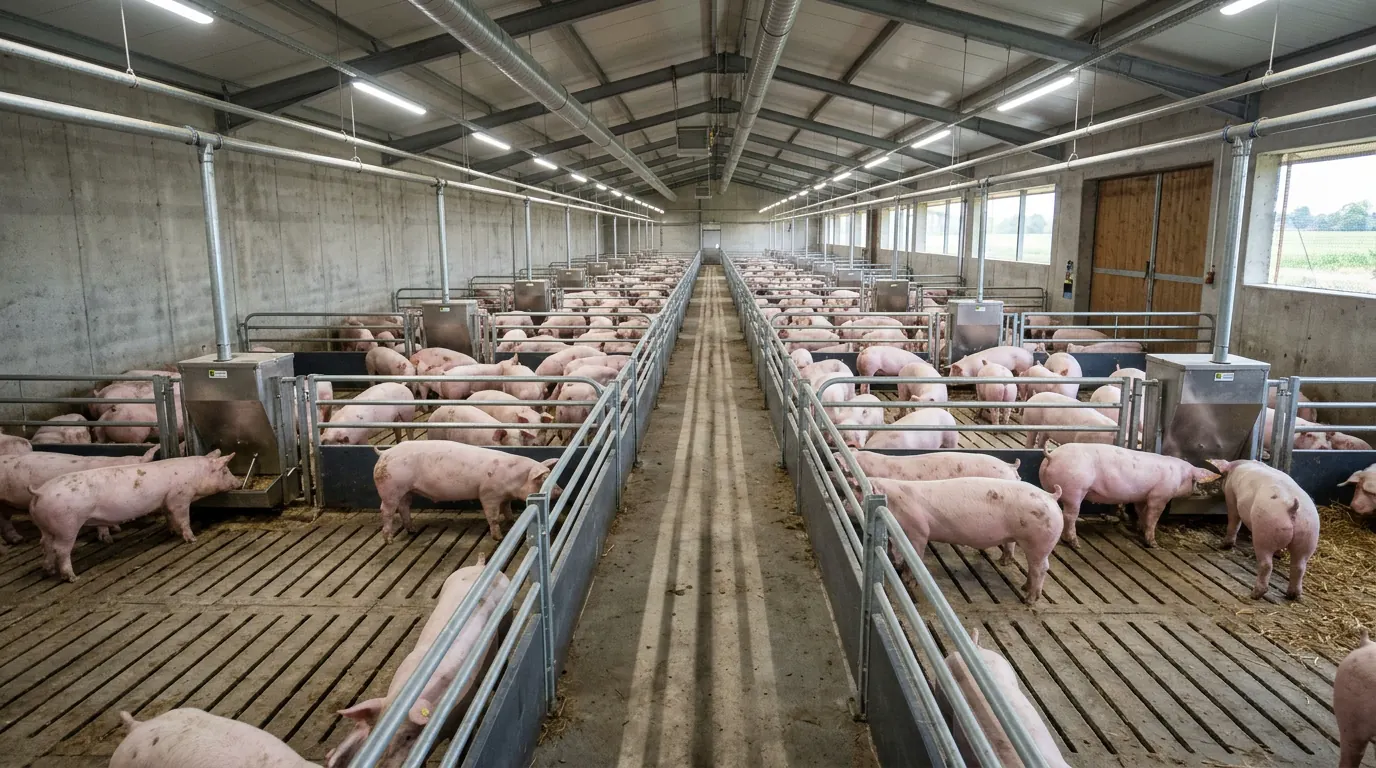
An ammonia sensor in a pig barn or cattle barn measures the concentration of ammonia (NH3) in the air and shows whether ventilation keeps the gas in a safe range. The sensor fixes nothing by itself. It gives you information to act on. For pigs, the reference value cited by IZ PIB is this: ammonia in livestock buildings should not exceed 20 ppm (13.931 mg/m³). The limit applies to the air in the whole building, so a single reading from one corner of the barn says little about the rest of the room. For more on reading results, see our study on sensor accuracy and reading drift.
Why ammonia forms in a pig barn
Ammonia forms when bacteria break down urea from urine and manure. The biggest source is the floor and the slurry, so the amount of gas depends mostly on how quickly manure is removed. According to the IZ PIB review (Pig welfare in a sustainable animal production system), the concentration depends on floor type, presence of bedding, outdoor runs, space per animal, ventilation intensity, animal behavior, season and temperature. The highest values were recorded in finisher buildings with slatted floors.
What the sensor measures and what affects the reading
Typical values in practice
The IZ PIB review cites research by Koerkamp et al. (1998), carried out in the UK, Germany, the Netherlands and Denmark. Average ammonia concentrations in houses for sows, weaners and finishers ranged from 5 to 18 ppm. Treat these numbers as a reference point, not as values to copy to your farm. The result depends on the building, ventilation and the amount of bedding, so compare your readings mainly with your own measurement history.
What a single reading shows
A sensor gives the value at one spot at one moment. Records from several days are the most useful, set against feeding times, ventilation operation and weather changes. If the value rises with the inlets closed and cold weather, air exchange may be too weak or there may be too much wet bedding. Log readings in your farm records so that after a few weeks you see a trend, not just one day's result.
Limits and values to watch
Ammonia together with other gases
A document from KPODR Minikowo (a regional agricultural advisory center) on pig behavior and welfare gives allowed concentrations: carbon dioxide no more than 3000 ppm, ammonia 20 ppm and hydrogen sulfide 5 ppm, at 60–70% relative air humidity. That is why it usually makes sense to pair an NH3 sensor with CO2 and humidity measurement. We describe how to choose devices in a separate guide to NH3 and CO2 sensors.
The regulation and its current status
The 20 ppm value cited by IZ PIB comes from the regulation of Poland's Minister of Agriculture and Rural Development of 15 February 2010. Check the legal status in ISAP (Internetowy System Aktów Prawnych, Poland's online legal database), as of 22.11.2026, because acts get amended. If a Veterinary Inspection (Inspekcja Weterynaryjna) inspector or your vet sets other requirements, follow their advice.
Where to mount the sensor in a pig barn
A spot in the animal zone
Mount the sensor in the zone where the animals stay, not in an aisle, by the entrance door or at a fan outlet. The measurement should show the air the pigs breathe. Keep the device away from the direct airstream of a fan and from places where water from drinkers or washing hits the housing. Choose the height according to the manufacturer's instructions, not by eye.
How many sensors and how to label them
One sensor in a large room may not show the situation across the whole building. In a long building or one with several sections, compare readings from different points and note which one usually shows higher values. Also record the exact mounting spot, so later readings are comparable and do not depend on who did the check.
What to do when ammonia rises
Ventilation and floor first
When the reading rises, check in turn: is ventilation working as set, are grilles and ducts clear, is slurry removed on schedule, and is the bedding dry. We describe ventilation control by concentration in the study on ventilation with an ammonia limit, because staying within the limit does not have to mean overpaying for heating.
Feed additives
Some studies indicate that additives with yucca saponins may reduce ammonia emissions. The effect depends on the dose, the diet composition and conditions in the building. Do not make such changes without talking to a nutrition adviser or your vet. Details are in the article on yucca and saponins.
Signs in the animals
If you see coughing, watery eyes or weaker weight gain in pigs while the reading is high, tell your vet. The vet will assess the cause and choose any treatment. Record the date of the observation and the sensor reading in your records, so the vet has a fuller picture.
Sensor readings in your farm system
Wired or LoRaWAN
A wired sensor needs a cable to the switchboard, while a wireless one connects through a LoRaWAN gateway. For buildings far apart, wireless is usually more convenient, but you need to watch whether a sensor has stopped sending data. You can compare both options in the text on wired sensors and LoRaWAN, and see examples from remote buildings in the study on the alarm for a silent sensor.
What integration gives you
Sensor readings can be linked to your farm records, so data from the barn lands in the same place as information about the herd. Decide who on the team is responsible for taking readings and for checking the device, and record every battery change or calibration with its date. We describe connections to sensors and scales in more detail on the integrations page.
Frequently asked questions
What ammonia level is allowed in a pig barn?add
According to the regulation of Poland's Minister of Agriculture and Rural Development of 15 February 2010, cited by IZ PIB, ammonia in livestock buildings should not exceed 20 ppm (13.931 mg/m³). Check the current text of the regulation in ISAP, as of 22.11.2026.
Where should I hang an ammonia sensor in a pig barn?add
Mount it in the zone where the animals stay, away from drafts and fan inlets and outlets. Take the height and the distances from walls from the sensor manufacturer's instructions.
Is ammonia harmful to pigs?add
A raised gas concentration lowers animal welfare and can strain the respiratory system. Report signs such as coughing or weaker weight gain to your vet, who will assess the cause and suggest treatment.
Ammonia sensor or NH3 and CO2 sensor: which should I choose?add
The KPODR Minikowo document gives limits for CO2, ammonia and hydrogen sulfide together, so measuring several gases gives a fuller picture of the air. Choose the device range to fit the size of the building and how you plan to take readings.
How often should I check an ammonia sensor?add
The sensor manufacturer sets how often to check and calibrate it. Record the date of each check and compare the result with another measurement if you have one. Treat missing data from the sensor as a signal to check the device, not as good news.
Sources & resources
- linkIZ PIB — Pig welfare in a sustainable animal production system (eds. A. Rekiel, G. Żak)
- linkKPODR Minikowo — Pig behavior and welfare (P. Dorszewski et al.)
- linkISAP, Poland's online legal database — isap.sejm.gov.pl
- linkChief Veterinary Inspectorate — gov.pl/web/wetgiw
Prepared by: DlaFerm Team based on data from the sources listed · Publisher: INSTA-TECH sp. z o.o.
Want to see sensor readings next to your herd data?
The DlaFerm module for <a href="/integracje-irzplus-czujniki">integrations with sensors and IRZplus</a> (ARiMR's online animal register) links readings to your farm records. Create a free farm account or get in touch, and we will show you how it looks in a building with your layout.
Phone
+48 796 258 151