Ameraucana chicken: blue eggs, beard and muffs
The Ameraucana is an American chicken breed with a beard, muffs and a pea comb. It lays eggs with a blue shell, which Polish breeding shops often call "green". We explain how to recognize it, where the egg color comes from and what to check before you buy.
verifiedFrom the team that has organised work on poultry farms for years.
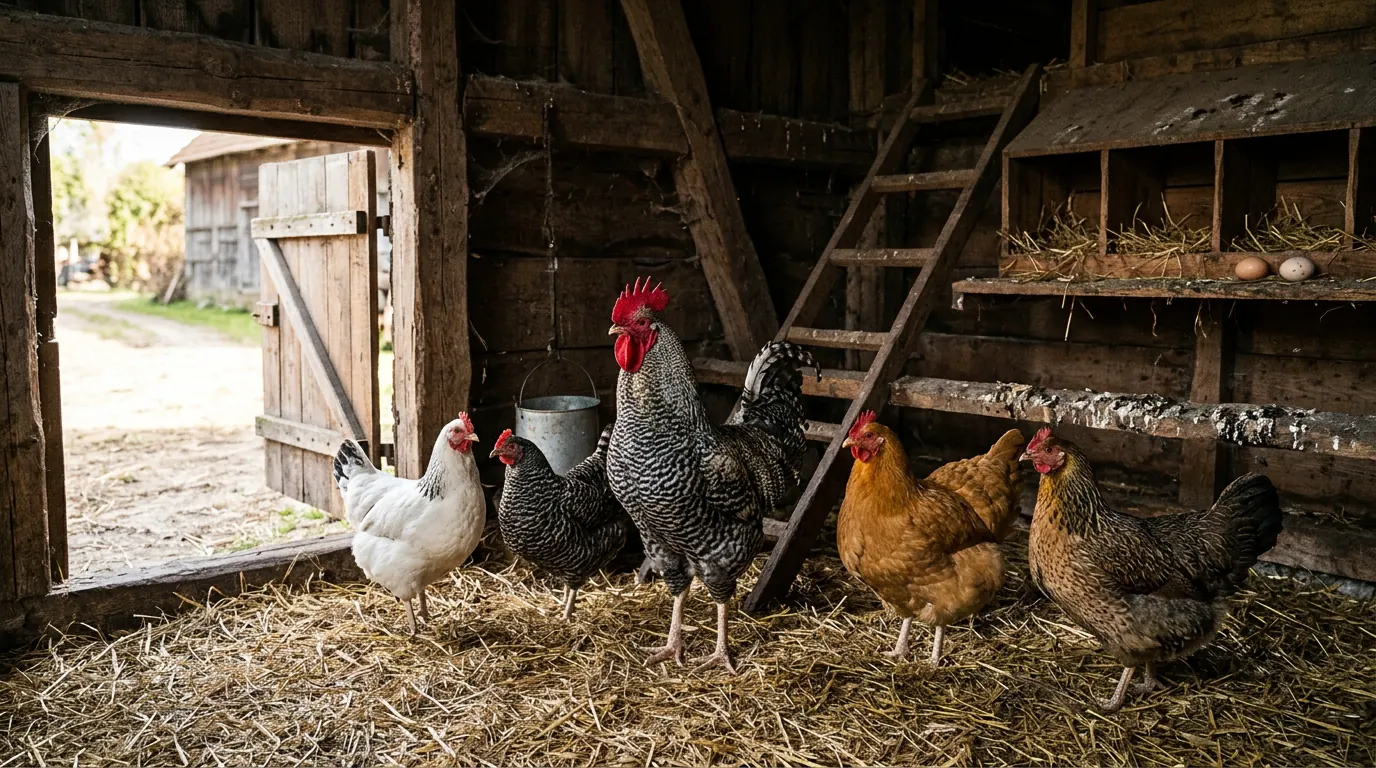
The Ameraucana was bred in the United States in the second half of the 20th century. It descends from the Araucana chickens of South America, but it has a tail, which the Araucana lacks. You can spot it by its "beard" and "muffs" (tufts of feathers under the beak and on the sides of the head), its pea comb and its slate-blue legs. Its trademark is the blue eggshell.
Blue or green eggs
A true Ameraucana lays blue eggs, not green ones. The blue pigment runs through the whole shell, so the inside of a cracked shell is blue too. A green tint appears when brown pigment is laid over a blue shell, on the outside. This happens in crossbreeds, for example ornamental hens sold as "greenlegs" or "olive" layers. For an overview of such hens, see our article on hens that lay green and blue eggs.
Where the breed comes from
Breeders in the USA crossed Araucana chickens with other breeds to get a bird with blue eggs but without the Araucana's faults. The Araucana has no tail and has tufts of feathers by the ears, and these traits are linked to hatching problems. The Ameraucana kept the blue-shell gene and gained a tail and a beard. The breed has its own standard in the United States. In Poland it is rare and you will mostly meet it with hobby breeders.
How to recognize an Ameraucana
Beard and muffs
The most distinctive feature is the tuft of feathers under the beak and on the sides of the head. It forms a beard with muffs and covers the earlobes. The feathers grow thickly, so the head looks wider than on an ordinary hen. This sets the Ameraucana apart from the Araucana, which has tufts above the ears but no beard. It also differs from most hens sold as "greenlegs", which often have only slightly fuller feathers on the cheeks.
Comb, legs and tail
The comb is a pea comb: low, three-ridged, rounded, with small bumps. It handles frost well because there is little surface to freeze. The legs are thin and slate-blue. The tail is upright and clearly visible, unlike the Araucana, which has no tail at all. If you are buying a bird and see a hen with no tail or with yellow legs, it is not an Ameraucana.
Color varieties
The US breed standard recognizes several color varieties, including black, blue, white, wheaten, silver and brown red. Plumage color does not affect eggshell color. If blue eggs matter to you, look for birds with documented parentage, not just attractive plumage.
Laying and egg quality
How many eggs an Ameraucana lays
This is an ornamental-and-utility breed. It lays fewer eggs than commercial layers and fewer than dual-purpose breeds. The exact number depends on the line, age and feeding, and laying is usually highest in the first year. It usually drops after a year, as we describe in our article on laying after the first year. The eggs are medium-sized. If egg count matters to you, choose another breed and treat the Ameraucana as an addition to the flock.
Shell and contents
Blue color does not mean better parameters. The contents are no different from brown or white eggs: taste, yolk and white depend mainly on feed and freshness. Egg quality is judged with other measures, such as Haugh units, which we describe in our article on egg quality. Shell color varies between hens, from light blue to blue-gray, and can fade when a bird is tired.
Other egg colors in your flock
If you want colored eggs in one basket, you can combine Ameraucanas with breeds that lay other colors. The Welsummer lays dark brown eggs, and tęczanka hens lay blue or green ones. The black Ayam Cemani is a show breed, not a layer of colored eggs, despite the myths online.
A true Ameraucana or an Easter Egger
Easter Egger
Adverts for Ameraucanas often turn out to be crossbreeds, which in the USA are called "Easter Eggers". They lay blue or green eggs but do not meet the breed standard: they may lack a beard, have yellow legs or a different comb. For a backyard flock this does not matter, but you then pay for a breed you do not get. Ask the breeder about the parents, visit the birds in person and ask for photos of eggs from the specific line.
What to check when buying
Check four traits: beard and muffs, pea comb, slate-blue legs and the presence of a tail. If you buy chicks, the breeder should show you at least the parents. A bird with clearly pale legs or a single comb is most likely a crossbreed. Prices of chicks and adult birds vary widely and depend on line, age and season, so always compare several offers.
Formalities
If you keep poultry in Poland, remember the duty to register the flock's premises and to report in IRZplus (ARiMR's online animal register), under the rules of ARiMR (Poland's Agency for Restructuring and Modernisation of Agriculture) and the Veterinary Inspection (Inspekcja Weterynaryjna). Check the rules for small backyard flocks in the current notices of the Chief Veterinary Inspectorate (Główny Inspektorat Weterynarii), and if in doubt ask the county veterinarian (powiatowy lekarz weterynarii). When you buy birds from a breeder, ask for a document showing where they come from.
Housing and breeding
Housing conditions
The pea comb and dense plumage help the Ameraucana overwinter, but the coop must be dry and free of drafts. Beard feathers get dirty easily during feeding and drinking. A drinker that does not wet the head works well, along with regular bedding changes. Hens are usually calm and sociable, but roosters can be aggressive toward people. If a bird is listless or not eating, check the possible causes of a listless hen and talk to a vet.
Hatching
Incubation of chicken eggs takes 21 days, as with most hens. We describe the details in our article on how long a hen sits on eggs. Ameraucanas can be good broody hens, but not every hen wants to sit. When mating, avoid pairing closely related birds, because it weakens condition and hatchability. If you want to keep the breed's traits, choose hens and a rooster that show the full set of standard features.
Flock records
With several breeds in one coop, birds and eggs are easy to mix up. Record which group the hatching eggs came from, plus dates of placement and deaths. In DlaFerm coop records you keep a separate group of birds for each breed.
Frequently asked questions
Does an Ameraucana lay green eggs?add
A true Ameraucana lays blue eggs. A green tint comes from crossbreeds, where blue combines with brown pigment. The name "green eggs" is often used loosely in sales.
What is the difference between an Ameraucana and an Araucana?add
The Ameraucana has a tail, a beard, muffs and a pea comb. The Araucana has no tail and has tufts of feathers above the ears, but no beard. Both breeds lay blue eggs.
How many eggs does an Ameraucana lay?add
Fewer than laying breeds and dual-purpose breeds. The exact number depends on the breeding line, age and feeding, and it is highest in the first year of life.
Are blue eggs healthier?add
No. Shell color does not change the contents or the taste of the egg. Quality depends on feed, freshness and how the hen is kept.
How long do Ameraucana eggs take to hatch?add
21 days, like the eggs of other chickens. If the hen does not want to sit, put the eggs in an incubator.
How can you tell an Ameraucana from an Easter Egger?add
Check for a beard with muffs, a pea comb, slate-blue legs and a tail. An Easter Egger often lacks one or more of these. The surest proof is information about the parents from the breeder.
Sources & resources
- linkNational Research Institute of Animal Production (Instytut Zootechniki PIB) — izoo.krakow.pl
- linkChief Veterinary Inspectorate (Główny Inspektorat Weterynarii) — gov.pl/web/wetgiw
- linkARiMR — gov.pl/web/arimr
Prepared by: DlaFerm Team based on data from the sources listed · Publisher: INSTA-TECH sp. z o.o.
Keeping several breeds in one coop?
In the DlaFerm coop records module you keep separate groups of birds, eggs and events for each breed. Create a free farm account or get in touch.
Phone
+48 796 258 151