Rainbow layer hen (tęczanka): breed and eggs
Tęczanka, or rainbow layer, is the name for a hen that lays eggs in different colors. Its performance depends on the line your flock comes from. We explain how to check where your birds come from, what to record in the house and how to feed a layer following the rules in parent stock manuals. We give no numbers we cannot confirm.
verifiedFrom the team that has organised work on poultry farms for years.
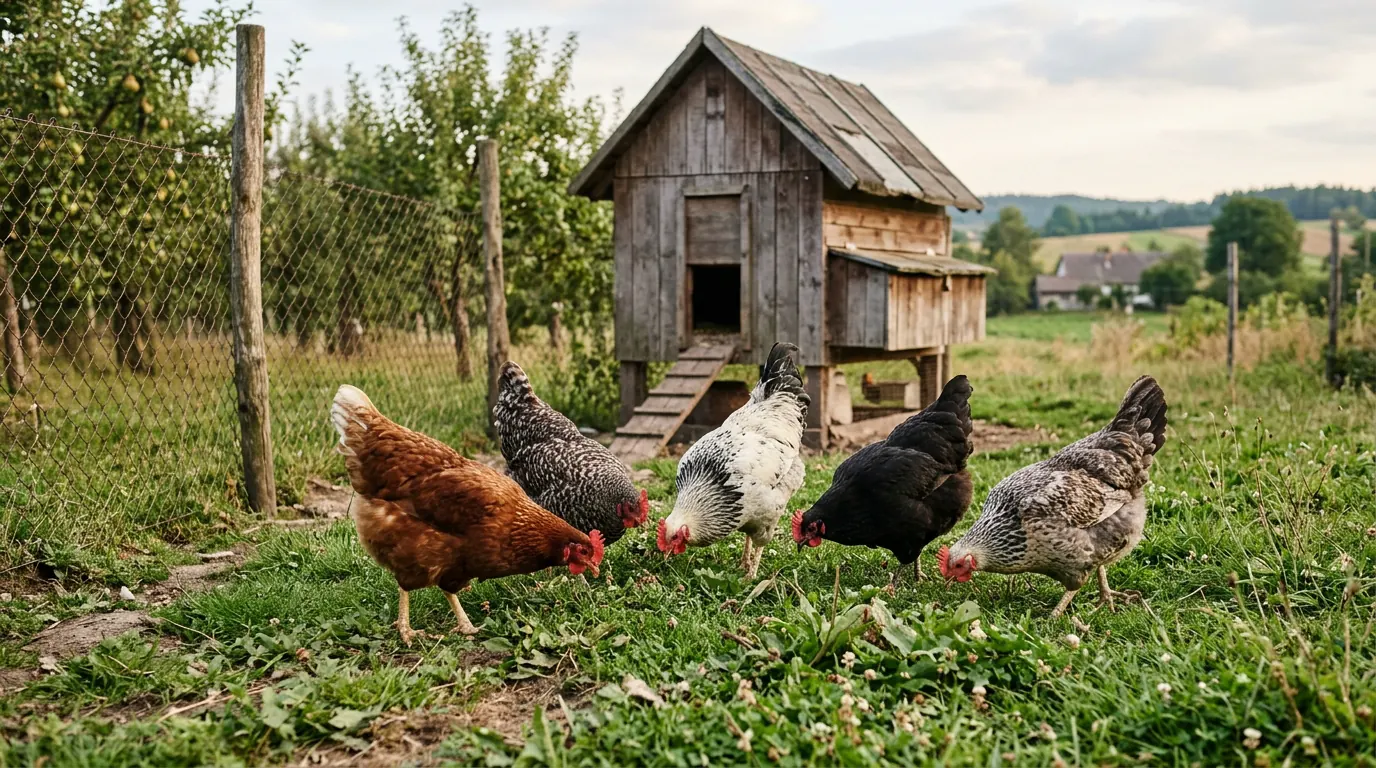
The tęczanka (rainbow layer) is the name for a hen that lays eggs in different colors, from white and cream to brown and greenish. There is no single, generally accepted standard for this name. So laying rate, egg weight and bird size depend on the line your flock comes from. When you buy, ask the seller where the birds come from and record it from day one. We describe the general rules for keeping layers in our guide to laying hens.
How to check where your birds come from
On the supplier's paperwork, look for the line name, the hatch date and the placement date. These data let you compare your flock's results with the producer's data. The Ross Parent Stock Handbook 2023 recommends recording the hatch date, the placement date and the number of birds placed, males and females separately. Use the same scheme for every group, including rainbow layers. You keep the record in your poultry house records, where each batch has its own card.
Rainbow layer eggs: color, weight and laying rate
Egg weight and laying rate
The Ross Parent Stock Handbook 2023 recommends recording average egg weight daily and weekly, and laying rate daily, weekly and cumulative per bird. The sources publish no standard for rainbow layers. So compare the flock with its own results from earlier weeks, not with a table for another breed. A change in egg weight in a single week often comes from feeding or house temperature. Record it together with feed intake, because only then can you see the link between the two.
Shell color and quality
Shell color alone says nothing about egg quality. Differences in shell thickness and cleanliness usually come from the bird's age, the feed composition and conditions in the nest. Collect eggs regularly and record floor eggs separately, because the Ross handbook lists them as a separate item. Put dirty or cracked eggs in a separate container so they do not mix with eggs meant for sale.
Hatching eggs
If you plan to hatch, record the number of hatching eggs, fertility, hatchability and sexing errors. Ross Parent Stock lists these indicators as separate items. Without them you cannot tell whether fewer chicks come from the flock, the incubator or the egg batch. Placement and cycle planning helps with the schedule, because hatching eggs must be ready at the right moment.
Feeding a layer without ready-made rations
Ross 308 nutrition specifications for parent stock are based on a common feed energy level of 2800 kcal/kg. The recommendation is that at a different energy level, nutrient values must be adjusted proportionally, especially digestible lysine. The same applies to feed allocation: you set it from the birds' body weight, their condition and egg production. If you change the feed, recalculate the ration proportionally. Do not copy the old figure from the bag.
Feed clean-up time
The Ross handbook points to the time the birds take to eat their allocated feed. When feed disappears too fast, some birds may get too little later on. When it lingers, waste grows and so does the risk of birds getting too fat. Watch feed clean-up time every day and record it. When you dilute feed with bran or husks, this time gets longer. The handbook names this as a way to keep the flock even.
Water and feed
Record the water-to-feed ratio as a separate indicator. A sudden rise in water use at the same feed ration is often the first sign of a health problem or high house temperature. A daily record lets you catch the change before visible symptoms appear. You compare feed and production indicators in the FCR and EPEF module.
What to record in a house with rainbow layers
The Ross Parent Stock Handbook 2023 lists the data a keeper collects during rearing and lay. They include floor area and stocking density per square meter, feeder and drinker space per bird, the number of deaths and culls, the lighting program (hours and intensity), minimum and maximum temperatures, and house humidity. Keep these items in one place, not on a sheet of paper by the door.
Deaths and culls
Record deaths and culls daily, weekly and cumulatively. If the flock is mixed, give them separately for males and females. For each bird, write the cause if you know it. Such a record shows the trend before a drop in laying shows up in your egg sales.
Treatment records
Record every treatment, vaccination and medicine with the date, product name and reason. The dose is always set by a vet, not by the keeper from a guide. Withdrawal rules for eggs come from the regulations, and you count the period from the last administration. Keeping these records in the treatment and withdrawal module helps you separate eggs under withdrawal from eggs ready for sale.
Flock health and when to call the vet
The Ross Broiler Management Handbook 2025 opens its health section with a rule: diagnosis needs knowledge of what to expect at a given age and what normal looks like for the breed. So compare your rainbow layers with their own flock, not with data from other farms. When a health problem is visible or suspected, the handbook recommends veterinary advice straight away.
Looking for the cause systematically
The handbook describes a systematic approach. First check your observations from the house, then the feed and water records, and last the death figures. Compare these three sources of data before you draw a conclusion. If a drop in laying goes with a rise in deaths, the problem probably affects the whole flock. If it affects only one part of the house, check conditions in that spot.
Biosecurity
Protection from disease starts with rules for entering the house and for contact with other birds. Write your biosecurity plan down and update it after every change in the flock. The biosecurity plan generator helps here and walks you through the plan point by point.
Rainbow layers compared with other laying hens
Comparing egg colors
If egg color is your main interest, compare rainbow layers with breeds of known shell color. We describe them in the article on hens that lay green and blue eggs. When you compare, look not only at color but also at laying rate, egg weight and how hardy the bird is in your house.
Breeds with a different profile
Compare breeds with a different purpose in their own descriptions, not by name alone. Your choice of breed should follow your production goal: table eggs for sale, hatching or a hobby. Before you decide, record your own flock's results for several weeks, because only then do you have data to compare.
Frequently asked questions
What is a rainbow layer hen (tęczanka)?add
Tęczanka is the name for a hen that lays eggs in different colors. There is no single, generally accepted standard for this name, so check the birds' origin with the seller. Base your flock's figures on its own records.
How many eggs does a rainbow layer lay?add
We give no number, because it depends on the line, the bird's age and conditions in the house. Record laying rate daily and weekly and compare the result with earlier weeks of the same flock. Parent stock manuals, such as Ross, describe how to record, not a ready norm for rainbow layers.
Can I sell rainbow layer eggs right after they are laid?add
That depends on the rules for selling eggs and on whether the flock was treated in the meantime. If a medicine was given, a vet sets the withdrawal period based on the regulations. Until then, keep eggs from that group apart.
How do you feed rainbow layers?add
Set the feed allocation from the birds' weight, their condition and egg production. If you switch to a feed with different energy, recalculate the ration proportionally, because the Ross 308 specification assumes 2800 kcal/kg. Watch feed clean-up time and water use every day.
Can rainbow layers live with other hens?add
Yes, but mixing groups needs watching. Record each group separately so you know which line gives which results. If health problems appear, call a vet and do not wait for the flock to recover on its own.
What should I record in poultry house records?add
Record the placement date, the number of birds split by sex, laying rate, egg weight, deaths, feed and water use, and the lighting program. Add house temperatures and humidity. These data let you spot a change in the flock sooner than you would by eye.
Sources & resources
- linkRoss Parent Stock Management Handbook 2023 (Interactive)
- linkRoss Broiler Management Handbook 2025
- linkRoss 308 Parent Stock Nutrition Specifications 2021
- linkChief Veterinary Inspectorate (Główny Inspektorat Weterynarii) — gov.pl/web/wetgiw
Prepared by: DlaFerm Team based on data from the sources listed · Publisher: INSTA-TECH sp. z o.o.
Do you keep a rainbow layer flock next to other groups?
The DlaFerm poultry house records module lets you record placements, laying, deaths and feed use separately for each group. Create a free farm account or get in touch, and we will show you how to set it up.
Phone
+48 796 258 151