Embryo Death: Why Chicks Die in the Egg
An embryo most often dies in the egg because of wrong temperature, humidity or ventilation, poor hygiene, or a weak breeder flock. We explain how to read the cause from the stage of death and the look of the embryo, and what to check in the incubator.
verifiedFrom the team that has organised work on poultry farms for years.
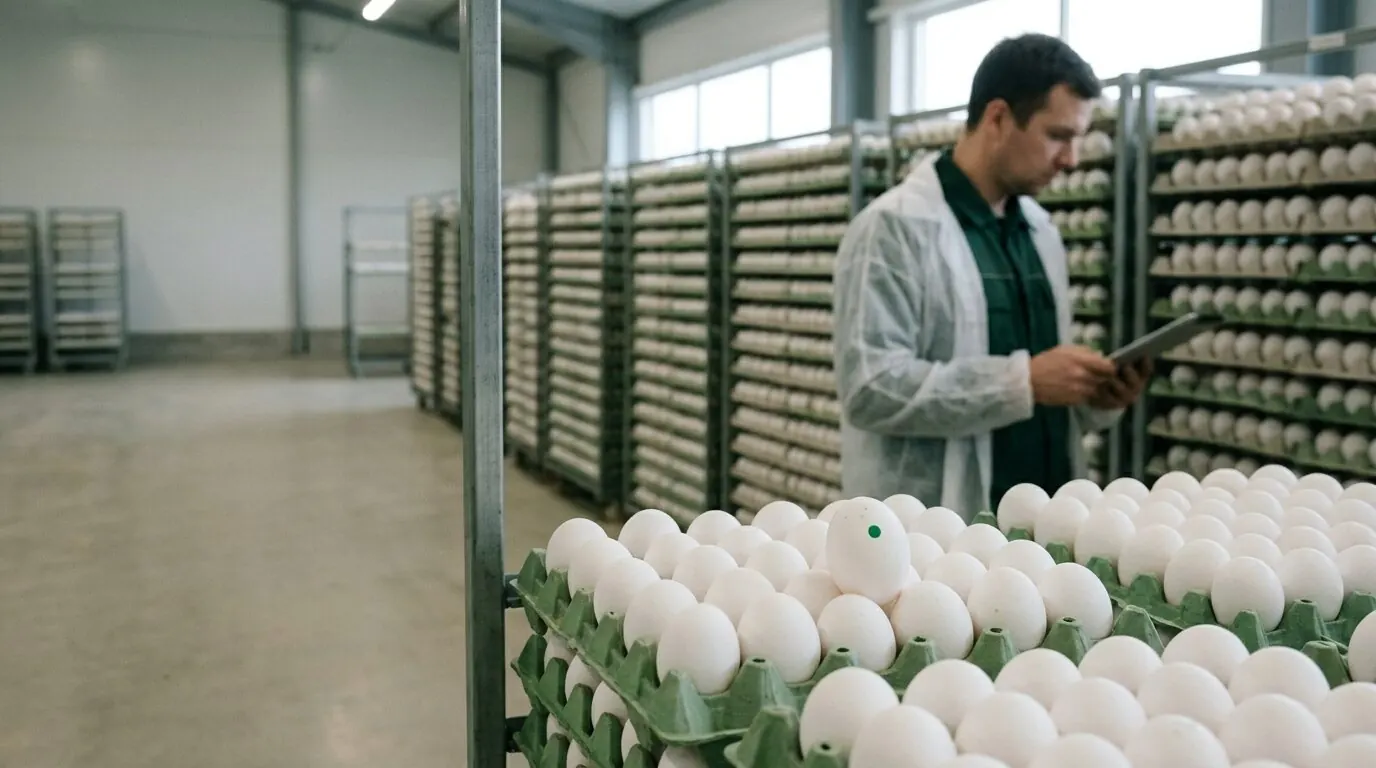
Chicks die in the egg for a few reasons: wrong incubator temperature, wrong humidity or ventilation, infected eggs, mistakes in storing and turning, and problems in the flock the eggs came from. The clue is the stage at which the embryo died and the changes you see when you open the egg. So the rule is simple: open the unhatched eggs, write down the results and compare them with a benchmark.
Where the numbers in this guide come from
We give the numbers from hatchery manuals: Aviagen Turkeys (for turkeys) and Cherry Valley. The principles are similar for backyard poultry, but for exact chicken settings use your incubator's manual and advice from the breeder of your breed. We describe how the embryo develops in a separate article, Embryo development day by day.
When the embryo dies: three periods of the hatch
Early, middle and late death
The Cherry Valley hatchery manual splits unhatched eggs into three groups. The first is infertile eggs. The second is eggs with an embryo that died soon after setting (early death). The third covers embryos that died in the middle of incubation, before transfer to the hatcher, and after transfer (late death). Aviagen Turkeys uses a similar split: results are recorded by the day of the cycle. Such a record shows you in which phase you lose the most eggs.
Loss peaks at the start and at the end
Aviagen Turkeys shows that embryo losses form two peaks: in the early and in the final part of incubation. That is why one bad batch is not enough to draw conclusions. Compare several hatches and note the day of the cycle on which dead embryos appear. If many die early, look for the cause in the eggs, their storage and hygiene. If many die late, check the conditions in the incubator, especially temperature, humidity and ventilation.
Incubation temperature and embryo death
Temperature too high
According to Aviagen Turkeys, high incubation temperature gives a typical loss pattern. Deaths between day 16 and day 24 of incubation go up. Malpositioned embryos, especially head down, appear more often. When you open the eggs you see cloudy eyes, swollen heads, swollen down, ruptured yolk sacs and excess albumen. This set of signs points you to the thermometer and to how heat is spread in the chamber.
Temperature too low
According to the same source, low temperature is linked to late hatching and to live but unhatched embryos. Such chicks are often weak, and some do not manage to break the shell. So the hatch date alone does not prove that everything went well. If chicks hatch late and live embryos stay in the trays when the hatch ends, check the thermometer and where it sits in the incubator.
Which settings to look for
The Cherry Valley manual gives typical settings: temperature 37.5°C, CO₂ at 0.3%, egg weight loss of 11–13% and turning every hour. It adds that you should ask for the guidelines of the maker of your particular incubator. For chickens, compare these values with your device's manual and the advice of your breed's breeder. Do not set values by eye.
Humidity, ventilation and egg turning
Egg weight loss
Cherry Valley gives egg weight loss of 11–13% as the incubation target. An egg loses weight as water evaporates, so humidity in the chamber directly affects this result. If too little or too much evaporates, the embryo has trouble breathing and breaking the shell. Weighing a sample of eggs at the start and during incubation lets you check whether the loss is within range.
Ventilation and turning
The embryo uses oxygen and gives off carbon dioxide, so ventilation has to keep up. Cherry Valley recommends keeping CO₂ at 0.3% and turning eggs every hour. If your hatching setup lets you control ventilation and humidity, check these settings when the hatch of fertile eggs falls below the benchmark. In an incubator without sensors, keep the vents clear and turn the eggs reliably, and when in doubt read the device's manual.
Infection, storage and egg quality
Infected eggs
Cherry Valley gives control figures for infections: infected eggs removed on day 10 and on day 25 normally fall within 1–2%. For higher values the manual says to check hygiene, egg washing and hatchery hygiene. Record infected eggs separately, like cracked and soiled ones, not by the stage of embryo death. A single egg with bacterial or mold contamination infects other eggs in the chamber.
Storage and egg position
With many early deaths, Cherry Valley recommends checking egg storage on the farm and in the hatchery, egg washing and hygiene, and whether eggs were set blunt end up (that is, whether the "point down" rule, as the manual describes it, was followed). In this manual, early death at 2% is the threshold at which you start investigating causes. Fresh, clean eggs from the nest are the best starting point for incubation. More in Storing hatching eggs.
Fertility and the flock the eggs come from
Fertility and hatchability
Cherry Valley gives normal fertility of 93–97% and hatchability of fertile eggs above 90%. If fertility is lower, the manual says to start by examining the breeder flock. In a small flock, check the ratio of roosters to hens, the age of the birds and their condition. Low fertility is not embryo death, but in hatch statistics it looks similar, because the egg yields no chick.
Feeding and flock health
Weak embryos can come from underfed or sick hens. Choose the dose of vitamins and supplements based on the recommendations for your breed and a vet's advice; we describe general rules in Vitamins for chicks and laying hens. A flock protected against disease, following the schedule in Vaccinating chickens in a backyard flock, gives healthier eggs. When treating, remember the withdrawal period, and the medicine and dose are chosen by a vet.
How to check why eggs did not hatch
Candling and opening eggs
Cherry Valley says eggs are usually candled between day 10 and day 11 of incubation, to remove infertile, infected and early-dead eggs. Do the transfer to the hatcher in a warm place (20–24°C), away from the incubator, and do it fast so the eggs spend as little time as possible outside the machine. After the hatch, open all unhatched eggs and record the embryo's stage and any changes. See also Hatch breakout analysis.
Sample and record
Aviagen Turkeys recommends choosing 4–5 trays for one breeder flock, from different places in the incubator, with clean eggs of known origin. Cherry Valley gives a minimum of 3 trays from each source. Express the result as a percentage of eggs set. Also note whether the debris in the tray was clean or dirty, and whether the chicks were wet or very thin. Keep the records of successive hatches in the DlaFerm coop records and compare them with earlier results.
Defects and when to deal with them
Aviagen Turkeys lists defects to assess: swelling of the head or body, beak deformities (short upper or lower beak, parrot beak, crossed beak). Single abnormalities are no reason for concern. Only when one defect shows up in more than 0.5% of eggs set is it worth looking for the cause. Chicks that tried to hatch for a long time have dry membranes and feathers and smell of ketones.
Action plan after a failed hatch
Order of checks
Start with temperature: check the thermometer and where it sits. Then compare the stage of death with the patterns described above and check humidity, ventilation and turning. Next look at the hygiene of the eggs and the incubator, and at egg storage. Finally assess the breeder flock. Plan your settings with a gap for cleaning the incubator; in larger flocks planning settings and the cycle helps. If you are choosing a machine, see How to choose an egg incubator.
Chicks after the hatch
Hatched chicks need warmth, so get a brooder with a heat lamp ready before the hatch. Look after hatch biosecurity: separate tools and clean hands limit the spread of infection between batches. A biosecurity plan generator will help you build a plan fitted to your farm.
Frequently asked questions
Why do chicks die in the egg?add
Most often because of incubation temperature that is too high or too low, wrong humidity and ventilation, infected or badly stored eggs, or a weak breeder flock. The stage at which the embryo died narrows down the cause.
What incubator temperature kills embryos?add
According to Aviagen Turkeys, temperature that is too high increases deaths between day 16 and day 24 of incubation. Temperature that is too low causes late hatching and live unhatched embryos. Check exact settings for chickens in your incubator's manual.
What should I do with unhatched eggs?add
Open them and record the embryo's stage of development and any visible changes. Give the result as a percentage of eggs set. For each flock take a sample from several trays in different places in the incubator.
When should I candle eggs?add
The Cherry Valley manual says candling is usually done between day 10 and day 11 of incubation. You then remove infertile, infected and early-dead eggs.
What should egg fertility be?add
Cherry Valley gives normal fertility of 93–97% and hatchability of fertile eggs above 90%. With lower fertility, check the breeder flock first.
Is one deformed chick a reason to worry?add
No. Aviagen Turkeys points out that single defects happen. Look for a cause only when one defect affects more than 0.5% of eggs set.
Sources & resources
- linkHow to Check Incubation Temperature (HA12)
- linkManagement Guidelines for Turkey Hatcheries
- linkCherry Valley SM3 Hatchery Management Handbook
- linkInstytut Zootechniki PIB (National Research Institute of Animal Production) — izoo.krakow.pl
Prepared by: DlaFerm Team based on data from the sources listed · Publisher: INSTA-TECH sp. z o.o.
Record the results of every hatch in DlaFerm coop records
The coop records module lets you keep hatch records, bird groups and quarantine in one place, then compare successive hatches. Create a free farm account in DlaFerm or get in touch.
Phone
+48 796 258 151