White pigeons: keeping and care
White pigeons are a color variety of domestic pigeons, kept for looks, shows and utility. Good keeping needs a dry loft, clean water, balanced feeding and steady health checks. We cover what to prepare before you start and which duties to check.
verifiedFrom the team that has organised work on poultry farms for years.
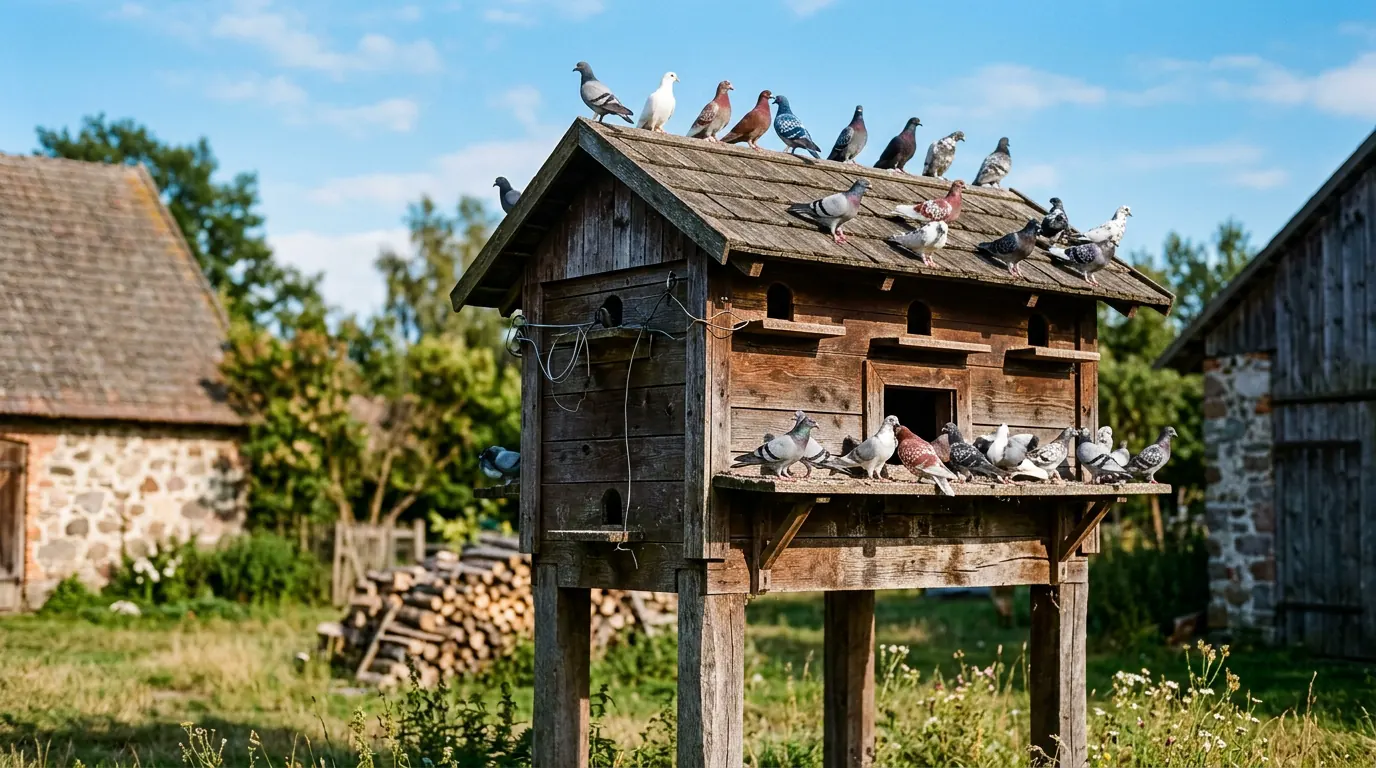
White pigeons are a color variety of domestic pigeons. Keepers raise them for looks, shows, flying or as utility birds. They need a dry, airy loft, constant access to clean water and feed, regular health checks and proper records. White color does not change the care they need, but it shows dirt, droppings and blood on the feathers right away. For the basics, see our guide on how to start keeping pigeons.
Why keepers choose white birds
White pigeons are popular in ornamental and show keeping because a clean white coat looks good in the ring. Many keepers start with white birds because the plumage shows hygiene. A dirty nest, wet litter or feathers stuck together by damp are easy to spot. Color alone, though, says nothing about utility value or health. Condition, behavior, appetite and veterinary test results show whether a pigeon is healthy, not feather color. When choosing birds, judge the same things as with any other variety: build, activity and origin.
A loft for white pigeons
Dry, airy space
The loft should be dry, airy and free of drafts at perch and nest height. Damp and cold air favor respiratory disease, so design ventilation to change the air without blowing cold air straight onto the birds. The floor should be easy to clean and disinfect. We describe nests, nesting bowls, drinkers and feeders in our guide to loft equipment.
Nests and litter
White feathers show dirt fast, so nests and breeding spots need their material changed more often than the rest of the loft. Litter should be dry and clean. Damp or clumped litter means you should replace it at once. At every check, look for parasites in the nests too. Dirty nests are one of the more common sources of health problems in a pigeon flock.
Feeding and drinkers
Feed and grain
Feed pigeons grain mixes matched to age, condition and season. Grain must be dry, clean and free of mold, because spoiled grain can harm birds. Agree the mix and amounts with your feed supplier or an adviser, and watch the birds for a few days after any change. Change the type of grain gradually, because the digestive system adapts more slowly than feathers.
Water and drinkers
Water must always be available and clean. Clean drinkers regularly, because algae and deposits grow fast in damp conditions. Change the water daily, in winter too, when drinkers freeze easily. Lack of water combined with dry grain weakens birds very quickly, so checking the drinkers is one of the first jobs on the morning round.
Flock health and prevention
Daily observation
On every round, watch for birds that are listless, have ruffled feathers, discharge from the beak or eyes, or diarrhea, and for birds that have stopped eating. Isolate a sick pigeon from the rest of the flock and report it to your vet. Write your observations in your records, because they help you judge whether the problem affects one bird or the whole flock.
Treatment and withdrawal periods
The vet always chooses the medicine and dose, never the keeper on a guess. Keep records of every treatment, and for birds meant for meat the vet sets the withdrawal period rule. You can keep treatment records and withdrawal dates in the treatment and withdrawal module. Biosecurity rules, meaning how you limit diseases getting into the loft, can be put together in the biosecurity plan generator.
Registration and keeper duties
Farm registration
Before you start, check the registration duties in current regulations. Legal state as of 22.11.2026. The rules depend on the number of birds and the purpose of keeping, so we give no specific requirements here, only where to check them. Notifying and updating data about your flock is done in IRZplus, the online animal register run by Poland's ARiMR (Agency for Restructuring and Modernisation of Agriculture). We cover the details in our guide to poultry farm registration. In practice, inspectors expect the keeper to point out the flock and be able to confirm its data.
Welfare and inspections
Animal protection law requires keepers to give birds proper care, water, feed and living conditions. Inspections are carried out by the Chief Veterinary Inspectorate (Główny Inspektorat Weterynarii) and the county veterinary inspectorates. Before you decide how big to go, read the current text of the act in ISAP, Poland's online legal acts database, and ask your vet how the rules apply to you.
Records and breeding
Bird records
Keep a record for each bird or group: ring number, hatch or purchase date, origin, sex, parents and treatment history. Good records show which pigeons have been in the flock longest, which pairs raised young and what happened in a given period. You can keep records in DlaFerm modules, for example in the coop records, so your loft data stays in one place.
Breeding and breeds
White plumage is one of the color varieties but is not a breed of its own. White pigeons appear among many utility and ornamental breeds, so when pairing birds, know the origin and the breed traits. You will find an overview of breeds and their uses in our guide to pigeon breeds: pawiki, staropolskie, obrzeżki and mewki. Plan pairings ahead so you do not mate related birds without thought.
Frequently asked questions
Are white pigeons healthier than other pigeons?add
Feather color does not affect a pigeon's health. Feeding, loft cleanliness, immunity and watching the flock set a bird's condition. White feathers have one advantage: dirt and symptoms show sooner.
Do I need to register to keep white pigeons?add
Registration duties depend on the number of birds and the purpose of keeping. Check them in current regulations and with your county vet. We cover IRZplus in a separate guide.
How often should I clean a pigeon loft?add
Clean nests and breeding spots more often than the rest of the building, because they get dirty fastest. Change litter when it gets damp or clumped. Adjust the schedule to the number of birds and the humidity in the loft.
What should I feed white pigeons?add
Feed grain mixes matched to age and season. Grain must be dry and free of mold, and water always clean and available. Agree the mix with your feed supplier or vet.
What should I do if a pigeon looks listless?add
Isolate the bird from the flock and watch it. Contact your vet. Do not give any medicine without their advice, because the vet always chooses the medicine and dose.
Do I need to keep treatment records for pigeons?add
Yes. Records of treatments and withdrawal dates help you avoid mistakes and make inspections easier. Keep them for every treatment, including vaccination and worming ordered by your vet.
Sources & resources
- linkChief Veterinary Inspectorate (Główny Inspektorat Weterynarii) — gov.pl/web/wetgiw
- linkARiMR — gov.pl/web/arimr
- linkMinistry of Agriculture and Rural Development — gov.pl/web/rolnictwo
- linkOnline System of Legal Acts (ISAP) — isap.sejm.gov.pl
Prepared by: DlaFerm Team based on data from the sources listed · Publisher: INSTA-TECH sp. z o.o.
Do you keep pigeons alongside other poultry?
In the <a href="/program-do-zarzadzania-ferma-drobiu">farm management module</a> you can record your flock, cycle and bird health in one place. Create a free farm account on DlaFerm.pl and see how it works in practice.
Phone
+48 796 258 151