Pigeon breeds: fantails, Old Polish, edged and gull pigeons
Fantails (pawiki), Old Polish pigeons (staropolskie), edged pigeons (obrzeżki) and gull pigeons (mewki) are among the fancy breeds people ask about most. Each differs in shape, plumage and show requirements, but all need a dry loft, health checks and records. We describe the breeds and the rules for judging and keeping them.
verifiedFrom the team that has organised work on poultry farms for years.
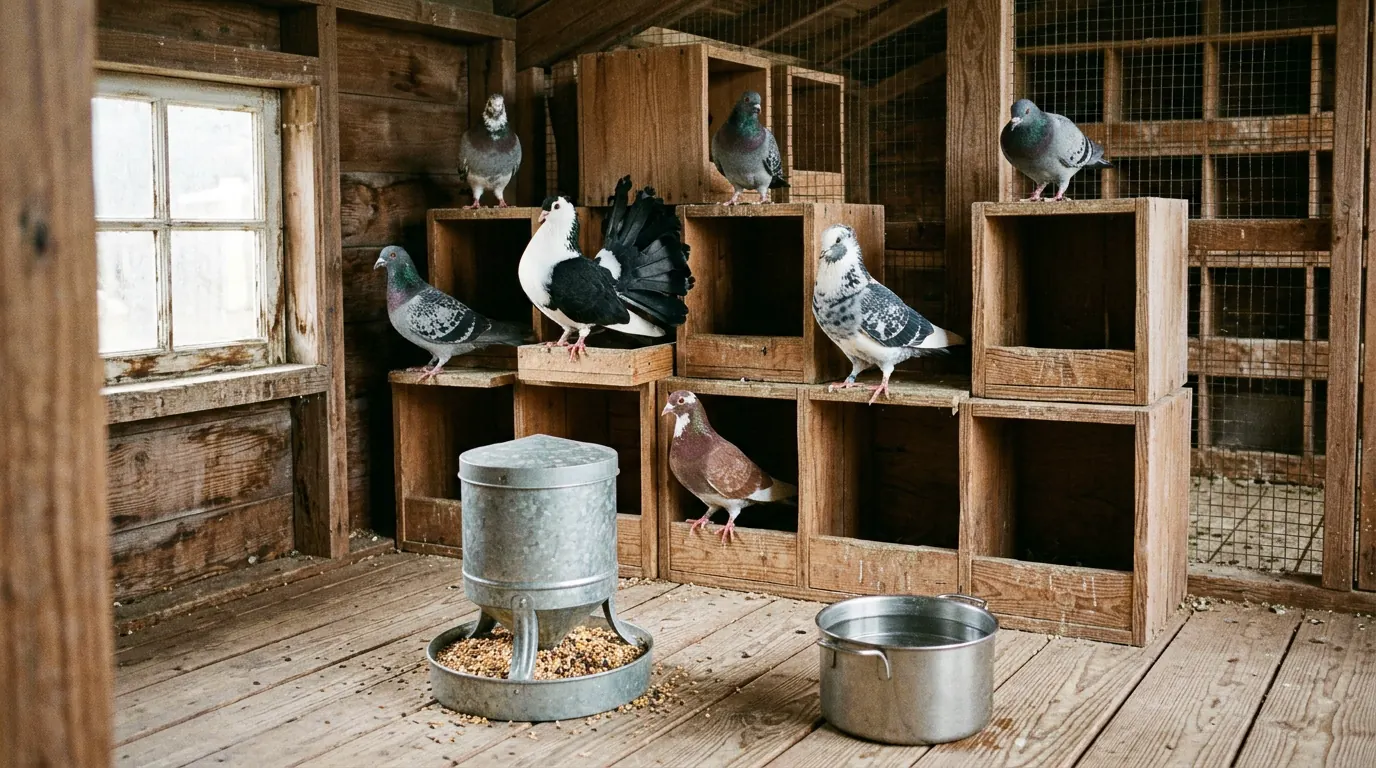
Fantails (pawiki), Old Polish pigeons (staropolskie), edged pigeons (obrzeżki) and gull pigeons (mewki) are the breeds people ask about most when they start with fancy pigeons. Each has its own shape, plumage and bearing, but all need similar care: a dry loft, a safe flight area and regular health checks. If you already keep poultry, you can record your pigeons in the same register. For how fancy breeds are described, see our overview of fancy chicken breeds.
Why there are so many breeds
Fancy pigeon breeds come from many years of selection for looks: tail shape, collar, wing pattern and plumage color. Breeders' associations write the standard for each breed, and judges score birds at shows by the same criteria. Before you buy, ask the seller for a pedigree or the line the birds come from, and compare them with the current breed standard. Your choice depends on your goal: shows, a hobby or selling young birds.
Plan the space before you buy birds. The loft should be dry, airy and free of drafts, and the birds need room to move. Match stocking density to the size of the loft and the breed, and ask an experienced breeder. There is no published figure for pigeons, so we do not list norms we cannot confirm.
Fantails: the breed with a fan-shaped tail
Looks
A fantail has a wide, fan-shaped tail that the bird carries raised and spread. This is the standard trait: judges score the tail's shape, its symmetry and how the bird holds it in show pose. Fantails come in many colors. When choosing birds, look at general condition. A bird that keeps dropping its tail, has damaged feathers or is clearly weak needs a health check before it joins your flock.
Housing
Fantails are sensitive to wet feathers. Damp tail feathers lose their shape, and the bird gets cold and loses condition. The loft needs dry flooring and perches sheltered from the wind. Check the tail and the feathers under it regularly, because dirt and droppings can cause skin inflammation. If you see any worrying sign, call a vet, who will choose the treatment.
Old Polish pigeons: a native fancy breed
Breed profile
Old Polish pigeons (staropolskie) are regarded as a native breed tied to Polish pigeon keeping. The standard describes build, body proportions and plumage colors. At shows, judges mostly look at breed type, color purity and the bird's condition. Before you buy, check the current standard for the required traits, because differences between breeding lines can be clear. A good-line bird usually has an even shape and clean, close-lying feathers.
Running your loft
Keepers of the breed usually record pairs and hatches. Note hatch dates, ring numbers and show results. These records show which pairs give the best type of offspring and make it easier to sell birds with a reliable pedigree. Also keep a treatment record for each bird, in line with the requirements of your breeders' association and your local vet. Entering the data in the coop register software keeps it all in one place.
Edged pigeons: birds with outlined plumage
Breed traits
The Polish name, obrzeżki, refers to the edging: a clear border in another color around each feather. The standard requires the border to be even and clean, with no blur toward the middle of the feather. Judges look at the whole plumage, not one spot. We describe a similar lacing principle for fancy chickens, because many fancy breeds rely on contrast in feather color.
Plumage care
Edging quality depends on the bird's condition and breeding line. A protein-rich diet and constant access to clean water affect the quality of new plumage during the molt. During the molt the bird needs calm and careful contact with other birds. Do not pull or clip feathers, because a damaged feather may not grow back fully for several weeks.
Gull pigeons: a breed with a distinct type
What to check before buying
For gull pigeons (mewki) the breed type in the standard and the bird's health matter most. Before you buy a pair, look at the birds calmly: eyes should be clean, the beak healthy and the feathers dry and close-lying. Ask the seller whether the birds were vaccinated or treated, and ask about the withdrawal period of any drugs given. If the seller cannot tell you, walk away or ask for documents.
Quarantine for new birds
Keep new pigeons apart from the rest of the flock for a while. Quarantine lets you spot signs of disease before it spreads to other birds. Agree the length with your vet, because it depends on the health situation at the bird's origin and on your farm. Record visitors to the loft in a farm entry and exit log, and set out your risk-reduction rules in a biosecurity plan.
How long pigeons live and what it depends on
What affects a bird's age
A pigeon's age depends on breed, feeding, loft conditions, disease and accidents. A bird kept in a dry, clean place under health control has a better chance of a long life. We give no single number of years, because there are no reliable data for pigeons and we do not want to mislead you. Check specific data in your breeders' association literature or with a vet. For comparison, we cover chickens in our guide to the lifespan of a hen.
Each bird's history
Keep a card for each bird with hatch or purchase date, line, vaccinations, treatments and weights. You can then see how long birds live in your flock and what affected it. For treatments, record the product name, the date given and the withdrawal period if the bird is kept for production. You can keep these records in the treatment and withdrawal records, and the vet always sets the dose.
Rules and registration when keeping pigeons
What to check in the law
Keeping birds, including fancy ones, falls under animal health rules. We describe the legal state as of 22.11.2026. You can find legal acts in ISAP, Poland's online database of legal acts (Internetowy System Aktów Prawnych), and official guidance is published by the Chief Veterinary Inspectorate (Główny Inspektorat Weterynarii). In practice, veterinary inspectorates require you to register the flock's premises and keep records, so before you start, ask your county vet (powiatowy lekarz weterynarii) which registration applies to you.
Documents and subsidies
If you run an agricultural business and apply for subsidies, applications go to ARiMR (Poland's Agency for Restructuring and Modernisation of Agriculture), and the rules are set by the Ministry of Agriculture and Rural Development. Do not assume subsidies cover fancy pigeons until you check with these offices. Keep purchase documents and pedigrees, because you will need them for applications and inspections. You can keep flock records in the coop register software, which organizes the data without manual spreadsheets.
Frequently asked questions
What are the fancy pigeon breeds?add
The most often named are fantails, Old Polish pigeons, edged pigeons and gull pigeons. Each breed has its own standard describing build, colors and plumage traits. You can find current standards through pigeon breeders' associations.
How long do pigeons live?add
Lifespan depends on breed, feeding, housing and disease. We give no single number of years because we have no confirmed source for pigeons. Check your breeders' association literature or ask a vet.
How do you recognize a fantail pigeon?add
You know a fantail by its wide, fan-shaped tail carried high. A judge makes the final call on breed type against the standard. When buying, ask the seller for a pedigree and the origin of the birds.
Do you have to register pigeons in Poland?add
The duty to register depends on the rules and the number of birds. Ask your county vet, and check the law in ISAP. We describe the legal state as of 22.11.2026.
How do you protect a pigeon loft from disease?add
Limit visits by strangers, keep an entry log, quarantine new birds and set aside separate footwear for the loft. Build your risk-reduction plan with your vet, fitted to your situation. Pigeons can also carry Newcastle disease, called paramyxovirosis in pigeons, so animal health supervision has to take them into account.
Can you treat pigeons without a vet?add
A vet always chooses the drug and the dose. For each treatment, record the product name, the date given and the withdrawal period if the birds are kept for production. This makes it easier to judge how well the treatment worked.
Sources & resources
- linkChief Veterinary Inspectorate — gov.pl/web/wetgiw
- linkARiMR — gov.pl/web/arimr
- linkNational Research Institute of Animal Production — izoo.krakow.pl
- linkInternetowy System Aktów Prawnych (Poland's legal acts database) — isap.sejm.gov.pl
Prepared by: DlaFerm Team based on data from the sources listed · Publisher: INSTA-TECH sp. z o.o.
Keeping pigeons next to poultry?
The DlaFerm.pl farm management software lets you keep flock, treatment and entry records in one place. Create a free farm account and see how it works in practice, or get in touch.
Phone
+48 796 258 151