White Pekin duck: raising, laying and fattening
The white Pekin is one of the most widely kept utility duck breeds. It combines fast weight gain with good laying, so it suits both fattening and a home flock of layers. Below we describe what it needs from you and how to keep its records.
verifiedFrom the team that has organised work on poultry farms for years.
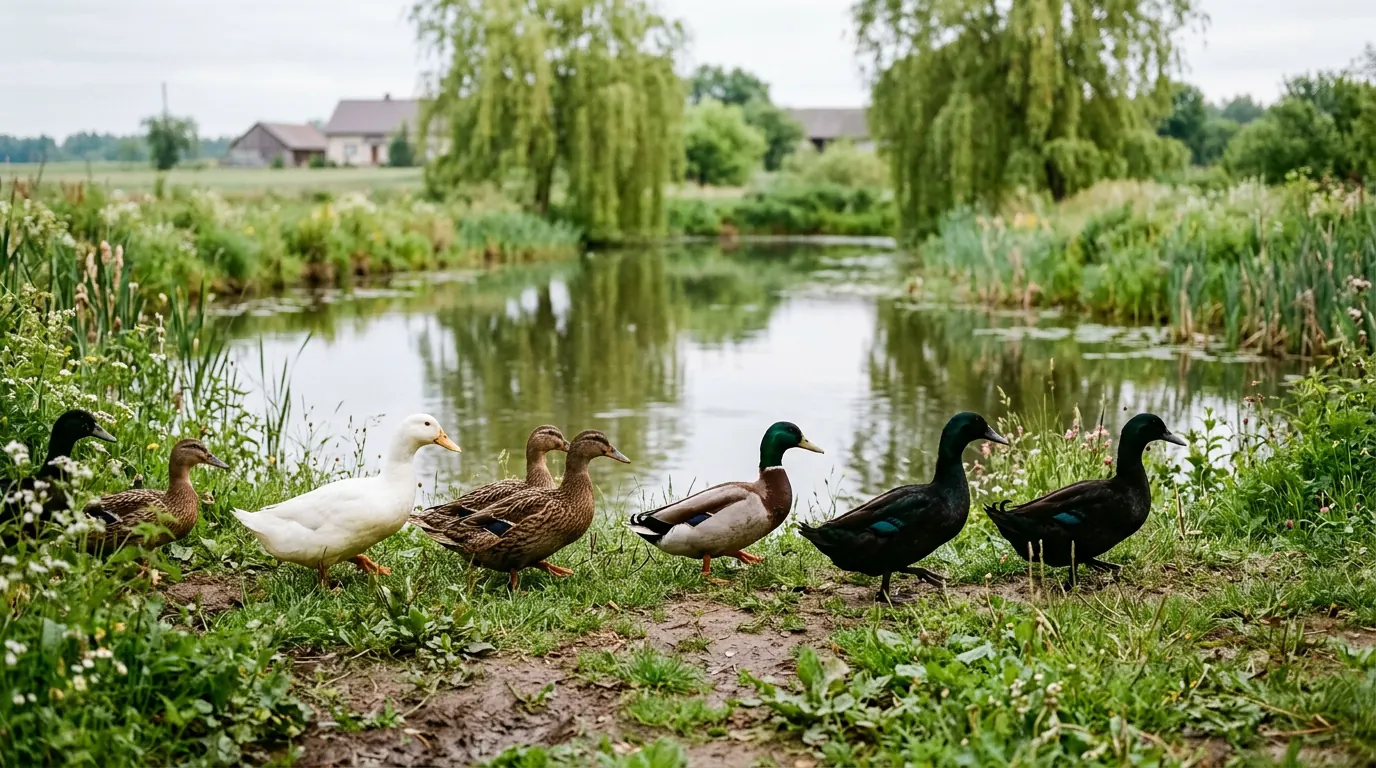
You keep white Pekin ducks mainly for meat, but also for eggs. Raising them is simple if you give them water, dry litter and steady checks on weight gain. The Pekin is a large white breed that gains well on complete feed. You can read more about breeds in our guide to duck breeds, and about the work itself in raising Pekin ducks.
Why the Pekin is so popular
White plumage makes slaughter easier, because after plucking the feathers leave no dark marks on the skin. The breed copes well with farm conditions and reaches slaughter weight quickly. For the farmer the cycle is predictable: ducklings, fattening, slaughter and a new batch. Keep in mind that results depend on the quality of the ducklings, the feed and hygiene, not on the breed alone.
Laying and breeding Pekins
Production traits of Pekin ducks
Pekin ducks have a large body and good meat yield. Drakes are clearly heavier than ducks, so separate them when breeding if you want an even flock. Weigh the flock regularly, not only at the start of the season. This lets you spot a drop in condition before it shows up in laying.
Laying: what to expect
Pekin ducks lay in spring and summer, and they lay clearly more than meat-type chickens. The exact number of eggs per duck depends on the breeding line, the age of the bird and the feed, so settle it with your hatching egg supplier. Record the number of eggs laid each day, because that is the only way to see a drop in laying in time rather than after the fact. You can calculate production indicators in the FCR and EPEF online module.
Hatching and breeding in the flock
Pekin ducks can sit on eggs, but farms more often use an incubator. It lets you control temperature and humidity and gives uniform ducklings. With natural hatching, provide a quiet nesting spot and constant access to water. Record each batch of eggs and ducklings separately, so that after a few cycles you know which line performs best.
Fattening Pekins from duckling to slaughter
Starting the batch
Place the ducklings in a heated pen with easy access to water and feed. In the first days they are very sensitive to drafts and damp, so the litter must be dry and fresh. Reduce the heating gradually as the ducklings grow, following their behavior: a scattered flock means the temperature is too high or too low.
Feeding
Feed for fattening ducks should be balanced and matched to the growth stage. Switch to finisher feed gradually, not overnight. Check feed intake and weight gain every week. If FCR starts to rise, check feed quality and access to drinkers first, and only then the ration. Broiler guidance can help, although it is written for chickens, not ducks: the principles are similar, the numbers are not.
Slaughter date and records
Set the slaughter date by the weight of the group, not of a single bird. Slaughtering too early means lower yield, too late means more feed per kilogram of meat. Before slaughter, check whether any medicine was given in that period. Your vet sets the withdrawal period, and you must record it. The treatment and withdrawal period module helps with this.
Water, litter and biosecurity
Water and litter
Pekin ducks must have water in which they can dip their bills, but keep the drinkers clean, because spilled water quickly turns litter into mud. Litter should be dry and fresh, and a wet layer is the signal to replace it. Too much moisture encourages leg problems and poorer weight gain.
Biosecurity and paperwork
Ducks brought onto the farm should come from a controlled breeder. Before placement, set the rules for people and vehicles entering, and the way you clean and disinfect. You can prepare a ready plan with the biosecurity plan generator. Remember that reporting a flock means registering the poultry holding in IRZplus, ARiMR's online animal register (ARiMR is Poland's Agency for Restructuring and Modernisation of Agriculture), as described in poultry farm registration (IRZplus).
Records for a Pekin duck flock
What to record
Note the placement date, number of ducklings, feed use, group body weight, dead birds with the cause, daily egg count, and all treatments and medicines with their withdrawal dates. When you keep these records in one place, for example in a poultry farm management program, you can compare cycles without hunting for notes.
Entry and exit log
Every entry to and exit from the farm should have a log entry. This includes feed deliveries, the slaughterhouse and buyers. Such a record helps during an inspection and when you analyze a problem in the flock. Keeping the log digitally, for example in the QR entry and exit log, makes it easier to keep up to date.
What decides whether duck fattening pays
Cost items
Feed is the biggest cost, so FCR and feed quality affect the result most. Then come ducklings, heating, litter, medicines and vet, and labor. Calculate each item separately before you set a selling price.
Prices and where to check them
Live poultry prices vary with season, region and buyer. We give no amounts here because they would quickly go out of date. For current guidance see how much a chicken, duck or goose costs: live poultry prices from breeders, and talk to several buyers before you sell.
Frequently asked questions
Do white Pekin ducks lay a lot of eggs?add
Pekins lay in spring and summer, and they lay clearly more than meat-type chickens. The exact number depends on the line, the age of the bird and the feed, so settle it with your hatching egg supplier and record it in your logbook.
Do Pekin ducks need access to water?add
Ducks need water to drink and to clean their bills and nostrils. Keep the drinkers clean and the litter dry. Wet litter is one of the biggest threats to flock health.
How long does it take to fatten Pekin ducks?add
It depends on the body weight the group reaches and on the feeding program. Set the slaughter date by weighing a sample from the group, not by the calendar. Record weight gain so you can compare cycles.
Can Pekin ducks be treated and still sold for meat?add
Your vet always chooses the medicine and dose. After a medicine is given, a withdrawal period applies, meaning the time before the meat may be sold. Record the withdrawal date and check it before slaughter.
Do I need to register a Pekin duck farm in Poland?add
A poultry holding must be reported and entered in the register kept in IRZplus. Check the details in the rules and with your county veterinarian (powiatowy lekarz weterynarii). Confirm the rules in force on 22.11.2026 in ISAP, Poland's legal acts database, before you start.
How do I set a price for live white ducks?add
The price depends on season, region, body weight and buyer. Compare offers from several buyers and breeders and include the cost of feed and ducklings. A list of live poultry prices from breeders gives you a guide.
Sources & resources
- linkRoss Broiler Management Handbook 2025
- linkChief Veterinary Inspectorate (Główny Inspektorat Weterynarii): gov.pl/web/wetgiw
- linkARiMR: gov.pl/web/arimr
- linkInternet System of Legal Acts (ISAP): isap.sejm.gov.pl
Prepared by: DlaFerm Team based on data from the sources listed · Publisher: INSTA-TECH sp. z o.o.
Do you keep ducks alongside other poultry?
The farm management program in DlaFerm.pl collects the records for all your species in one place. Create a free farm account and see how record keeping works in practice.
Phone
+48 796 258 151