Tumbler, Winer and Muleman pigeons: breed guide
Tumblers (wywrotki), Winers (winerki) and Mulemans (mulemansy) are pigeon breeds that keepers choose for their traits and for how well they match the breed standard. They differ in build, behavior and care needs, but every group needs a clean loft and good bird records. We explain how they differ and how to keep them.
verifiedFrom the team that has organised work on poultry farms for years.
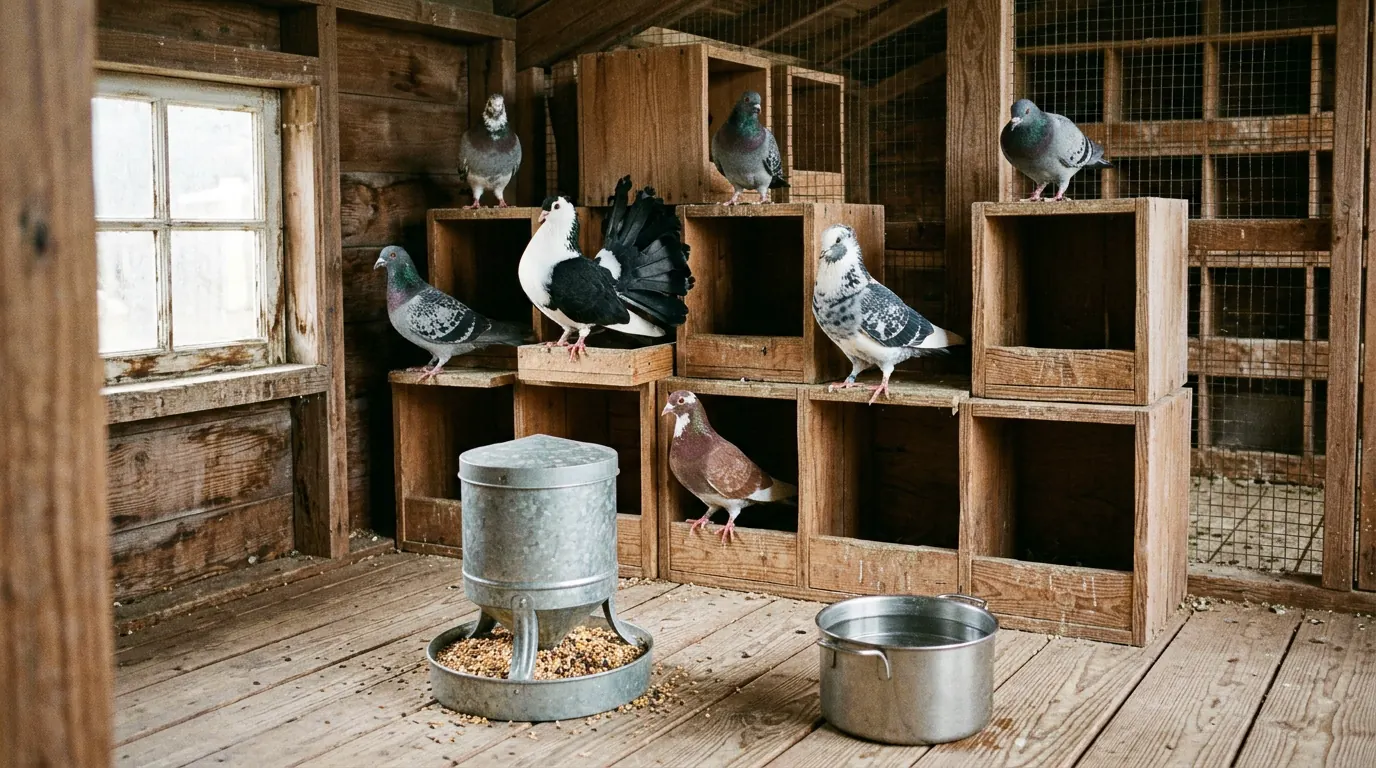
Tumbler (wywrotki), Winer (winerki) and Muleman (mulemansy) pigeons are three groups of utility breeds. Keepers raise them mainly for standard traits, flight behavior and bird condition. Each has its own standard describing build, plumage and desired traits, so before you buy, check the current breed standard with a pigeon breeders' association. For a general overview, see our guide to pigeon breeds. Here we focus on what actually sets these three groups apart in practice.
Where the differences come from
The differences come from selection over many generations of keepers. Some lines were selected for flight behavior, others for build and color. For you this means there is no single way to keep them. A flying bird needs a roomy loft and space to exercise. A show bird depends more on clean plumage and calm conditions. Before you plan your loft, check what the breed you want to keep requires.
What to settle before buying
Before you buy, write down why you want the birds: shows, flying, or a breeding display. Ask the seller about origin, age and health. Ring every bird straight away and enter it in your records, because without a number it is hard to link data on treatment, breeding and origin later. Pigeons can pass diseases to other birds, so keep new birds apart for as long as your vet advises before you join them to the flock.
Tumblers, Winers and Mulemans: how they differ
Tumblers (wywrotki)
Tumblers are known for a distinctive flight in which the bird somersaults in the air. Keepers judge them on flying technique, compact form and stamina. Birds in this group need regular training in free flight, so the loft should have an exit with room to take off and land. The breed standard describes build and plumage in detail. Learn it before you choose birds for further breeding.
Winers (winerki)
Winers are kept mainly for looks that match the standard. Judging focuses on body build, head shape and proportions, not on flight behavior. For you this means less need for flying space, but more attention to regular condition checks and clean plumage. The current breed standard describes the exact traits of each variety.
Mulemans (mulemansy)
Keepers judge Mulemans by the standard for build and plumage, not by flight behavior. These birds need a clean, dry loft and a calm setting, because stressed birds look worse at shows. Always check the current standard for each breed, as the description of traits can change between editions.
Loft and equipment for utility breeds
Space and ventilation
The loft must be dry, airy and free of drafts. Damp and built-up droppings favor respiratory disease and parasites, so clean and disinfect the floor and perches regularly. When planning space, check whether your breed needs a flying area. We cover nests, nest bowls, drinkers and feeders in a separate guide: pigeon loft equipment.
Feed and water
The diet of utility pigeons is based on grain mixes chosen for age and time of year. Birds are fed differently in the breeding season, at rest and before a show. Water must always be clean, and drinkers rinsed daily. Change the feed gradually and write the changes down, because a sudden switch can hurt condition. Your vet sets the dose and any supplements, not the feed bag.
Protection from predators and outsiders
The loft should have protected vents and a door that closes. Wild birds can carry disease, and strange pigeons can bring pathogens into your flock. Follow biosecurity rules: do not let visitors in without a change of footwear, and limit contact with birds from unknown sources. You can prepare a ready plan for safe handling in the biosecurity plan generator.
Pigeon health: observation, treatment and withdrawal periods
Daily observation
Every day, check that birds eat, drink and move normally. Watch for ruffled feathers at rest, changed discharge from the beak and eyes, lameness and weight loss. These signs are not a diagnosis, but they tell you to isolate the bird and talk to your vet. The sooner you note a symptom, the easier it is to tell whether one bird or the whole group is affected.
Treatment and withdrawal periods
The vet always chooses the medicine and dose after examining the bird. If your pigeons are meant for meat, or the meat is sold, a withdrawal period applies after treatment. You must record it and keep to it. Keep treatment and withdrawal records in the treatment and withdrawal module, so you know when a bird can go back to sale.
Marking and records
Every bird entering your loft should have a unique ring number in your records, together with hatch date, origin and treatment history. Data kept in one place makes breeding analysis and pairing decisions easier. Keep your flock records in the house records module.
Pairing and running your breeding program
Recording pairs and origin
Pairing starts with a record of each bird's origin. It shows which lines give good offspring and whether you are inbreeding. Record the pair number, pairing date, egg-laying and hatch dates, and show or flight results. After a few seasons, this history lets you decide from data, not memory.
Breeding season
The breeding period depends on bird condition, loft temperature and day length. Before the season, check the health of your pairs, restock nests and nest bowls, and plan which pairs will breed. Record each clutch separately, so you can later judge how productive each pair is. You can plan clutch dates and the work cycle in the flock placement planning module.
Where to find reliable information
Pigeon breeders' associations set breed standards and judging rules. Poland's Chief Veterinary Inspectorate (Główny Inspektorat Weterynarii) publishes general rules on animal welfare and keeping, and you can find the legislation in the Internet System of Legal Acts (ISAP). If you are unsure what applies to your loft, ask your county veterinary officer (powiatowy lekarz weterynarii) first.
Frequently asked questions
What is the difference between Tumbler and Winer pigeons?add
Tumblers are judged mainly on how they fly, somersaulting in the air. Winers are kept mostly for build and looks that match the standard. This matters when you plan a loft, because flying birds need room to exercise.
Can you keep Muleman pigeons in a small loft?add
Show birds do not need a large flying area, but they need a dry, clean and calm place. A cramped loft raises stress and disease risk. Size the loft to the number of birds and to whether the breed needs flying.
How do you tell if a pigeon matches the breed standard?add
Judge it against the current breed standard, which describes build, proportions, plumage and colors. It helps to compare the bird with the standard at a club meeting or with an experienced judge. Photograph your birds under the same conditions to track changes from season to season.
Do pigeons need to be treated under a vet's supervision?add
Yes. The vet chooses the medicine, dose and method after examining the bird. Treating without a diagnosis can make the bird worse and lengthen the withdrawal period. If in doubt, call your vet as early as you can.
How long should you keep new pigeons separate?add
Keep new birds apart for as long as your vet advises, long enough to watch their health before joining the flock. During that time, check each bird's condition and write down the results. This makes it easier to spot symptoms before they spread to the rest of the flock.
Is it worth keeping pigeon records?add
Yes. Without a ring number and a record of origin, it is hard to judge offspring and lines. Records also track treatment and withdrawal periods when birds are meant for meat. Start with a simple list of birds and add more data each season.
Sources & resources
- linkChief Veterinary Inspectorate (Główny Inspektorat Weterynarii) — gov.pl/web/wetgiw
- linkNational Research Institute of Animal Production (Instytut Zootechniki PIB) — izoo.krakow.pl
- linkInternet System of Legal Acts (Internetowy System Aktów Prawnych) — isap.sejm.gov.pl
- linkMinistry of Agriculture and Rural Development (Ministerstwo Rolnictwa i Rozwoju Wsi) — gov.pl/web/rolnictwo
Prepared by: DlaFerm Team based on data from the sources listed · Publisher: INSTA-TECH sp. z o.o.
Keeping pigeons alongside other poultry?
The <a href="/program-do-zarzadzania-ferma-drobiu">farm management software</a> lets you record birds, treatment and withdrawal periods in one place. Create a free farm account on DlaFerm.pl and see how records work in practice.
Phone
+48 796 258 151