Tippler and Fabry Pigeons: Breeds and Care
Tipplers and Fabrys are two popular pigeon breeds kept by hobbyists and show breeders. They differ mainly in how they behave in flight and what shows expect. We explain how to recognize them, how to run the loft and which records to start from day one.
verifiedFrom the team that has organised work on poultry farms for years.
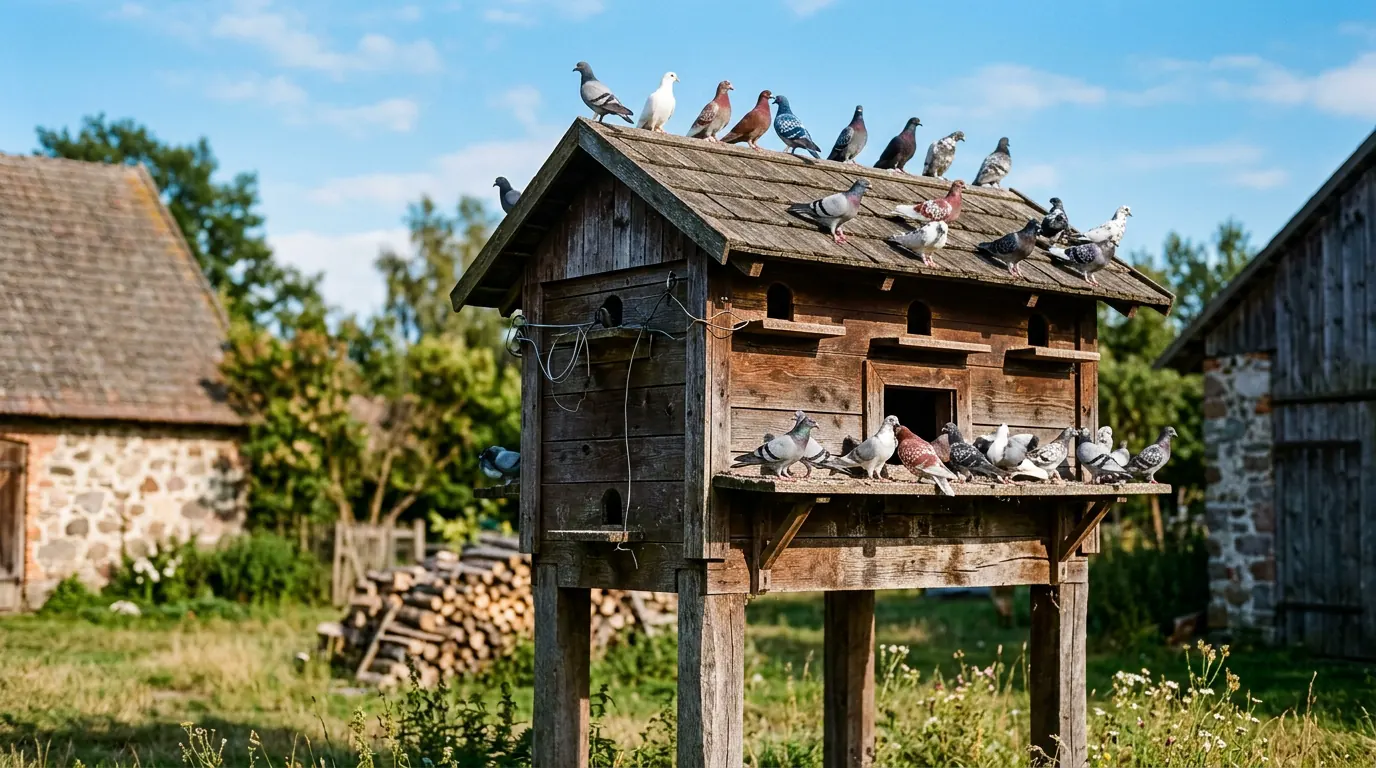
Tippler and Fabry pigeons are two breeds kept in Poland by hobby breeders and show exhibitors. Tipplers are known above all for their flight: the bird climbs high and tumbles on the way down, so breeders value them for a spectacular display. Fabrys are recognized by their build and plumage, which follow the breed standard. Always check details such as colors and show requirements in the current standard of the breeders' club. Before you buy your first birds, look at the overview of pigeon breeds to compare them with other groups.
Who these breeds suit
Tipplers and Fabrys are usually chosen by people who want a small loft with birds that have a distinct character. With Tipplers, flight matters, so you need space to release the birds and a quiet neighborhood. Fabrys more often go to shows and to conservation breeding, where matching the standard counts. In both cases, decide before you buy how many hours a week you can give to care, nest checks and records. Pigeons cannot be left unattended for long, even if they cost little to keep.
Where to start
First check the rules in your municipality (gmina) and county (powiat), and the general animal protection requirements for keeping animals. Then prepare the loft: dry, airy, free of drafts, with a separate place for nests and access to fresh water. Only then buy your first birds from a reliable breeder, ideally just a few. From the first day keep a simple record of each bird, because it helps with pairing and with spotting health problems.
Tipplers and Fabrys: the practical differences
Flight and purpose
Tipplers have long been kept as flying pigeons, and a breeder judges their value by how the bird climbs and descends in flight. This takes regular release and exercise, without which the bird loses condition and the urge to fly. Fabrys more often go to shows and to conservation breeding, where type and match to the standard are judged. The differences are not sharp. Many lofts keep both breeds side by side, and the goal decides: flight, showing, or a liking for a particular type of bird.
Housing needs
Both types need a dry, airy loft without drafts and with access to fresh water. Match the number of birds to the size of the loft and the space for flying. Flying birds need more room and regular release, because without movement they lose form. Choose nests, nest bowls, drinkers and feeders by the number of pairs, not by the number of birds in the flock. We describe how to choose and place equipment in the guide to loft equipment.
Clutches and young birds
Pigeons usually incubate the eggs as a pair, and the hen and cock feed the squabs together. Watch whether the pair settles to a clutch regularly and whether the young grow without delay. If the young stop being fed and the pair abandons the nest, do not assume at once that you handled something wrong. Illness or stress can be the cause. In that case contact a vet, who will choose any treatment. Do not pick medicines yourself.
Health and loft hygiene
Biosecurity
Keep new birds apart for a few weeks before they join the flock. Limit access to the loft for people from outside your loft, and keep wild pigeons out of rooms where feed is kept. Clean and disinfect equipment, nets and footwear at the entrance, and change the water regularly. Wild birds often carry disease, so place feeders where they cannot be reached from outside. Poland's Chief Veterinary Inspectorate (GIW) notes that pigeons can be infected with Newcastle disease, called paramyxovirosis in pigeons, and can pass the virus to chicken flocks, so disease surveillance must take pigeons into account. You can build a ready plan in the biosecurity plan generator and fit it to the size of your loft.
Treatment and withdrawal periods
Treating pigeons takes a vet's decision. The vet chooses the medicine and dose, and you should not base those choices on forum opinions. Record every treatment with the date, time and name of the product. If a withdrawal period applies to the medicine, note when it ends, because this makes checks easier before any use of the birds or their products. A treatment and withdrawal period log helps with this record and with talking to your vet.
Records and rules
Bird records
Keep a register for each bird: ring number, sex, hatch date, parents, health events and changes of owner. Having it all in one place lets you quickly trace a bird's origin and see which pairs raise young reliably. With a few pairs a notebook is enough, but in a larger loft it is better to move the data into software. A farm management program handles poultry and other birds in one place and is convenient for records. The data must be consistent and up to date through the whole season.
Welfare rules
The general animal protection rules also cover pigeons. Poland's Animal Protection Act sets care requirements, and inspectors may check that you follow them. Check the legal state as of 22.11.2026 in official sources, because rules change. We describe the main changes for breeders in our summary of the 2026 Animal Protection Act. If you doubt that a way of keeping birds is allowed, ask the county veterinarian (powiatowy lekarz weterynarii) before you invest in a loft.
How to start with Tipplers or Fabrys
First pair
Start with two or three pairs of healthy birds from a reliable breeder. Buying from one source lowers the risk of bringing disease into the loft. When choosing, look at the bird's origin, behavior, and the cleanliness of plumage, eyes and nostrils. Ask to see the birds moving and check that they are calm when handled. For general starting rules, see the guide on how to start keeping pigeons. It covers the steps from choosing a site to the first clutches.
Season plan
Most of the work falls in the breeding season. Before it, plan a loft check, top up the nests and check your feed stock and water containers. Decide which pairs will be put together this year and write it in your plan. After the season, sum up the results: number of clutches, number of young raised and the problems that came up. This record helps most when choosing pairs for next year and keeps you from repeating the same mistakes.
Pigeons and other ornamental poultry
Shared loft and poultry
Do not keep pigeons together with poultry without a clear reason. Different species can carry disease, and shared feeders and drinkers raise the risk of contact with wild birds. If you also keep ornamental poultry, separate the rooms, equipment and feeding places. This limits the risk of infection and makes it easier to monitor each group's health. For ornamental chicken breeds that can share a farm, see the guide to ornamental chicken breeds.
What next
Once you have a loft and your first pairs, set up your records from the start. One consistent register of birds and health events saves time at every check and lets you compare clutch results year to year. The most common mistake is writing data down from memory at the end of the season, when some of it is already out of date. Record as you go, even in short notes, and you will draw conclusions faster and with more confidence.
Frequently asked questions
What is the difference between Tippler and Fabry pigeons?add
Tipplers are valued mainly for their flight, while Fabrys are valued more for matching the standard at shows. The difference in needs is smaller than it seems, as both types need a dry loft and regular care. Check details of build and colors in the current standard of the breeders' club.
How much space do you need for a Tippler or Fabry loft?add
Loft size depends on the number of pairs and on whether the birds will be released to fly. Flying birds need more space and room for regular flights. Match the number of birds to the real floor area, because overcrowding favors disease.
Can you keep Tipplers with chickens?add
Keeping pigeons with poultry without a clear reason is not recommended. Different species can carry disease, and shared feeders raise the risk of contact. If you must, separate rooms and equipment and discuss the plan with a vet.
How do you check a pigeon's health before buying?add
Watch the bird move, check that eyes, nostrils and plumage are clean and that it is calm when handled. Ask the breeder about the bird's origin and whether the flock was tested or vaccinated. Keep a new bird apart before it joins the flock.
How much does a pair of Tipplers or Fabrys cost?add
The price depends on the bird's origin, age, results and whether you buy for breeding or for showing. Prices vary by region and market, so we give no amounts. Ask breeders and breed clubs directly.
Do you have to register a pigeon loft?add
Requirements depend on the scale of keeping and on the rules where you live. General animal protection rules always apply, and you should check details with your municipal office or the county veterinarian. Do not assume the rules are the same as for commercial poultry.
Sources & resources
- linkChief Veterinary Inspectorate (Główny Inspektorat Weterynarii): gov.pl/web/wetgiw
- linkMinistry of Agriculture and Rural Development: gov.pl/web/rolnictwo
- linkNational Research Institute of Animal Production (Instytut Zootechniki PIB): izoo.krakow.pl
- linkInternet System of Legal Acts: isap.sejm.gov.pl
Prepared by: DlaFerm Team based on data from the sources listed · Publisher: INSTA-TECH sp. z o.o.
Do you keep a loft next to other poultry?
DlaFerm keeps flock records, health events and bird records in one place. Create a free farm account or get in touch, and we will show you how to set it up in practice.
Phone
+48 796 258 151