Sorghum silage for beef cattle: growing and ensiling
Sorghum silage gives you a dependable forage where corn yields poorly, but it needs a different harvest time and more care in feeding. Harvest at the right dry matter, seal the clamp or silo tightly and introduce it gradually. Below we explain how to do it on a beef cattle farm.
verifiedFrom the team that has organised work on poultry farms for years.
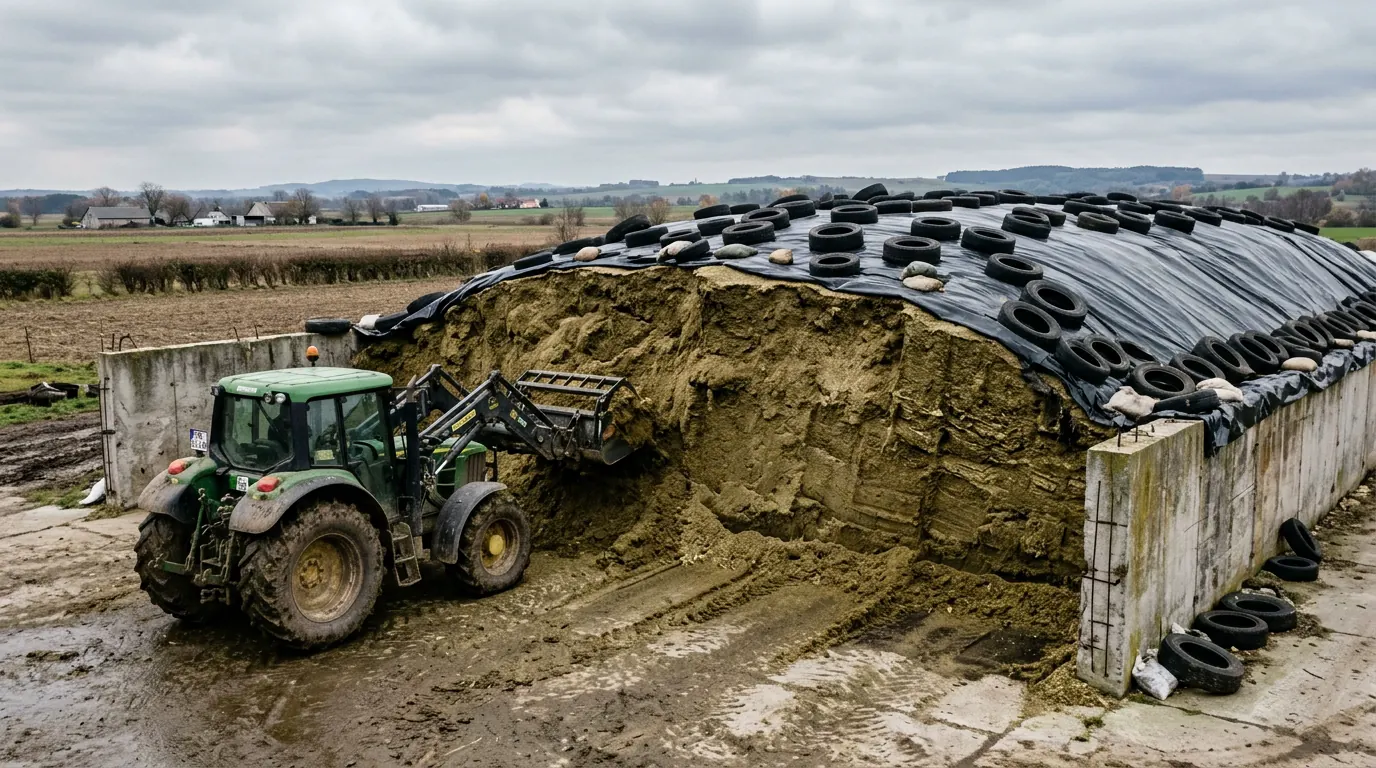
You grow sorghum for silage when you need a dependable yield of green forage for beef cattle and corn on that field fails because of drought or cold. Sorghum loves heat, produces a lot of biomass and copes well with dry spells. Its silage needs a different harvest time than corn and more attention in feeding. Three things matter most: harvesting at the right dry matter, sealing the silage tightly and starting safely with regrowth during the season. We also cover how to build a ration in our article on silage for cattle.
Why sorghum at all
Sorghum uses warmth better than many cereals and on lighter soils it can hold its yield in a dry year. For beef cattle, sorghum is a forage, so you plan it together with your other silages, not instead of them. Before you decide to sow, compare cost and yield with corn on your own field. ODR Lubań (a Polish agricultural advisory center) publishes an income calculation for beef production at different intensity levels. Feed and cattle prices change often, so check current prices with local buyers and agricultural chambers before you decide.
Growing sorghum for silage
Field and sowing date
Sow sorghum when the soil is already warm, because cold and wet slow emergence and make the stand uneven. Set the date locally by watching soil temperature in the first weeks of spring, not by the calendar. Choose a sunny field that is free of heavy weeds before sowing, because young sorghum competes poorly with weeds. Agree a crop rotation with your advisor, since it depends on the diseases and pests on your land.
Choosing a variety for silage
For silage you choose forage varieties, not grain varieties, because what you want is green mass and its feed value. Varieties differ in height, regrowth and yield. Choose by the description in a forage variety catalog and ask an ODR advisor about it. Do not assume a grain variety will make good silage, even if it yields well for grain.
Harvesting and ensiling sorghum
When to harvest
Sorghum for silage is usually cut when the grain reaches the milk-to-dough stage and the stalks are still juicy. Harvest too early gives watery silage that ferments poorly and leaks from the silo. Too late gives dry material that is hard to compact. Measure dry matter on a sample before harvest, because it tells you whether the silage will keep well. In feeding tables corn silage is taken at about 30% dry matter; for sorghum, agree the exact target with your advisor.
Compacting and sealing
Chop the crop short and haul it to the silo quickly, because oxygen starts spoiling silage right away. Compact in layers, cover the clamp tightly with plastic sheeting and weigh it down with tires or bags. Whether to add acid or silage inoculant depends on dry matter and moisture, so choose it after talking to your advisor. Badly fermented silage smells of butyric acid or rot and should not go into the feed trough.
Feed value for beef cattle
What the Teagasc table shows
In the Teagasc Beef Manual table, corn silage has 32% dry matter, 8.5% crude protein and 48% NDF fiber per kilogram of dry matter. Treat these values as a reference point, not as the result for your field. Sorghum varies in composition with variety, harvest stage and fertilization, so have a sample analyzed in a laboratory before you build a ration. Sorghum silage can be lower in energy than well-developed corn, so when rearing calves and finishing cattle add concentrate or protein feed.
How much silage in the ration
According to an IZ PIB publication (K. Bilik et al.; IZ PIB is Poland's National Research Institute of Animal Production), the guide ration of corn silage (30% dry matter) for cattle is 4 kg a day at 200 kg body weight, 5 kg at 300 kg, 6 kg at 400 kg and 7 kg at 500 kg. Silage is fed ad libitum, so these figures are a guide, not a limit. When you combine two silages, mix them before feeding. For sorghum, use this scheme only as a starting point and watch whether the animals pick through the feed.
Feeding risks to keep in mind
Prussic acid in young sorghum
Sorghum contains compounds that in young plants, regrowth and frosted plants can release prussic acid (hydrogen cyanide), which is dangerous to cattle. The risk is highest in early growth and after frost. Do not graze cattle on sorghum regrowth and do not feed fresh, young material. If you suspect poisoning, call a vet right away, because the vet, not the farmer, chooses the medicine and dose.
Introducing a new feed
Introduce new silage gradually over several days, mixing it with the current feed. A sudden change in ration causes diarrhea and loss of appetite, and that shows up in weight gain. Record when and from which silo the animals were fed, because it helps you find the cause if health problems appear. OODR Łosiów (a Polish agricultural advisory center) recommends feeding suckler cows mainly forage while they rear calves, so sorghum silage fits this scheme only as part of the whole ration.
Silo, clamp and batch records
Where to store
Keep sorghum silage in a sealed clamp or silo, away from rainwater and animals. Airtightness decides losses, and uncovered edges and damaged sheeting speed spoilage from the top. For how to choose a silo and clamp, see our guide to silos and clamps. Check the seal every time you remove a larger layer.
Records and batch control
Keep a record of every batch: harvest date, field, dry matter result, ensiling date and opening date. That way you know which batch was good and which spoiled, and you can judge the effect of the feed on weight gain. You can keep the status and history of your clamps in one place in silo monitoring in DlaFerm.pl. Set access to the records in permissions and roles, so only the people responsible for feeding enter feed data.
Frequently asked questions
Is sorghum suitable for silage for beef cattle?add
Yes, sorghum is used as a forage for beef cattle, especially where corn yields poorly. Its value depends on variety, harvest time and fermentation quality. Have a sample analyzed before you build a ration and discuss the ration with a nutrition advisor.
When should you harvest sorghum for silage?add
Plan the harvest when the grain is at the milk-to-dough stage and the crop has the right dry matter. Harvest too early gives watery silage, too late gives dry silage that is hard to compact. Always confirm timing with a dry matter result from a sample.
Can sorghum silage be poisonous?add
Young regrowth and plants after frost can contain compounds that release prussic acid. Do not graze cattle on such plants and do not feed fresh, young material. If you suspect poisoning, contact a vet right away.
How much sorghum silage should you feed cattle?add
Guide rations of corn silage according to the IZ PIB publication run from 4 kg a day at 200 kg body weight to 7 kg at 500 kg. For sorghum, use these values only as a starting point. Set the final ration with a nutrition advisor or a vet.
How do you store sorghum silage?add
Silage keeps well in a sealed silo or clamp if it is well compacted and covered. Once opened, use it quickly, because oxygen causes spoilage from the surface. Watch the smell and temperature of the silage and discard a spoiled batch.
Does sorghum yield well in drought?add
Sorghum tolerates drought and high temperatures well, so it is chosen where corn yields poorly. Yield and feed value still depend on soil and fertilization. Do not assume a high yield without a trial on your own field.
Sources & resources
- linkIZ PIB — Feeding beef cattle in organic farming conditions (K. Bilik et al.)
- linkTeagasc — Teagasc Beef Manual — Section 6: Nutrition
- linkOODR Łosiów (gov.pl) — Feeding beef cattle (leaflet)
- linkODR Lubań (PODR publication) — Sample calculation of farm income from beef production (different intensity levels)
Prepared by: DlaFerm Team based on data from the sources listed · Publisher: INSTA-TECH sp. z o.o.
Keeping an eye on silage quality in the silo?
The silo monitoring module in DlaFerm.pl helps you keep clamp status and batch records in one place. Create a free farm account and see how it works on your own farm.
Phone
+48 796 258 151