Silage Storage: Tank, Drive-in Bunker and Clamp
A silage tank, a drive-in bunker and a clamp differ in cost, airtightness and the way you feed out. The goal is the same: the silage must pack down, stay sealed from air and not heat up or mold before you feed it. We explain how to choose a system and run storage on a beef herd. We also give figures from IZ PIB, Teagasc and AHDB manuals that help you estimate your stock.
verifiedFrom the team that has organised work on poultry farms for years.
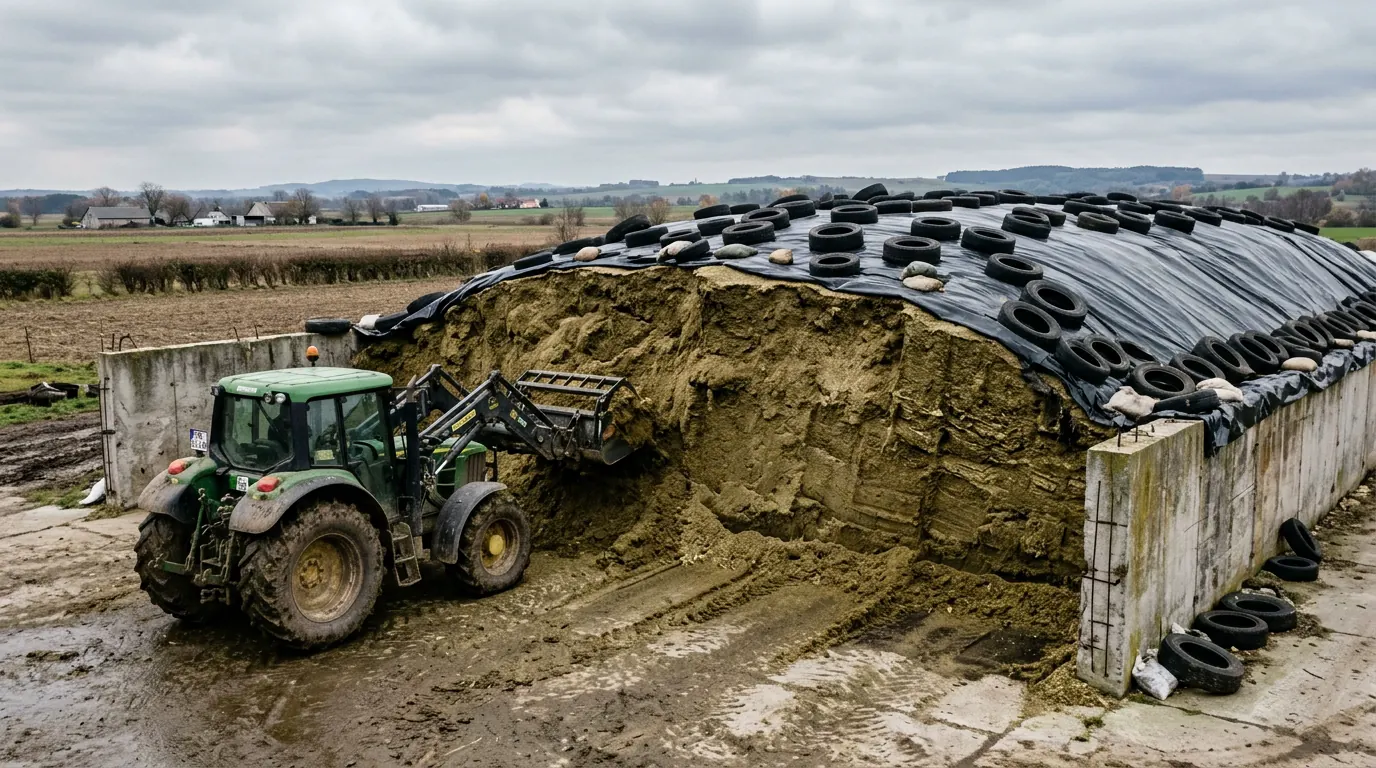
A silage tank is a sealed, closed container. A drive-in bunker is a chamber that a tractor drives into, and you take feed from the face. A clamp is a heap of silage on a hard-surfaced pad, covered with sheeting. For a beef cattle farmer one thing matters most: the silage must pack down fast and be cut off from air, then be used from the face so that it does not start to heat and mold. For large stocks a clamp is often cheaper to build, but it needs good packing and careful covering.
What decides the choice
The choice depends on how much feed you have, the size of the herd and the time daily feed-out takes. With a small number of suckler cows the stock is small and easier to keep in a closed container. With a bigger herd a clamp with a wide face pays off, because you take silage from it every day. Tracking your stock helps you plan whether the silage will last until spring. The silo monitoring module shows how this works in practice.
Tank and drive-in bunker: sealing and feeding from the face
Closed tank
A tank limits air, but it needs airtight hatches, a working drain and regular checks of the seals. Load the silage in layers, pack it down and load as fast as you can. In its beef manual, Teagasc recommends filling and sealing silos quickly, because this limits heating of the feed after harvest. Once the tank is closed, open it only when you must, because every opening lets air in.
Drive-in bunker and daily feed-out
In a drive-in bunker, keep the exposed surface of silage as small as possible. Teagasc advises feeding as many animals as possible from the silo, because this uses up the face faster and shortens the time the silage is in contact with air. If part of the herd gets bales, store them where a tractor can reach them and feed them in turn, not leave them for long. It helps to record how much silage the herd eats each day, because that quickly shows a drop in appetite or a change in feed quality.
Silage clamp: packing, sheeting and weight
Packing and airtight sheeting
Build the clamp in layers and pack it well, because air trapped between layers makes the feed heat. When filling is finished, cover it with sheeting without holes, secure the edges and weigh the whole thing down with sacks or tires. You want no visible mold on the surface once uncovered, and silage that feels cool to the touch. Repair any damage to the sheeting at once with tape made for the job, because even a small hole lets air under the whole sheet.
Exposed face
Open the clamp from the face and only as much as the animals eat in a day. Every new cut means new contact with oxygen, so do not take silage off in advance for several days. We compare different ways of storing feed in our article on feed silos on the farm, which shows how the choice of structure changes the work of daily feeding.
Protecting silage from birds, rodents and animals
Rodents and other animals
Keep the stock away from cattle and other livestock, because outside access to silage increases losses and the risk of contamination. Teagasc recommends placing rodent bait carefully so that cattle cannot reach it. Always read the manufacturer's instructions and follow the advice of your vet or adviser, because many poisons are dangerous to animals.
Birds and damage checks
Birds peck at sheeting and bales, so netting or monofilament line protects the stock from them. Teagasc also notes that an eye pattern painted with emulsion paint may scare them off. Check the sheeting and the edges of the clamp regularly. Repair damage at once, because a small cut can spoil a large part of the stock within a week. We describe the difference between knocking on a silo and a level sensor in knocking on the silo versus a feed level sensor.
How much silage to prepare for beef cattle
Rations by body weight
According to a table in an IZ PIB publication (Poland's National Research Institute of Animal Production) on feeding beef cattle in organic systems, silage from wilted grass at about 30% dry matter is fed ad libitum. Indicative amounts are 13 kg a day at 200 kg body weight, 16 kg at 300 kg, 19 kg at 400 kg and 21 kg at 500 kg. For maize silage the amounts are 4 to 7 kg a day over the same weight range. Use these figures as a starting point for your own plan, not as a ready-made standard for every herd.
| Body weight | Grass silage (about 30% dry matter) | Maize silage |
|---|---|---|
| 200 kg | 13 kg | 4 to 7 kg |
| 300 kg | 16 kg | 4 to 7 kg |
| 400 kg | 19 kg | 4 to 7 kg |
| 500 kg | 21 kg | 4 to 7 kg |
Dry cows
The AHDB manual warns that unrestricted silage in the dry period can make cows too fat. Its example is a 650 kg cow, eight weeks before calving, fed a restricted 17 kg of silage. Minerals matter before calving too, especially magnesium, selenium, vitamin E and iodine, which support the health of cow and calf. Agree the ration and supplements with your vet or feeding adviser.
How to keep track of silage through the winter
Counting days of stock
Work out your stock from the dimensions of the clamp or tank and the estimated density of packed silage. Divide the result by the daily use of the whole herd and you get the number of days the feed will last. Recalculate it every week, because the rate of use changes with the age and weight of the animals. You can run the day forecast and the signal to the feed supplier in feed stock under control: a silo sensor, a days forecast and a signal for the feed mill.
Records and sensor links
Feed level readings are reliable only if you record them regularly and at the same spot. Sensor data can go into the system with the rest of your farm data, which makes planning feed purchases easier. We list the available connections on the page about integrations with IRZplus and sensors (IRZplus is ARiMR's online animal register, run by Poland's Agency for Restructuring and Modernisation of Agriculture), where you can see which devices and data you can link.
Frequently asked questions
Is a silage tank better than a clamp?add
A tank limits air better, but it costs more and must be airtight. A clamp is simpler to build and, if well packed and covered, suits large stocks. The choice depends on how much feed you have and how you feed out.
How do you store silage in a clamp?add
Pack the layers, cover the clamp tightly with sheeting, weigh it down and secure the edges. Repair sheeting damage at once with tape. Open only as much of the face as the animals eat in a day.
How do you protect silage from birds and rodents?add
Fence the stock so cattle cannot reach it. Place rodent bait carefully, out of reach of animals. Netting or monofilament line scares birds, and according to Teagasc so does a painted eye pattern.
How much silage do you need for winter?add
It depends on animal weight, the ration and the length of winter feeding. The IZ PIB table gives indicative grass silage amounts of 13 to 21 kg a day at body weights of 200 to 500 kg. Multiply by herd size and number of days, then check the result with a nutritionist.
What should you do when silage goes moldy?add
Remove the spoiled layer and do not feed it to animals. If cattle show symptoms, call a vet, who will choose what to do next. The cause is usually poor packing, leaky sheeting or feeding out the face too slowly.
Sources & resources
- linkTeagasc (Ireland) — Teagasc Beef Manual — Section 6: Nutrition
- linkIZ PIB — WZ — Feeding beef cattle in organic systems (K. Bilik et al.)
- linkAHDB Beef & Lamb (UK) — Beef BRP Manual 5: Feeding suckler cows and calves for Better Returns
Prepared by: DlaFerm Team based on data from the sources listed · Publisher: INSTA-TECH sp. z o.o.
Want to know how much silage is left?
The silo monitoring module helps you track feed levels over time and plan your winter stock. Create a free farm account on DlaFerm.pl and see how it works on your farm.
Phone
+48 796 258 151