Soft-shelled eggs: causes and what to do in your flock
An egg with no shell most often appears when the diet does not give the hen enough calcium and vitamin D3, when the flock is stressed, or when an infectious disease is at work. Before you reach for a supplement, check the feed, the conditions in the coop and your laying records. If it keeps happening, call a vet.
verifiedFrom the team that has organised work on poultry farms for years.
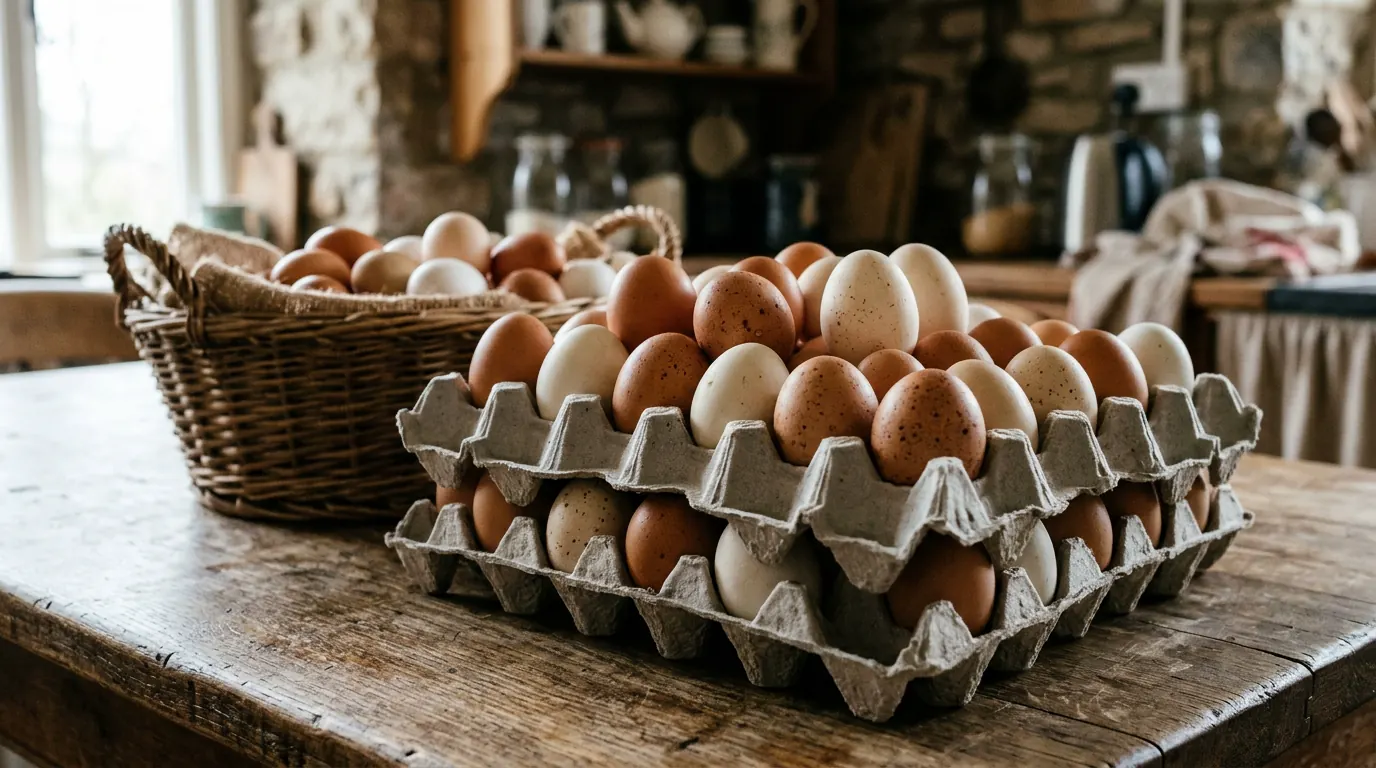
A soft-shelled egg forms when a hen lays an egg with only the shell membrane, or with a very thin, brittle shell. The most common causes are feeding mistakes, especially too little calcium, phosphorus or vitamin D3, a very fast laying rate, stress, and infectious diseases such as infectious bronchitis. Start with the diet and the conditions in the coop. If the problem continues, talk to a vet about the flock.
How to tell a real problem from a one-off
A single shell-less egg turns up even in a well-run flock and usually needs no action. The trouble starts when the number of such eggs grows week by week or affects many hens at once. Then the scale matters, not the single egg. Write down every day how many eggs you collected and how many had a thin or missing shell. Only that kind of data shows a trend.
Where shell-less eggs come from
Feeding and calcium
The shell is made mainly of calcium carbonate, which the hen takes from her feed and from a separate calcium source. If there is too little calcium in the diet, or it is poorly absorbed, the hen's body cannot supply enough of it in the last stage of forming the egg. Ask your feed supplier for the composition, especially calcium and phosphorus, and compare it with the needs of your group of birds. You will find good starting points in our guide on how to keep hens for eggs.
Energy density and laying rate
The 2021 Ross 308 parent stock nutrition specifications say that the feed amount is set from body weight and laying rate, and that nutrient values must be adjusted in proportion to the energy density of the feed. The handbook assumes 2800 kcal/kg, so with a different feed the nutrient values need to be recalculated. Changing feed without that recalculation can upset the calcium supply to hens in full lay.
Vitamin D3 and phosphorus
Calcium from the feed reaches the shell only if the body absorbs it well. That takes enough vitamin D3 and the right balance of calcium and phosphorus. A lack of vitamin D3, or too much phosphorus, can make the shell worse even when the feed contains the right amount of calcium. Always discuss additives and premixes with a nutrition adviser.
Stress, disease and coop conditions
Infectious diseases
Infectious bronchitis, Newcastle disease and other infections of the reproductive tract can cause eggs with no shell or a very thin one. They often come with a drop in laying and poorer condition of the birds. Vaccination on a schedule set by a vet protects against the main diseases. Details are in our text on vaccinating chickens in a backyard flock.
Stress and heat
A sudden temperature change, noise, predators, a change of flock members or a lack of water all act on hens as stress. Under stress the bird's body changes the rhythm of forming eggs, and the shell may be weaker. Watch the flock on hot days and check that the hens always have clean water. Weak birds that stand with ruffled feathers and avoid moving need a closer look, as we describe in the text on a listless hen.
Irregular laying
Young hens at the start of lay often produce eggs with weaker shells, because their reproductive system is still developing. The same can happen with older birds whose laying is declining. If the problem affects newly introduced hens or hens around peak lay, improving feed and keeping the coop calm is often enough. When shell-less eggs stay in the flock for longer, you need a vet's advice.
What to do when shell-less eggs appear
Step 1: count and record
Collect eggs at least twice a day and write down how many have no shell or a thin shell. Also note which hens are affected, if you know where the eggs came from. After a few days you will see whether the number is rising or steady. The vet will also need this record, as they will ask about the scale and course of the problem. The easiest way is to keep it in a poultry farm management system.
Step 2: improve the diet
Make sure the flock always has access to a calcium source, for example a separate feeder with crushed shell. Change the feed gradually, because a sudden change of composition can also cause trouble. If you use a ready-made mix, ask the producer for the composition and compare it with the recommendations for that age group. Do not add calcium or vitamin products on your own, because too high a dose harms as much as a deficiency.
Step 3: call the vet
If the problem does not go away after you improve the diet, or if signs of disease appear, consult a vet. The vet chooses any treatment, the medicine and the dose. Remember the withdrawal period of every product given, and record it before the eggs go on sale. The treatment and withdrawal period module helps with this. While you are at it, check whether the flock has been wormed as your vet advised.
Coop conditions that affect the shell
Water and litter
Wet litter encourages disease and stress, and it weighs on hens every time they step onto the roost. Check the drinkers, look for leaks and replace litter when it becomes packed and damp. You will find more on causes and effects in the text on wet litter. A clean coop also lowers the risk of infections that can affect shell quality.
Nests and broken eggs
Hens that lay in cramped, badly placed nests or on the floor often crack or damage eggs. A damaged shell does not always mean a health problem, so tell eggs cracked by accident apart from eggs with no shell. Well-designed nests and regular egg collection limit the problem. We describe how to build them in the text on nest boxes for hens.
How to keep records so you can see the pattern
What to record
Note the date, the number of eggs laid, the number of eggs with no shell or a thin shell, feed changes, weather, treatments and vaccinations. After a few weeks it is easier to spot links, for example a drop after a change of feed supplier or after a heat wave. Such a record also helps when you talk to the vet. Keep it in a coop register so all the data is in one place.
Shell color is not shell thickness
Shell color depends on breed and genetics, not on strength. Hens that lay green or blue eggs can have shells as strong as hens that lay brown ones. When judging a problem, look at the thickness and completeness of the shell, not the color. We describe breed differences in the text on hens that lay green and blue eggs.
Frequently asked questions
Why is my hen laying eggs with no shell?add
Most often the diet does not give enough calcium, phosphorus or vitamin D3, or the flock is stressed or has an infectious disease. It can also affect young hens at the start of lay. Check the feed and the coop first, and if the problem continues, talk to a vet about the flock.
Are eggs with no shell safe to eat?add
An egg with no shell is more exposed to contamination and breaks easily, so it is not suitable for sale. If the flock is sick, the eggs may also be infected. Decide on using them at home only after talking to a vet.
Will adding calcium to the feed solve the problem?add
Not always. Calcium helps only when hens eat it and absorb it well. A lack of vitamin D3 or a poor calcium and phosphorus balance can stop the hen from using the calcium. Agree the dose and type of supplement with an adviser or vet instead of adding it on your own.
When should shell-less eggs make me call a vet?add
Call when the number of such eggs stays up for several days or grows and better feeding has no effect. Call too if you also see a drop in laying, weakness, diarrhea or a change in behavior. The vet will assess the flock and choose any treatment.
Do young hens also lay eggs with no shell?add
Yes. At the start of lay the shell is often weaker, because the young hen's reproductive system is still developing. The problem usually fades as laying settles. If it lasts longer or gets worse, talk to a vet.
How do I record shell-less eggs in my flock records?add
Write down every day the number of eggs collected and the number with no shell or a thin shell. Add the dates of feed changes, treatments and vaccinations. This makes it easier to see links and to show the data to your vet.
Sources & resources
- linkRoss 308 Parent Stock Nutrition Specifications 2021
- linkRoss Parent Stock Management Handbook 2023 (Interactive)
- linkChief Veterinary Inspectorate (Główny Inspektorat Weterynarii) — gov.pl/web/wetgiw
- linkNational Research Institute of Animal Production (Instytut Zootechniki PIB) — izoo.krakow.pl
Prepared by: DlaFerm Team based on data from the sources listed · Publisher: INSTA-TECH sp. z o.o.
Want to see when shell quality starts to slip in your flock?
The DlaFerm coop register lets you keep laying and observation records in one place. Create a free farm account on DlaFerm.pl or get in touch, and we will show you how it works in practice.
Phone
+48 796 258 151