Silver pigeons (srebrniaki): breed and traits
You keep Silver pigeons (gołębie srebrniaki) mainly for their looks: the color and build of the bird, judged against the breed standard. We explain how to recognize a bird that matches the breed description, how to set up the loft and how to keep your birds without losses. For every health or treatment decision, talk to a vet.
verifiedFrom the team that has organised work on poultry farms for years.
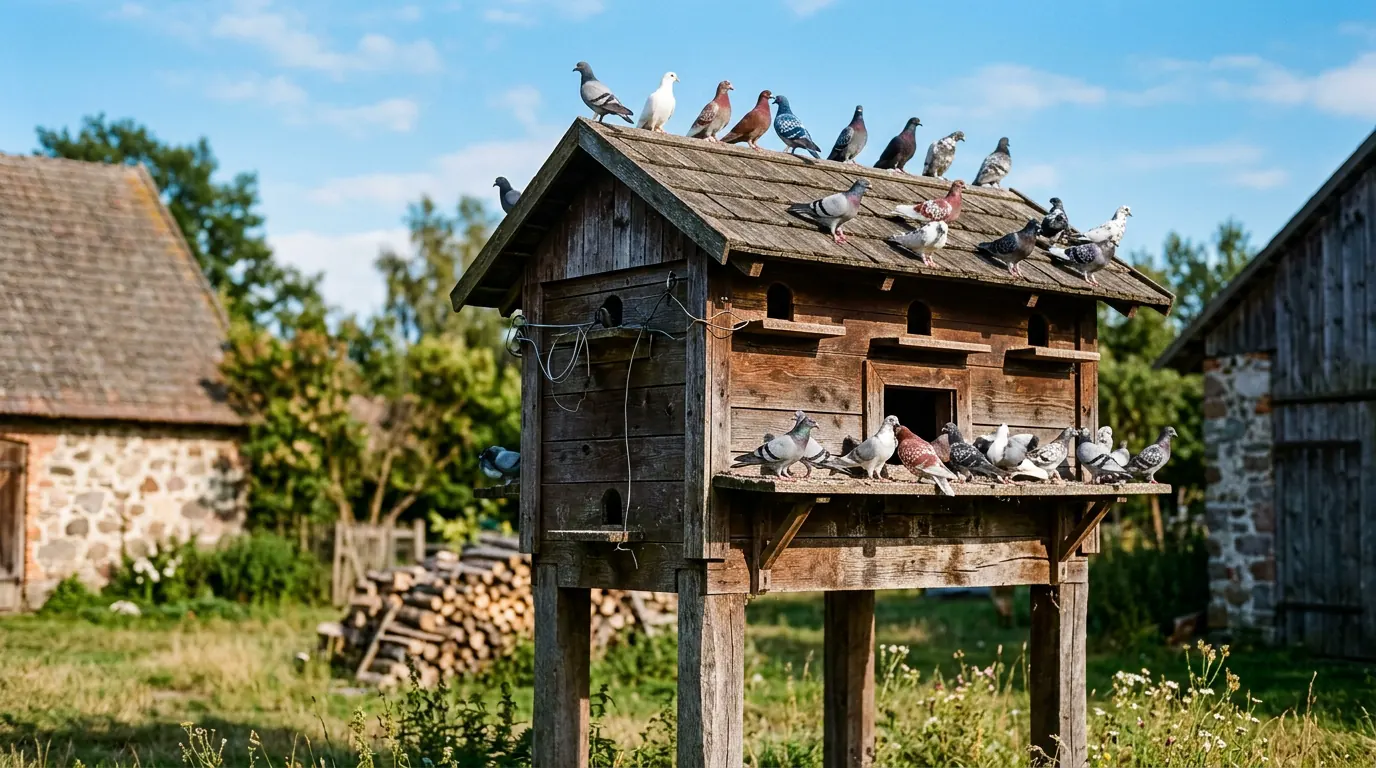
Silver pigeons (srebrniaki) are a breed kept for appearance: plumage color and body build. They are judged against the breed standard, not on performance. We give no sizes or weights here, because we have no source that describes them. The surest reference is the standard approved by the pigeon breeders' club. For a wider overview, see our guide to pigeon breeds.
Why the standard matters
When buying, the name "srebrniak" alone is not enough, because birds that look alike can belong to different varieties. Before you pay, ask the seller for a pedigree or information on where the bird came from, and compare it with the standard. An experienced judge or a member of the breed club can assess a bird faster than you can from photos. Also record where your birds came from and when you bought them. You will need these details for every later breeding decision.
How to recognize a Silver pigeon
Color and plumage
The main identifying mark of the breed is plumage color, which should match the description in the standard. Look at the bird in daylight, because artificial light changes shades. Check that the color is even across the whole body, especially on the neck, wings and tail. Look for off-color patches, spots and faded feathers. Tail and flight feathers must be complete, because missing feathers lower the score at a show right away.
Build and posture
The standard also describes the body shape, the shape of the head, beak and eyes, and the posture of the bird. A healthy bird stands firmly, holds an upright body and has bright, clean eyes with no discharge. The beak and nostrils should be clean and the feathers close to the body. Do not buy a sick, listless or ruffled bird without an examination. If in doubt, ask a vet to assess the bird before transport.
A loft for Silver pigeons
Dry and airy
The loft must be dry, because damp encourages respiratory disease and parasites. Provide ventilation without drafts over the birds' heads. Change the bedding regularly and do not let litter cake into wet clumps. Cover windows and openings with mesh so wild birds cannot get in. Before buying equipment, check how the loft is built and whether it is easy to clean.
Nests, feeders and water
Each bird needs its own nesting place, either a nest or a nest bowl. Place the bowls out of drafts and away from rain. Feeders and drinkers should be clean, raised and easy to empty, and the water fresh every day. For full details on nests, bowls and drinkers, see our guide to pigeon loft equipment.
Pairing birds and managing clutches
Choosing pairs
Choose pairs by the standard and by ancestry, not by color alone. Avoid mating closely related birds, because it weakens the young and makes it hard to judge the line. Leave young birds in peace for their first period, and only then bring them into the breeding program. For each pair, note the date you paired them and the expected hatch date. After hatching, judge the young against the standard at the feather stage and mark the weaker birds.
Clutch and pedigree records
Keep a simple record of every clutch: pair number, egg laying date, hatch date, number of young and their condition. Also note which birds went to shows and what scores they got. After a few seasons you will see which pairs give the best offspring. You can keep records in a notebook or in software. Software lets you enter records faster and search them.
Prevention and working with your vet
Quarantine for new birds
Keep new birds apart before they join the flock. Quarantine lets you spot signs of disease before they threaten the other pigeons. Agree the length of quarantine with your vet, because it depends on where the bird came from and on the disease situation in the region. Do not move equipment, crates or litter between groups without disinfection. Write your biosecurity rules into a plan and stick to them. Note that Poland's Chief Veterinary Inspectorate (GIW) treats pigeons as susceptible to Newcastle disease (in pigeons called paramyxovirosis, PPMV-1), and they can carry the virus, so disease surveillance must take pigeons into account.
Signs and treatment
Watch for birds that stop eating, sit ruffled, have watery discharge from the nose or eyes, or have diarrhea. Isolate such birds and report the case to a vet. The vet, not the keeper, chooses the medicine and dose. If birds may go to sale or to the table, check the withdrawal period rules before giving any medicine. Record every treatment with its date so you do not mix up the timing.
Selling birds and paperwork
Buying and selling
When you buy or sell birds, follow the veterinary requirements in force at the time. You can find current legislation in ISAP, Poland's online system of legal acts, and animal health supervision is run by the Chief Veterinary Inspectorate (Główny Inspektorat Weterynarii). In practice, local veterinary inspectorates may require extra documents when birds move between farms. Before any transport, ask your vet what is required in your case.
Paperwork on the farm
Keep pedigrees, proof of purchase, clutch records and treatment records in one place. This makes inspections and sales easier, and helps you answer buyers' questions. It is worth keeping data on birds and their ancestry for many years. When rules change, check them in the legal acts and in the guidance of the Ministry of Agriculture.
Frequently asked questions
Are Silver pigeons a separate breed?add
Yes. Silver pigeons (srebrniaki) are bred to their own breed standard, which describes the color and build of the bird. To be sure, compare the bird with the current standard approved by the pigeon breeders' club. Do not rely only on the name the seller uses.
How do I recognize a good Silver pigeon when buying?add
Judge the color, evenness of plumage, completeness of feathers and build against the standard. Check that the bird is clean and lively and has clean eyes and nostrils. Ask for the bird's ancestry and ask about health checks.
How do I set up a loft for Silver pigeons?add
The loft should be dry, airy and free of drafts. Each bird needs a nest or nest bowl, and feeders and drinkers must be clean and easy to empty. Use our loft equipment guide when you plan the fit-out.
Can I keep Silver pigeons with other pigeons?add
You can, but quarantine new birds first, away from the flock. Agree the length of quarantine with your vet. Do not mix birds in different health states in one group.
How do I prevent pigeon diseases?add
The key points are a clean loft, dry litter, fresh water, quarantine for new birds and daily observation of the flock. Isolate sick birds and report the case to a vet as soon as you can. The vet always chooses the medicine and dose.
Where can I check the rules on trading birds?add
You can find current legislation in ISAP, Poland's online system of legal acts. The Chief Veterinary Inspectorate publishes animal health information. Before a sale or transport, ask your vet which documents you need.
Sources & resources
- linkChief Veterinary Inspectorate (Główny Inspektorat Weterynarii): gov.pl/web/wetgiw
- linkNational Research Institute of Animal Production (Instytut Zootechniki PIB): izoo.krakow.pl
- linkInternet System of Legal Acts (ISAP): isap.sejm.gov.pl
- linkMinistry of Agriculture and Rural Development: gov.pl/web/rolnictwo
Prepared by: DlaFerm Team based on data from the sources listed · Publisher: INSTA-TECH sp. z o.o.
Do you keep pigeons alongside other poultry?
Our <a href="/program-do-zarzadzania-ferma-drobiu">farm management software</a> lets you record birds, treatments and movements in one place. Create a free farm account on DlaFerm.pl and see how it works for you.
Phone
+48 796 258 151