Rye, alfalfa and cabbage silage for cattle
Silage from rye, alfalfa or cabbage can be part of the roughage ration for beef cattle, but each crop needs a different approach. Rye has limits in feeding finishing cattle. Alfalfa adds protein and needs a gradual change of ration. For cabbage, there are no specific data. Here is what Poland's IZ PIB (Institute of Animal Production), OODR (an agricultural advisory center) and Teagasc say.
verifiedFrom the team that has organised work on poultry farms for years.
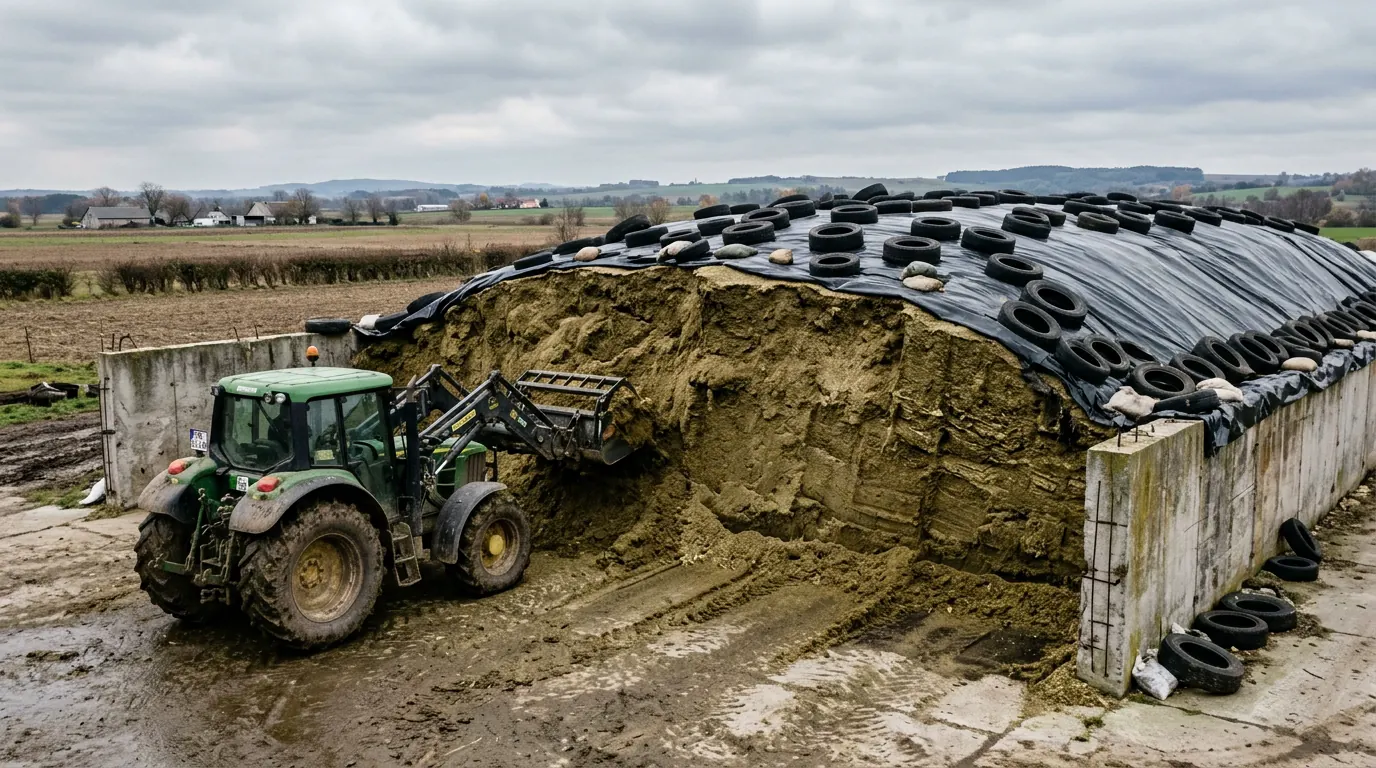
You can feed rye, alfalfa and cabbage silage to beef cattle as part of the roughage ration, but not all in the same amount and not to every category of animal. Rye needs limits in feeding finishing cattle, legumes are rich in protein, and cabbage calls for caution because there are no published data on feeding it. You set rations together with your vet or an ODR advisor (Poland's agricultural advisory center). Below we show what is known and what is not. For more on roughage, see our guide to maize, grass and beet silage for cattle.
What decides your choice of silage
Animal category and silage quality come first, and the crop species comes after. EFSA describes the diet of suckler cows as based mainly on roughage, lower in energy than the diet of finishing cattle, and often with poorer silage quality. Before calving, grass silage of moderate digestibility is used, about 660 g/kg digestible dry matter, fed ad libitum. With very good silage, part of the ration is replaced with straw to limit energy. So digestibility is the first thing to check in a silage analysis.
Rye silage: when and for whom
Limits for finishing cattle
A leaflet from OODR Łosiów says rye can be used in finishing cattle only in limited amounts. It contains non-starch polysaccharides with anti-nutritive properties, so the leaflet allows it only for older animals whose digestive tract is fully developed. The leaflet speaks of rye grain, not whole-crop silage, so we do not carry these rules over to another form without checking. Ask your advisor whether rye silage on your farm fits this rule, and record what share of the ration it makes up. Keep the rules and documents for beef cattle keepers at hand when you change feeding.
Rye and young cattle
For calves going into finishing, the OODR leaflet points to feeds high in energy and protein. It does not name rye as an energy source for weaned calves, so with young cattle use it carefully and talk to an advisor. Silage composition depends on harvest date: a young plant differs from a mature one, and that affects digestibility. Plan the harvest so the silage has a predictable composition, and write the harvest date in your feeding log.
Alfalfa silage: protein and caution
The role of alfalfa in the ration
The OODR Łosiów leaflet lists seeds of legumes, including alfalfa, among protein-rich feeds. That refers to seeds, not silage from green forage, so apply it to silage with caution. In practice alfalfa is a supplementary component next to grass and energy feeds. Set its share of the ration from a feed analysis and from watching the herd, not from a single number in a table.
Alfalfa mixed with grass
A table from IZ PIB for organic production gives rations of wilted grass and legume silage (30% dry matter): 10 kg a day for cattle weighing 200 kg, 13 kg for 300 kg, 16 kg for 400 kg and 18 kg for 500 kg. The rations are approximate because silage is fed ad libitum. When you combine two types of silage, mix them before feeding. Legumes can cause bloat, especially after a sudden change of diet, and farms often report this. At the first signs of bloat, call your vet, who will decide the treatment. Change the ration gradually and watch the cattle after each change.
Cabbage silage: what we do not know for sure
No data
The feeding guides describe silage from grass, maize, cereals and their mixtures, not cabbage. So for cabbage silage we give no rations, no share of the ration and no age from which it can be fed. That gap is information in itself: before you introduce cabbage, check current advisory publications and discuss them with your vet.
What to check before feeding
Start with the composition and dry matter of the silage. The IZ PIB tables refer to silage with about 30% dry matter, so compare your silage with that value, not with fresh weight. Have a laboratory analyze the feed and record the results with the harvest date. Watch appetite and manure for the first days of a new feed. If you see anything abnormal, stop the change and report the problem to your vet.
Rations by body weight: what IZ PIB gives
Summary of rations
The IZ PIB table for organic production gives daily rations for cattle weighing 200, 300, 400 and 500 kg. Maize silage: 4, 5, 6 and 7 kg. Grain and legume silage (approx. 30% dry matter): 5, 6, 7 and 8 kg. Wilted grass and legume silage: 10, 13, 16 and 18 kg. For these rations the table also assumes a concentrate mixture on a separate row. With grain and legume silage, dry matter intake is about 5.8, 7.3, 8.5 and 9.6 kg a day. Treat the rations as a starting point, not a ready recipe.
How to read the table
Rations in the table rise with body weight but differ between silage types. Maize silage has lower rations than grass and legume silage because of its composition, not because it is poorer quality. The table describes an organic farm and does not take your herd into account. Use it as a reference for your own observations: weight, body condition and appetite show whether the ration is right. Discuss ration changes with your vet or an ODR advisor.
Silage stocks: how much to prepare for winter
Needs according to the Teagasc manual
The Teagasc Beef Manual gives approximate silage needs in tonnes per month: 1.2 t for a suckler cow, 1.3 t for a finishing animal of 500 kg and 0.8 t for a weanling of 300 kg. Multiply these values by the number of animals and the number of months they are housed. The figures come from Irish conditions and do not replace your own balance, but they give the order of magnitude. Add a reserve for losses at harvest and in storage, because their size depends on the silo and the weather.
Monitoring stocks
Check the stock in the silo every week and compare it with your plan. The feed silo monitoring module helps keep stock levels in one place. Also make sure cattle always have water and working cattle drinkers, because animals drink more on silage. For a treated herd, record the medicines given and withdrawal periods in the treatment and withdrawal records.
Frequently asked questions
Can you feed rye silage to cattle?add
Yes, but with limits. The OODR Łosiów leaflet says rye contains non-starch polysaccharides with anti-nutritive properties, so in finishing cattle it is used in limited amounts and only for older animals. Agree the amount with your vet or an ODR advisor.
How much alfalfa silage should you feed a cow?add
There is no published ration for alfalfa alone. The IZ PIB table gives rations of wilted grass and legume silage: from 10 kg a day for cattle weighing 200 kg to 18 kg for 500 kg. The rations are approximate because silage is fed ad libitum.
Is cabbage silage safe for cattle?add
Our sources have no data on cabbage silage, so we give no rations or safety rules. Before you introduce it, discuss composition and feeding method with your vet or an ODR advisor. Change the feed gradually and watch the animals.
What is silage digestibility and why check it?add
Digestibility is the part of the feed's dry matter that the animal can use. EFSA gives the example of grass silage of moderate digestibility, about 660 g/kg digestible dry matter, used before calving in suckler cows. It is worth ordering a silage analysis, because the amount and type of supplements depend on it.
How much silage does an animal eat per month?add
Teagasc gives approximately 1.2 t a month for a suckler cow, 1.3 t for a finishing animal of 500 kg and 0.8 t for a weanling of 300 kg. These are Irish figures, so treat them as a starting point for your own balance.
Do you need to mix two silages before feeding?add
Yes, if you combine two types. The IZ PIB source recommends mixing them before feeding and giving them as a mixture. That keeps the ration uniform and makes changes in feed composition easier to control.
Sources & resources
- linkIZ PIB — Feeding beef cattle in organic production (K. Bilik et al.)
- linkOODR Łosiów (gov.pl) — Feeding beef cattle (leaflet)
- linkTeagasc — Teagasc Beef Manual — Section 6: Nutrition
- linkEFSA AHAW Panel — Welfare of beef cattle (EFSA Journal 23:9518)
Prepared by: DlaFerm Team based on data from the sources listed · Publisher: INSTA-TECH sp. z o.o.
Planning silage stocks for winter?
The feed silo monitoring module helps you keep track of stock in your silos. Create a free farm account on DlaFerm.pl or get in touch, and we will show you how it works in practice.
Phone
+48 796 258 151