Pouter pigeons: breed traits and care
Pouters (garłacze in Polish) are a group of fancy pigeons known for a large crop that the bird inflates when displaying. We describe their build, behavior and housing. We also show how to keep breeding and health records for your flock.
verifiedFrom the team that has organised work on poultry farms for years.
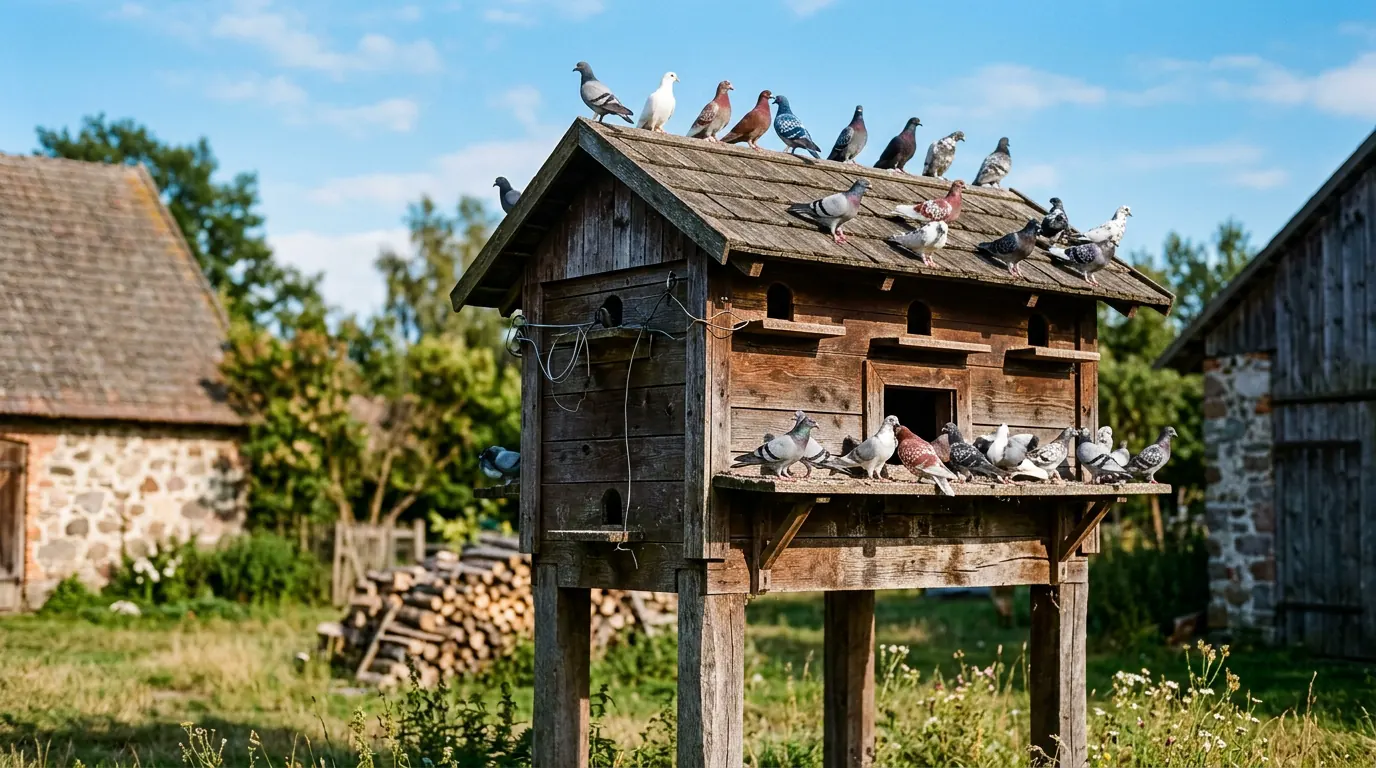
Pouter pigeons (garłacze) are a group of fancy pigeon breeds. Their trademark is a large crop, the widened part of the gullet, which the bird inflates during courtship displays. This trait sets them apart from the breeds we cover in pigeon breeds: pawiki, staropolskie, obrzeżki and mewki. People keep pouters for looks and behavior, not for meat or eggs. So good care comes down to a sound loft and calm, regular handling.
Who this breed suits
Pouters suit fancy breeding, shows and a private loft. If you want birds for eggs or meat, choose other poultry. With pouters, what matters most is a bird that fits the breed standard, good condition and tidy flock records: pedigree, hatch date and treatment history. If you are starting out, first look at a few birds from established breeders and talk to a pigeon breeders' club near you. Clubs know the current standard and how shows judge birds.
The crop: the feature that defines the breed
How the crop works
The crop is a widened part of the gullet where the bird stores food before digestion. In pouters it is especially large, and the bird inflates it during courtship to show off to a female and to other birds. Inflating is natural behavior, but excessive or prolonged inflating can point to stress or a health problem. Watch for it at every flock check. A healthy crop is symmetrical, elastic and clean. If it feels hard, lopsided or empties poorly, tell your vet.
Standard and judging
Each pouter variety has its own standard describing the body shape, head, plumage color and crop proportions. Pigeon breeders' associations and clubs set the standard, and a judge scores birds against it at shows. Before you buy a bird or choose a breeding pair, compare it with the current standard, not just the seller's opinion. Record each bird's sex, hatch year and origin. Without these data it is hard to predict breeding results.
Behavior and daily care
Behavior in the loft
Pouters usually get along with other pigeons, but males can be territorial in the courtship season. With a larger group, provide several perching spots and separate nests so birds do not fight over the same places. Crowded birds stress more often, and stress lowers immunity and can worsen crop condition. Watch the flock every day. A healthy bird eats willingly, has clean feathers and moves freely around the loft.
Noise and fright
Sudden sounds, frequent changes in the flock and predators such as cats, martens or large birds raise stress. Birds get used to fixed feeding and cleaning times, so keep a fairly regular routine. Cover windows and openings with mesh, and close the loft entrances at night.
Loft and equipment
Nests, drinkers and feeders
Each pair needs its own nest or nest bowl, ideally in a quiet, shaded spot. Place drinkers and feeders so droppings cannot foul them. Match their height and spacing to the size of the birds. Litter must be dry and clean, because damp litter encourages disease. We describe the full equipment list and layout in loft equipment: nests, nest bowls, drinkers and feeders.
Ventilation and cleanliness
The loft should be dry, airy and free of drafts at bird level. Too much moisture and ammonia damages the airways. Remove droppings regularly and change the floor material more often during the breeding season. Keep cleaning tools for one room only, so you do not carry germs from place to place.
Flock health and biosecurity
Signs to report
Healthy birds are active, have smooth feathers and evenly filled crops. Tell your vet about poor appetite, drowsiness, discharge from the eyes or nostrils, diarrhea, a twisted head or sudden deaths. Do not give birds medicines on your own. The vet chooses the drug and dose. Record the date of treatment, because some products carry a withdrawal period for animal-derived products.
Biosecurity in the loft
Keep a new bird apart before you add it to the flock and watch it for as long as your vet advises. People entering the loft should change footwear, and equipment should not be shared with other lofts. You can build a plan for this in the biosecurity plan generator. Record treatments and withdrawal dates in the treatment and withdrawal records.
Running the loft and keeping records
Choosing pairs
When you choose pairs, look at the standard, the health of both birds and their origin. Avoid mating very closely related birds, because it weakens the young. Note which pair produced which clutch, how many chicks hatched and how they grew. After a few seasons this history shows which lines are best, so you do not have to rely on memory.
Flock records
Keeping records in one place makes checks and show preparation easier. The poultry house records module lets you log groups of birds, their movements and events. Remember also your duties to the district veterinary officer (powiatowy lekarz weterynarii) regarding flock notification. Check current requirements in ISAP (Poland's database of legal acts) and on the website of the Chief Veterinary Inspectorate (Główny Inspektorat Weterynarii), because rules change.
Frequently asked questions
How is a pouter pigeon different from other pigeons?add
A pouter stands out for its large, inflatable crop, which it shows off during courtship. Other breeds differ mainly in body build, plumage and head shape. The standard for each variety sets out its exact traits.
Can you keep pouters with other pigeons?add
Usually yes, but in the courtship season males can be territorial. Provide enough perches, nests and feeding spots. Add new birds only after an observation period.
How do you tell if a pigeon's crop is healthy?add
A healthy crop is clean, elastic and symmetrical, and it empties gradually after feeding. If it is hard, lopsided or stays full for a long time, tell your vet, who will assess the cause.
How much does a pouter pigeon cost?add
The price depends on the variety, the bird's origin, its age and whether it is a show bird. Agree the exact amount directly with the breeder or through a pigeon breeders' club. Prices in adverts change quickly.
Do you have to register a pigeon loft in Poland?add
A poultry flock, pigeons included, falls under the supervision of the district veterinary officer. Check current rules in ISAP and on the Chief Veterinary Inspectorate website. If in doubt, ask the vet in your district.
How often should you check the birds?add
Watch the flock every day: appetite, activity, feather condition and crops. Now and then do a full review together with your records. Ask your vet for advice for your loft.
Sources & resources
- linkChief Veterinary Inspectorate (Główny Inspektorat Weterynarii) — gov.pl/web/wetgiw
- linkNational Research Institute of Animal Production (Instytut Zootechniki PIB) — izoo.krakow.pl
- linkEFSA — efsa.europa.eu
- linkInternet System of Legal Acts (ISAP) — isap.sejm.gov.pl
Prepared by: DlaFerm Team based on data from the sources listed · Publisher: INSTA-TECH sp. z o.o.
Do you keep pigeons next to other poultry?
The poultry house records module keeps bird groups, events and health records in one place. Create a free farm account and see how it works in practice, or get in touch and we will show you the system.
Phone
+48 796 258 151