Poultry plucker: how to choose and use one
A poultry plucker is a drum with rubber fingers that removes feathers after you scald the bird. A good machine and a well-set process give you a clean carcass without torn skin. Below we explain how a plucker works, what to look at when you buy one and how to run it day to day.
verifiedFrom the team that has organised work on poultry farms for years.
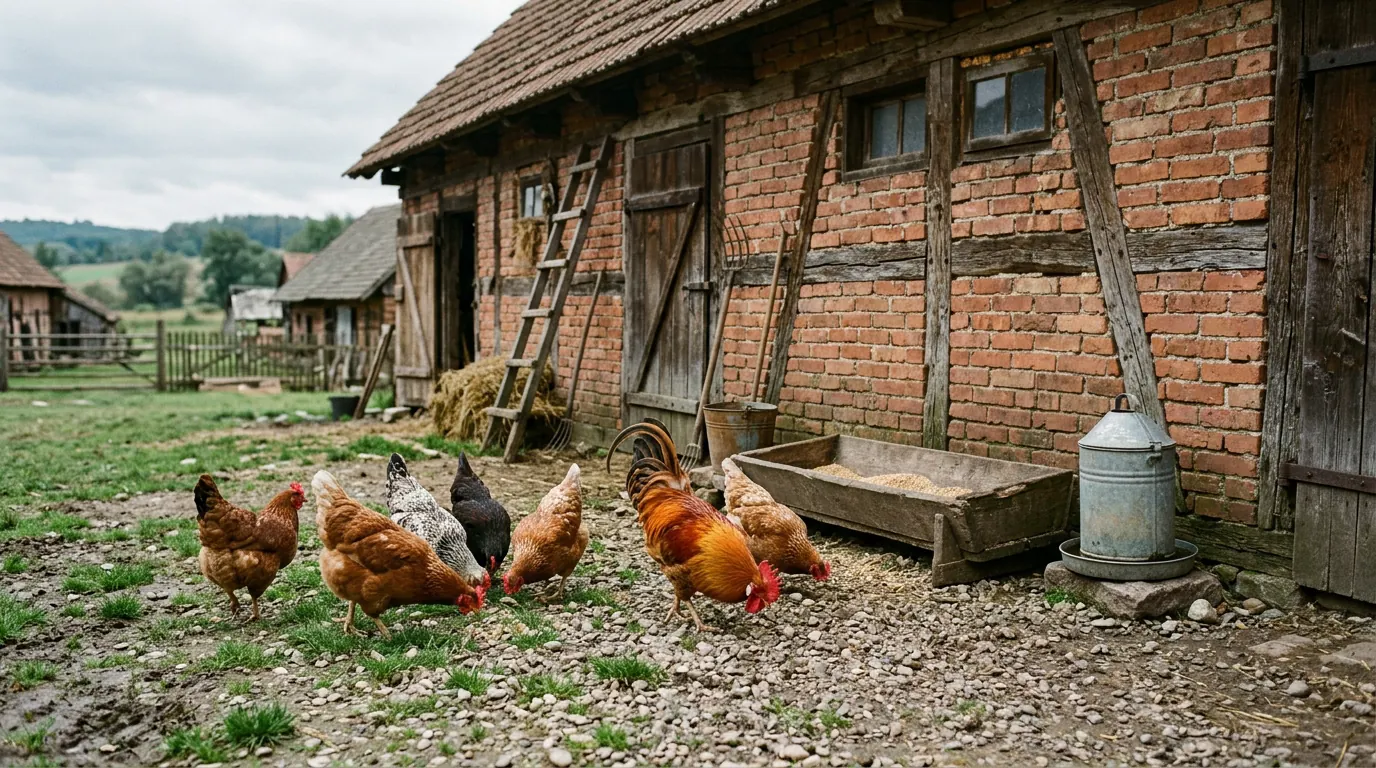
A poultry plucker removes feathers from the carcass after you scald the bird in hot water. The drum with rubber fingers turns and pulls out feathers that have loosened under heat and moisture. A well-chosen, properly used plucker saves hand work and gives carcasses an even look, but the result depends mostly on scalding, not on the machine itself.
Where to start
If you are only planning to process poultry, start with the number of birds in one batch and with the rules, because they decide the type of equipment and where you work. Before you invest, check the requirements for setting up a poultry farm in our separate guide: how to set up a poultry farm. Knowing the whole process from the start helps you avoid costly rebuilds.
How a poultry plucker works
A drum with rubber fingers
In a typical plucker, a drum lined with rubber fingers turns while the bird is carried around inside it. The fingers grip the feathers and pull them out of the follicles. The machine will not remove dry feathers, so plucking always starts with a scalded bird. Set the cycle time and drum settings according to the manufacturer's instructions. After the first batches, check a few birds and adjust the settings if needed.
Scalding decides the result
Hot water loosens the hold of the feathers in the skin. A bath that is too cold leaves feathers in the skin and makes plucking longer. One that is too hot can tear or split the outer skin and lower carcass quality. Choose the temperature and time for the age and type of bird and follow the equipment maker's advice. This setting most often decides whether plucking goes smoothly or needs a lot of finishing by hand.
What to look at when choosing a plucker
Capacity matched to your flock
Before you buy, count how many birds you process in one batch and how often. A low-capacity plucker with big batches means queues and tired people. An oversized machine for rare, small slaughters will sit idle. Ask the seller for the cycle time for the size of birds you process and check whether you can expand later. Compare offers by the parameters in the technical data sheet, not by price alone.
Material and ease of washing
The drum, fingers and inside of the housing are the parts most exposed to the carcass and water. Stainless steel is a common choice because it handles frequent washing and disinfectants. Check whether the drum opens or comes off without special tools and whether you can replace fingers one by one. Rubber fingers wear out over time, so the availability of spare parts matters in the long run.
Preparing birds before plucking
Withdrawing feed before slaughter
Before slaughter, birds are usually kept off feed for a set time to reduce the contents of the digestive tract. The length of this break depends on the species, the age of the bird and the requirements for your batch. Agree the exact time with your vet or with the slaughterhouse you deliver to. Do not extend the break on your own, because birds lose condition and weight.
Weighing and recording the batch
Weigh the batch before slaughter and record the weight and the number of birds. After plucking and at the slaughterhouse, you can then compare carcass yield and check whether the scalding was right. Use a scale that shows weight in kilograms with enough accuracy. The batch record also helps with invoicing. You will find more on weighing equipment in our guide: scales for weighing poultry.
Running the plucker day to day
Work order
First heat the scalding water and check its temperature with a thermometer. Then dip the birds for the time set for that batch, lift them out and move them to the drum. Keep the same order every time, because then it is easier to spot changes in the result. After plucking, remove leftover feathers from the carcass before it moves on. Do not overload the drum, because birds jam and the skin tears. Keep the plucking station apart from where live birds arrive, and work in gloves and an apron.
Cleaning after each batch
When you finish, empty feathers and dirt from the drum, then rinse it with water. Wash the inside and the fingers with a cleaner made for food-contact equipment and rinse well. Clean the drain too, because feathers block it faster than you expect. Set your sanitation rules together with the farm's biosecurity plan. The biosecurity plan generator can help. Do not use products the equipment maker did not approve, because they can damage the rubber.
Slaughter and regulations: what to check
Slaughter for your own use versus sale
The rules on poultry slaughter and trade in carcasses are set out in acts and regulations. How you may slaughter and process depends on whether the carcasses are for your own use or for sale. Check the current text of the rules in ISAP, Poland's Internet System of Legal Acts, and note that the legal position is as of 22.11.2026. Before you start a plucker on your farm, contact the county veterinary officer (powiatowy lekarz weterynarii), who will tell you what applies in your case. If you have no facilities of your own, look at poultry slaughterhouses and the rules for delivering live birds.
Treatment history in the batch
If birds in the batch were treated, note it before slaughter. The withdrawal period is set for the specific product, and the vet chooses the medicine and dose. A treatment record lets you check that the required time has passed since the last dose before carcasses go for processing. This record protects you from selling carcasses still within a withdrawal period. See how to keep it in treatment records and drug withdrawal periods.
A plucker in services for other keepers
Invoicing the service
If you pluck birds for neighbors, agree the price per bird or per kilogram before the batch, and the rules for collecting waste. Record each batch separately, with the number of birds, the weight and the date. Then it is easy to settle up and avoid arguments about results. Market prices change, so agree the rate with the customer at the time and not from old arrangements. We describe the details in poultry service billing.
Crews and orders
On larger orders people work in shifts and each has different tasks. Write down who runs the machine, who takes the carcasses and who is responsible for cleaning. For crews that catch and transport poultry, the program for poultry catching crews helps by organizing trip planning. A clear split of duties cuts mistakes in scalding and hygiene.
Frequently asked questions
How do I choose a poultry plucker?add
Start with the number of birds in one batch and how often you process. Then compare capacity in the technical data sheet, the material of the drum and fingers, and the availability of spare parts. It helps if the machine comes apart easily for washing.
Why are the feathers not coming off the carcass?add
The most common cause is scalding: water that is too cold does not loosen the feathers, and too long a dip can damage the skin. Also check that the drum is not overloaded, because then the fingers cannot reach the feathers.
What should I use to clean a poultry plucker?add
Wash it with a cleaner made for food-contact equipment and rinse well with water. Set disinfection rules with the farm's biosecurity plan and check the manufacturer's instructions for products you must not use.
Do I have to report slaughtering poultry for my own use?add
It depends on how you use the carcasses and where you slaughter. Check the current rules in ISAP, Poland's Internet System of Legal Acts, and if in doubt ask the county veterinary officer. Do not assume that not reporting is safe until you have cleared it with the authority.
How long before slaughter should I withdraw feed?add
Agree the feed withdrawal time with your vet or the slaughterhouse, because it depends on the species, age and conditions of the batch. Do not extend the break yourself, because it weakens the birds and lowers their weight.
How do I weigh a batch before plucking?add
Weigh the whole batch together, or weigh a representative group as a sample, and record the weight with the date. After the slaughterhouse you can then compare carcass yield with what you had before plucking.
Sources & resources
- linkMain Veterinary Inspectorate (Główny Inspektorat Weterynarii) — gov.pl/web/wetgiw
- linkInternet System of Legal Acts (ISAP) — isap.sejm.gov.pl
- linkMinistry of Agriculture and Rural Development — gov.pl/web/rolnictwo
Prepared by: DlaFerm Team based on data from the sources listed · Publisher: INSTA-TECH sp. z o.o.
Want batches, weights and treatments in one place?
The DlaFerm <a href="/program-do-zarzadzania-ferma-drobiu">poultry farm management software</a> keeps flock records, weighings and treatments together. Create a free farm account and see how it works in practice.
Phone
+48 796 258 151