Poultry slaughterhouses in Poland: how to deliver your birds
You find poultry slaughterhouses in the lists of plants supervised by the Veterinary Inspection (Inspekcja Weterynaryjna). The surest check is the website of the Chief Veterinary Inspectorate (GIW) and your county veterinary officer. You deliver birds after agreeing the date, the weighing and the settlement rules with the plant or the pickup crew. Below we explain how to choose a plant and get a batch ready for pickup.
verifiedFrom the team that has organised work on poultry farms for years.
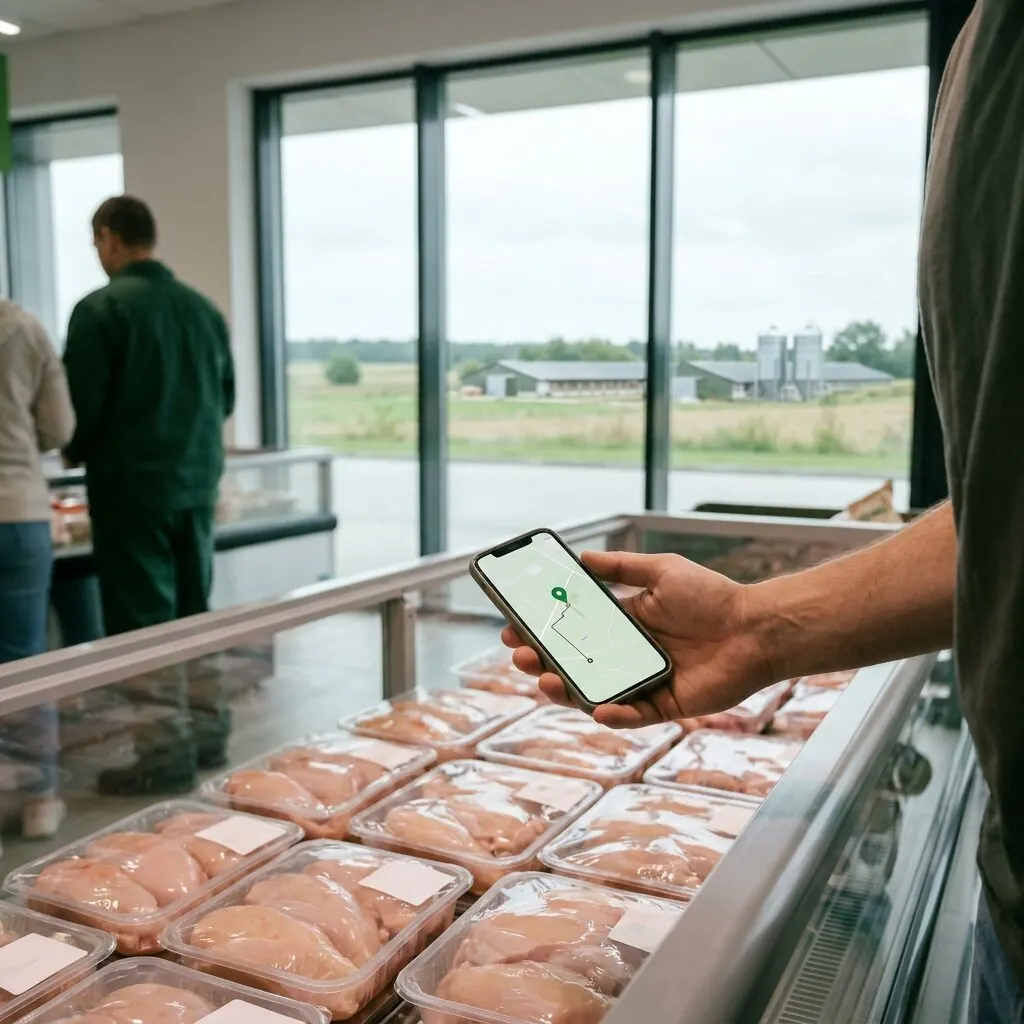
You find poultry slaughterhouses in the lists of plants supervised by the Veterinary Inspection (Inspekcja Weterynaryjna). First check the current status on the website of the Chief Veterinary Inspectorate (GIW) and with your county veterinary officer, and only then call the plants. The list changes over time, so we do not rely on fixed names. You deliver birds by agreeing a pickup date directly with the plant or through a pickup crew. The plant decides how many batches it takes per week, and you decide when a batch is ready. We describe the size of the industry and its production trends in Poultry production in Poland and worldwide.
Where to start
Before the first contract, ask about three things: whether the plant accepts your type and age group of poultry, what hours it receives birds, and what it bases the result on, live weight or carcass weight. Also ask about the required documents and who arranges transport. Put the agreement in the contract, not only in a phone call. With broilers, the plant cares most about a uniform batch and a predictable date, because slaughter line planning and shift staffing depend on them.
How to find a poultry slaughterhouse in Poland
Lists of plants
Slaughter plants are supervised by the Veterinary Inspection, and the supervisory bodies publish their lists. On the Chief Veterinary Inspectorate website you find information on supervision and contacts for the provincial and county veterinary officers. Check the rules on slaughterhouses and animal transport in ISAP, Poland's online legal acts database, because their wording changes over time. Before you sign, make sure the plant is on the current list and ask whether it accepts birds from growers outside its own integration.
What to check before signing
Compare plants on a few criteria: distance from the farm, receiving hours, expected batch size, weighing method and payment term. Ask about pickup on weekends and public holidays, because many plants work to a fixed schedule. It also matters how the plant reports slaughter results. A good plant passes on data on weight, yield and any post-mortem findings, so you can judge how the flock performed.
Preparing birds for pickup
Withdrawal periods and medicines
A withdrawal period applies before slaughter after any medicine is given, and its length depends on the product and the route of administration. The vet chooses the medicine and dose, and the withdrawal time comes from the product documentation and your vet. Record every treatment with the date, product name and batch number, then compare those entries with the planned pickup. The Treatment and withdrawal module in DlaFerm keeps these records in one place and shows the withdrawal end dates before pickup.
Body weight on pickup day
You set the target weight with the plant and your feeding plan. The Ross 308 Performance Objectives 2022 give roughly 3222 g body weight at day 42 and roughly 3665 g at day 46, with an FCR of about 1.517 and 1.589 respectively. These are targets for a well-run batch, not the result of every farm. Actual weight depends on the line, feeding and housing conditions, so compare your batch with your own results from earlier cycles. You can read more about feeding programs in Broiler feeding.
Weighing the batch and settling with the plant
Live weight and carcass weight
With live weight you are paid for birds weighed before loading. With carcass weight you are paid for the meat after slaughter, so the basis of the calculation is different. The difference is explained by slaughter yield, the ratio of carcass weight to live weight. For you, this means the same weight result can give a different amount depending on the contract. Before you sign, ask for a worked example on a real batch. If you weigh the flock with a camera or a scale in the house, keep the results, because they help you check the settlement. The Poultry weighing with a camera (AI) module lets you compare weight with earlier readings.
Documents and invoice
Settlement needs clear documents: batch details, number of birds, weight, pickup date and delivery number. The plant issues a receipt document, and you compare it with your own records before issuing the invoice. Structured e-invoices are becoming more important, so when document flows change, check how the plant receives invoices. We describe invoicing and service settlement in the system in KSeF invoicing (KSeF is Poland's national e-invoicing system) and Service settlement.
Pickup by a catching crew
Organizing the catch
The catching crew works to an agreed schedule: it arrives on the set date, catches the birds in the house and prepares them for transport. Before it arrives, decide which house goes first, how many people catch and by what time the batch must be ready. Record the start and end times of catching and the number of birds handed over for transport. You can keep all of this in the Poultry catching crews module, which makes it easier to check the work and settle the service.
Biosecurity at pickup
Every vehicle and every person entering the farm is a potential source of infection. Agree the rules with the crew: clean clothing, footwear disinfection and entry only through the designated gate. Record entries and exits, and after pickup check the house for dead birds and changes in flock behavior. A ready biosecurity plan with pickup rules is described in the Biosecurity plan generator.
Welfare and stress at pickup
Reducing stress
Catching and transport raise stress in birds, so limit noise, light and rush during pickup. Catch birds gently and do not overload the crates. Assess pickup conditions the same way as during rearing, because welfare indicators such as flock behavior, litter condition and mortality show whether the batch was well prepared. Read more about these indicators in Welfare indicators.
Heat and high temperature
In summer, pickup in hot weather raises the risk of deaths and lowers bird weight. Plan catching for the cooler part of the day and check ventilation and drinkers beforehand. In long hot spells some growers use water and feed additives, but choosing and using them is a matter for your vet or feed adviser. We describe feeding in the heat in Betaine for heat stress.
Frequently asked questions
How do I find a poultry slaughterhouse in Poland?add
Check the current list of plants on the Chief Veterinary Inspectorate (GIW) website and ask your county veterinary officer about plants in your county. The list changes, so do not rely on old summaries. Only after checking, call the plants and compare their intake terms.
Do I have to observe a drug withdrawal period before slaughter?add
Yes. A withdrawal period applies after medicines are given, and its length depends on the product. Your vet sets the medicine and withdrawal time based on the product documentation. Record every treatment so you can check the date before pickup.
Does the slaughterhouse pay for live weight or carcass weight?add
It depends on your contract with the plant. With live weight, the birds are weighed before loading. With carcass weight, the meat is weighed after slaughter, which gives a different basis for settlement. Ask for a worked example before you sign.
How much should broilers weigh on pickup day?add
The Ross 308 Performance Objectives 2022 give roughly 3222 g at day 42 and roughly 3665 g at day 46. These are targets for a well-run batch, and actual weight depends on the line, feeding and housing. Agree the target weight with the plant.
How do I prepare birds for pickup step by step?add
Agree the date and schedule with the plant or crew, check drug withdrawal periods and enter them in your records, verify the batch weight and prepare the documents. On pickup day keep the house calm, limit stress for the birds and record the number of birds handed over for transport.
Where can I check the rules on transport and slaughter?add
You find the current legal text in ISAP, Poland's online legal acts database (isap.sejm.gov.pl), and your county veterinary officer and the slaughter plant can explain it. The rules change, so check their current status before every batch, not only at the first contract.
Sources & resources
- linkRoss 308 / 308 FF Broiler Performance Objectives 2022
- linkRoss Broiler Management Handbook 2025
- linkChief Veterinary Inspectorate (GIW): gov.pl/web/wetgiw
- linkInternet System of Legal Acts (ISAP): isap.sejm.gov.pl
Prepared by: DlaFerm Team based on data from the sources listed · Publisher: INSTA-TECH sp. z o.o.
Planning a pickup soon?
In DlaFerm you keep treatments, withdrawal periods and catching crew records in one place. Create a free farm account and get your data in order before the next pickup.
Phone
+48 796 258 151