How to start a poultry farm: permits, costs and contract, step by step
Starting a poultry farm begins with paperwork and a contract, and only then with building the house. We show the order of steps: from registering the flock premises, through location and budget, to the contract with the integrator and the first placement of birds. The legal state described is as of 22.11.2026.
verifiedFrom the team that has organised work on poultry farms for years.
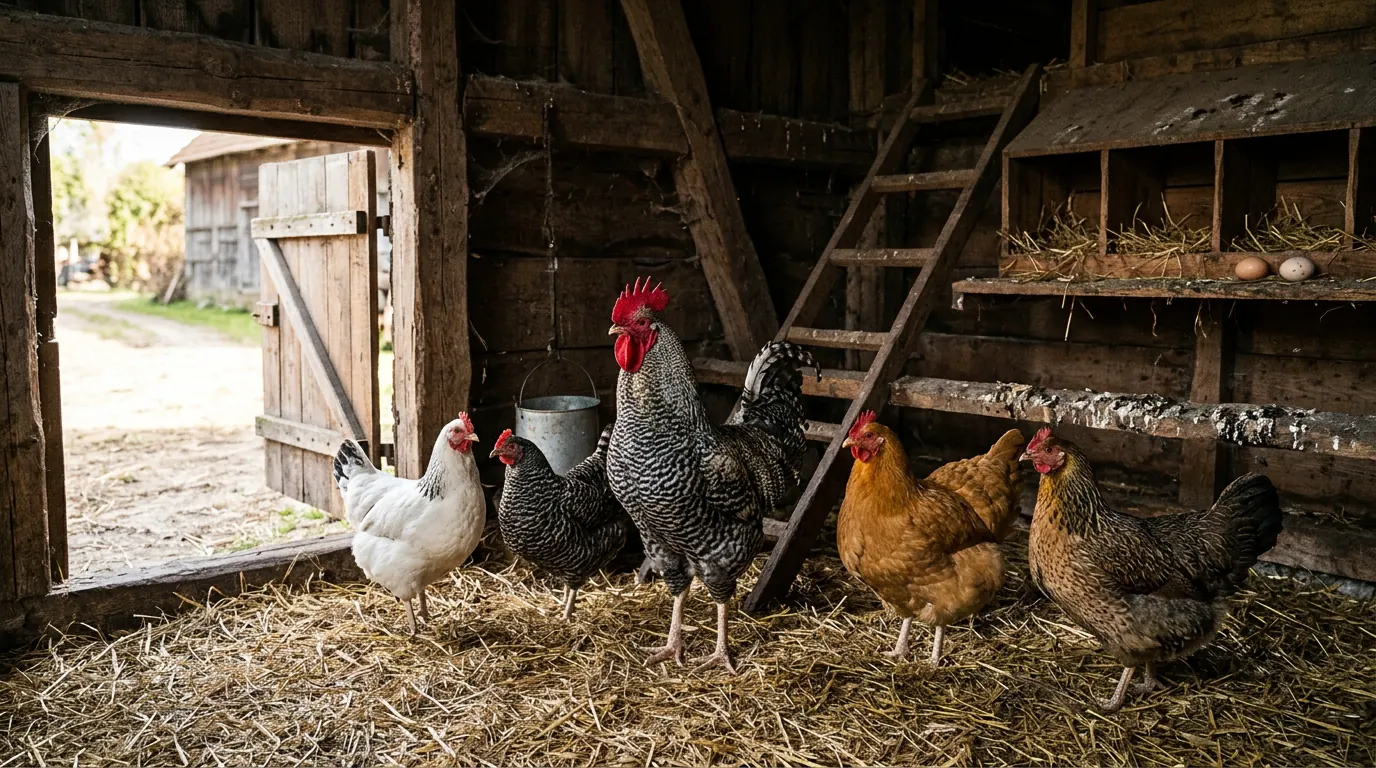
Starting a poultry farm in Poland begins with formalities, not with the house. First you decide the production type (broilers, laying hens, turkeys), the site, and the partner you will sign a contract with. Only then do you file applications, design buildings and buy equipment. Below we describe the order of steps and where to check the current rules.
What decides the size of the investment
The cost and scope of the farm depend mainly on whether you build from scratch or convert an existing building, and on the number of places and the equipment: heating, ventilation, drinkers and feeders. Prices of materials and equipment change over time, so we give no figures. Get three quotes for the same specification and compare them line by line. Before you buy a flock, read the first flock step by step, because it is part of the budget too.
Permits and notifications
Find out which notifications apply to your farm
The requirements depend on the species, the number of birds, and whether you sell only live birds or also products. Usually the first step is to register the flock premises with the county veterinarian (powiatowy lekarz weterynarii). You check your eligibility for support with ARiMR (Poland's Agency for Restructuring and Modernisation of Agriculture). The bird-number thresholds that trigger extra duties are in the current act and regulations in ISAP (Internetowy System Aktów Prawnych, Poland's online legal database). In practice the Veterinary Inspection (Inspekcja Weterynaryjna) expects contact before you start up, so do not begin building without talking to a vet. Our guide on how to become a poultry farmer also covers the basic steps.
Biosecurity plan and building requirements
The Veterinary Inspection assesses not only documents but also the farm layout: separation of the clean and dirty zones, a place to disinfect vehicles, and entry rules for people and equipment. Before you design the building, prepare a written biosecurity plan and decide who keeps the entry and exit log. Base the plan on concrete rules, not generalities. You will find a ready framework with a checklist in the biosecurity plan generator.
Location, distances and building design
Distances from homes and other farms
Plan the location with a map in hand. Check the local development plan and the distances from homes, roads and other livestock buildings. The exact values come from regulations and local decisions, so check them with the municipal office (urząd gminy) and in the current legal act. Before you buy land, ask the municipality for written information on building conditions. Verbal assurances will not protect your investment if the application is refused.
House design and equipment
The layout should make health checks and work easier: a separate entrance for people, another for feed and birds, and surfaces that are easy to wash. Ventilation, heating and the drinker system decide flock performance, so match them to the number of birds and the production type. Set heating and ventilation parameters for your specific building with an advisor and the equipment maker. If you plan to expand, raise it at the design stage, because later changes cost more.
Costs and financing
What the budget includes
The budget covers land or lease, buildings, installations, equipment, the first flock, starter feed, documents and designs, and a reserve for the time before the first income. Running costs are the ones most often underestimated: heating, electricity, water, transport, disposal of dead birds and wages. Keep the list in a spreadsheet, split into one-off investment and monthly costs. That shows how many months you can last until the first settlement.
Grants and loans
ARiMR offers investment support for farmers. Conditions, deadlines and limits are set by programs and call notices, which change, so check them on the agency's website and with the voivodeship office before you apply. A bank loan needs a financial plan, and the bank expects realistic flock performance assumptions from you. We give no rates or amounts. Compare at least two offers and work out the total cost, not just the installment.
Contract with an integrator or buyer
What an integrator contract contains
A contract-grower agreement usually sets out the supply of chicks and feed, housing standards, terms for collecting the birds, settlement rules and pricing. The most important part for you is the indicators used to calculate your pay, for example body weight, feed use or mortality. Check who pays for treatment, losses and downtime between flocks. Ask for a sample contract and read it before you sign, ideally with a legal adviser.
What drives price and earnings
Prices of birds, feed and collection change often, so we give no quotes. They depend on the domestic and export market, seasonality, feed commodity prices and energy cost. Check current prices with buyers, in trade notices and in publications of research institutes. When you plan your result, rely on your own flock indicators, not on a single market price. You can calculate results in the FCR and EPEF online module.
The first flock step by step
Schedule and records from day one
Before you place the flock, set the cycle: delivery date, time to prepare the house, disinfection and length of the round. The all-in/all-out rule, meaning you place and remove the whole batch at once, makes cleaning and the sanitary break between flocks easier; we describe it in a separate article. Placement and cycle planning helps you set the dates. Record every delivery and shipment straight away, because you need the data for inspections and settlement.
What to measure in the first weeks
According to Aviagen data (Ross 308 / 308 FF Broiler Performance Objectives 2022), a broiler reaches a weight of about 2998 g at day 42, and the cumulative FCR is 1.531. These values are a reference point for a well-run flock, not a guarantee of results on your farm, because the line, feed and conditions all affect the outcome. Uniformity matters too. According to the Ross Broiler Management Handbook 2025, at a weight of about 1.9 kg, CV% of 8, 10 and 12 correspond to uniformity of 79%, 68% and 60%. Sample weighing and recording results in the digital flock record shows this as it happens.
Frequently asked questions
Do I need a permit to start a poultry farm?add
It depends on the scale, the species and whether you sell animal products. Always start by registering the flock premises and talking to the county veterinarian. Check the bird-number thresholds that trigger extra duties in the current rules in ISAP, Poland's online legal database.
How much does it cost to start a poultry farm?add
The cost depends on whether you build from scratch or convert a building, and on the number of places and the equipment. We give no figures, because prices change over time. Get three quotes for the same specification and count running costs, not only the investment.
Do I need a contract with an integrator?add
You do not have to, but contract growing gives you steady collection and settlement based on agreed indicators. Farming on your own account carries sales and price risk. In both cases read the contract before you sign and ask about pricing rules and how losses are shared.
How long does it take to set up a poultry farm?add
The time depends on the offices, the design and the construction. You usually plan formalities, design, building and start-up in that order. Agree a schedule with the contractor and ask the office for expected deadlines before you plan the first placement.
Can I start with a small flock?add
Yes, but a small scale does not remove veterinary and biosecurity duties. Agree with your vet which requirements apply to your site before you buy birds. With a small flock, good records and a quick response to signs of disease matter most.
Where can I check the current poultry rules in Poland?add
The sources are ISAP, the websites of the Chief Veterinary Inspectorate (Główny Inspektorat Weterynarii), ARiMR and the Ministry of Agriculture and Rural Development. For each decision check the legal-state date and make sure you use the current text. If in doubt, ask the county veterinarian.
Sources & resources
- linkRoss 308 / 308 FF Broiler Performance Objectives 2022
- linkRoss Broiler Management Handbook 2025
- linkChief Veterinary Inspectorate (Główny Inspektorat Weterynarii) — gov.pl/web/wetgiw
- linkARiMR — gov.pl/web/arimr
- linkInternetowy System Aktów Prawnych (online legal database) — isap.sejm.gov.pl
Prepared by: DlaFerm Team based on data from the sources listed · Publisher: INSTA-TECH sp. z o.o.
Want your documents and your flock in one place?
The <a href="/program-do-zarzadzania-ferma-drobiu">farm management software</a> keeps flock and document records in order from the first placement. Create a free farm account and see how it works in practice.
Phone
+48 796 258 151