Ostrich meat: value, price and market
Ostrich meat is lean and dark red. It is sold mainly fresh or frozen, in cuts. There is no single price per kilogram, because it depends on the cut, the carcass weight and the buyer. We explain what drives the value of the meat and how to check the current market.
verifiedFrom the team that has organised work on poultry farms for years.
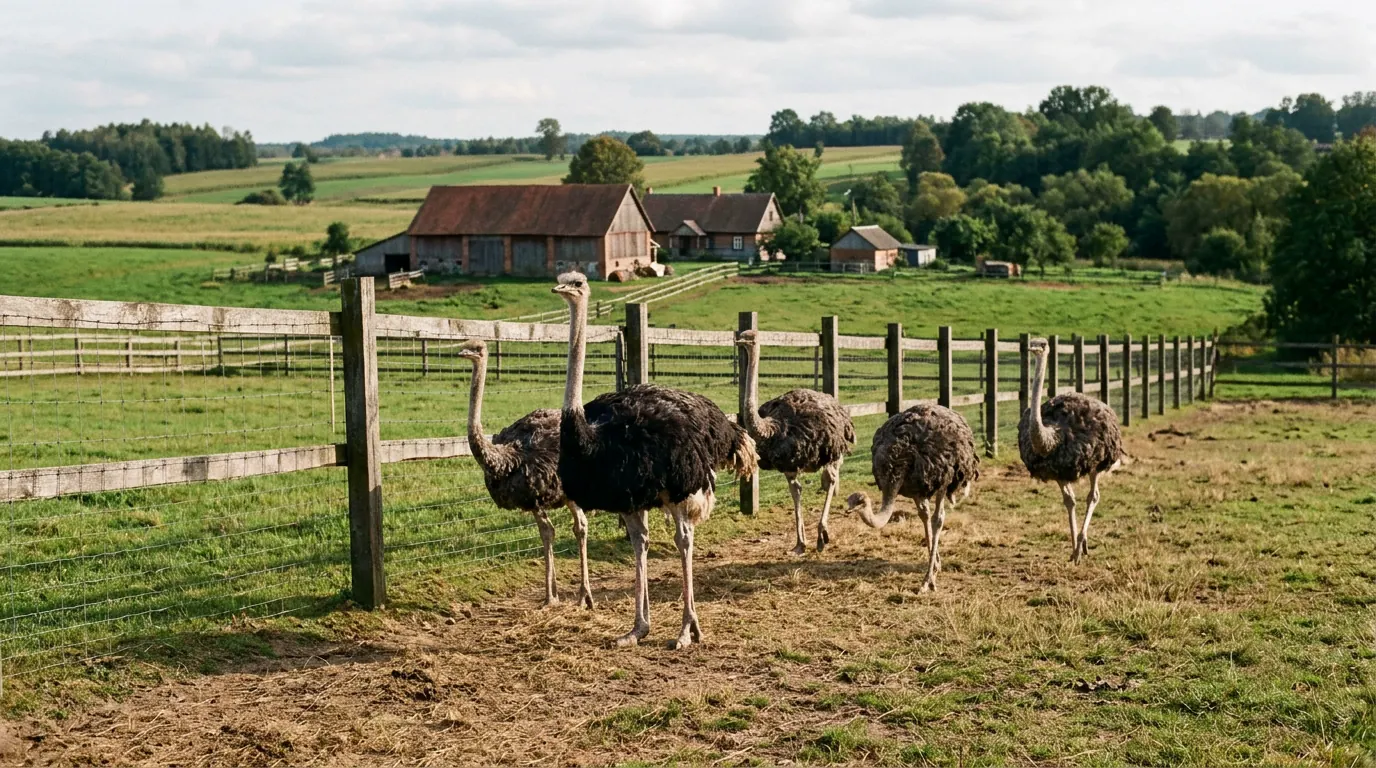
The price of ostrich meat is set between seller and buyer, not on a single exchange. It reflects the nutritional value of the meat, the quality of the cut, the cost of slaughter and processing, and whether you sell wholesale or retail. There is no fixed public price list for ostriches, so compare offers from several buyers before you sell.
Why pricing is harder than for broilers
Chicken meat reaches the market in large batches and has set trade standards. Ostrich meat comes from far fewer slaughters, and sales are spread over more channels: specialist shops, restaurants, direct sales and export. So a single figure from an advert rarely shows the real price. When you compare prices, always ask whether the rate is for a whole carcass or for cuts, and whether it is gross or net.
Nutritional value of ostrich meat
Lean meat with a dark color
Ostrich meat is dark red, close to beef, and contains little fat. That is the main marketing argument, but the numbers depend on the batch, the age of the bird and the cut. Check the composition data from laboratories and research institutes for your specific product. Always compare species on the same cut, for example thigh with thigh.
Taste, texture and cooking
Ostrich meat is tougher than chicken and needs different cooking. Short frying in thin slices, braising and roasting at a lower temperature work best. If you supply restaurants, give the cooks the recommended way to prepare it. That builds trust in the product and helps you sell at a higher price. For more on the differences between species, see our comparison of ostriches, emus and rheas.
What the price of ostrich meat depends on
Cut and category
Fillet, thigh, wing and tongue have different market values. The most expensive are usually the cuts restaurants want most, while the cheapest go to processing. A price "per kilogram" with no cut named tells you nothing. When you price, separate whole carcasses from cuts and compare only similar items.
Carcass weight and age of the bird
Buyers judge carcass weight and bleeding, and the age of the bird at slaughter. Birds that are too young or too old lower the price. The more uniform the batch, the easier it is to sell at a fixed rate. Keep records of the weight and age of each group, so you have hard data in negotiations.
Season, sales and competitors' prices
Demand for exotic meat rises before the holidays and in the grilling season, but this is not a fixed rule. The price is also affected by how much similar meat reaches the market at the same time. Check prices regularly with several buyers in your region. We cover chicken meat prices, which change weekly, separately in chicken price, because it is a different market with a different structure.
Market and buyers
Direct sales
Direct sales give the highest net price, because you skip the middlemen. But you need your own channel: a farm shop, regular customers, home delivery. Remember the cost of refrigerated transport, and that customers are buying a rare product, so you must be able to explain its value. If you run a mixed farm, you can post a sale listing on the page poultry farm: value and sale.
Slaughterhouses and wholesale buyers
Most birds go to slaughterhouses that offer ongoing cooperation. Terms depend on the contract: whether you pay for slaughter or the slaughterhouse buys the carcass, how weight is counted, and the payment deadline. Before you sign, ask for the terms in writing and compare them with two other offers. The poultry service settlements module lets you keep settlements with buyers in one place.
Restaurants and specialist shops
Restaurants pay for quality and reliable deliveries, not for the lowest price. They need a fixed schedule, defined cuts and documents that confirm origin. Specialist shops usually take smaller batches but pay a higher rate. With every delivery, give the slaughter date and batch number, as good trade practice also requires.
Slaughter and sale in line with the rules
Slaughter in a supervised slaughterhouse
You may sell ostrich meat only if it comes from slaughter carried out under hygiene rules and under the supervision of the Veterinary Inspection (Inspekcja Weterynaryjna). The Chief Veterinary Inspectorate (Główny Inspektorat Weterynarii) publishes information on supervision and requirements. Rules change, so before any change to your business, check the current law in ISAP (Poland's online legal acts database) and consult a vet or the inspectorate.
Medicines, withdrawal periods and documents
If birds were treated, the meat can be sold only after the withdrawal period for that medicine. A vet always chooses the medicine and dose, and the advice must be documented. Keep treatment records and withdrawal dates in a log, for example in the treatment and withdrawal period module, so you never sell meat too early.
How to work out profitability of raising for meat
Feed cost and weight gain
Feed takes most of the costs. Compare the cost of feed per kilogram of gain, not just the price of a bag. For each group, record feed use and bird weight, because without this data you cannot tell whether rearing pays. You can calculate production indicators automatically in the FCR and EPEF online module.
Records and settlements
Profitability depends on having full data on each batch: placement, feed, treatment, slaughterhouse and price. Farm management software collects this in one place and lets you compare results from one cycle to the next. You can issue sales invoices for meat in the KSeF invoicing module (KSeF is Poland's national e-invoicing system), which simplifies settlements with buyers.
Frequently asked questions
How much does ostrich meat cost per kilogram?add
We do not give a fixed amount, because the price changes with the cut, the batch, the buyer and the season. Ask several buyers in your region for current rates. Always compare prices for the same cut and on the same terms.
Is ostrich meat healthier than chicken?add
Ostrich meat is lean and dark in color, but whether it is "healthier" depends on how you compare products and which cuts you look at. Composition data should come from testing a specific batch or from a reliable source. For diet questions, ask a doctor or dietitian.
Can I sell ostrich meat from my own farm directly to customers?add
The meat must come from slaughter carried out under the rules and under veterinary supervision. Before you start selling, check the current requirements in ISAP and with the Chief Veterinary Inspectorate. If in doubt, ask a vet or the county inspectorate.
What does the carcass yield of an ostrich depend on?add
Yield depends on live weight before slaughter, the age of the bird, its condition and how it was fed before slaughter. Differences between batches can be large, so record weight and bleeding for each group. That makes it easier to negotiate prices with the slaughterhouse.
Does a withdrawal period apply to ostrich meat too?add
Yes. If the birds received medicines, the withdrawal period for that product applies. A vet decides which medicine and which withdrawal period apply in a given case. Record every treatment, so you have proof during an inspection.
Where can I check whether the poultry rules have changed?add
You can find current legal acts in ISAP, Poland's online legal acts database. Practical information is published by the Ministry of Agriculture and Rural Development and the Chief Veterinary Inspectorate. Whenever rules change, note the date of the legal state you are working with.
Sources & resources
- linkChief Veterinary Inspectorate (Główny Inspektorat Weterynarii) — gov.pl/web/wetgiw
- linkMinistry of Agriculture and Rural Development — gov.pl/web/rolnictwo
- linkNational Research Institute of Animal Production (Instytut Zootechniki PIB) — izoo.krakow.pl
- linkOnline System of Legal Acts (ISAP) — isap.sejm.gov.pl
Prepared by: DlaFerm Team based on data from the sources listed · Publisher: INSTA-TECH sp. z o.o.
Selling meat from your own farm?
The KSeF invoicing module helps you issue invoices for birds and meat without retyping data. Create a free farm account in DlaFerm.pl and see how it works on your farm.
Phone
+48 796 258 151