Ostrich, emu and rhea compared, plus ostrich egg price
Ostriches, emus and rheas are large flightless birds kept for meat, leather, feathers and eggs. They differ in size, in how they incubate and in what they need from a paddock. The price of an ostrich egg depends on its purpose, the bird's origin and the season, so check the current figure with breeders.
verifiedFrom the team that has organised work on poultry farms for years.
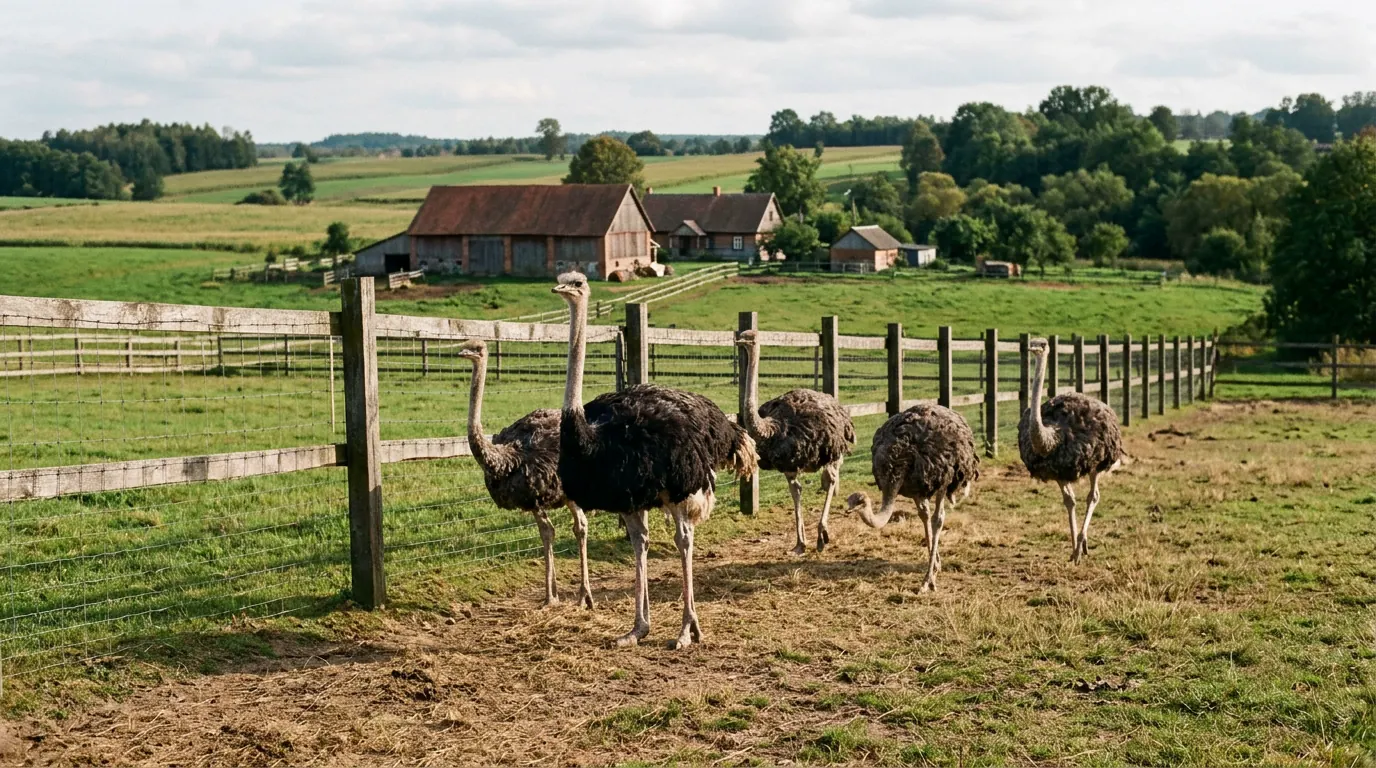
The African ostrich is the largest living bird and lays the largest eggs. The emu comes from Australia and is the second largest bird in the world. The rhea, also called the pampas ostrich, comes from South America and is the smallest of the three. You choose a species by climate, available space and production goal. For eggs, two things count: egg size and hatchability, the share of eggs that produce chicks. We describe the general rules of running such a farm in our guide to ostrich farming.
The three species at a glance
Ostriches are the tallest and heaviest, the emu is clearly lighter, and the rhea is the lightest of the three. Ostriches and emus lay in the breeding season, which in the northern hemisphere usually falls in spring and summer. The roles in incubation differ: the male emu incubates the eggs alone, the male rhea also handles hatching, and in ostriches the female helps incubate by day and the male by night. Take this into account when you plan the breeding flock and the number of nests.
Ostrich, emu and rhea: the differences that matter on a farm
Size and paddock
The African ostrich needs the largest paddock and a tall, strong fence, because it runs fast and can jump over low obstacles. The emu has dense, double-layered plumage that protects it from cold and rain, so it copes better with changeable weather. The rhea lives in flocks and needs open space. For every species, plan the paddock so birds can move away from each other. In a pen that is too small, tension and the risk of injury rise.
Egg and hatch
An ostrich egg is many times heavier than a hen's egg, and one equals a dozen to several dozen hen eggs. The emu eggshell is dark green, while rhea eggs are pale and are laid in the male's shared nest. Incubation time is different for each species and is longest in the emu. We describe shell and egg structure in our text on the structure of a hen's egg, a useful point of reference. Hatchability depends on egg quality, incubator settings and the health of the breeding flock.
Ostrich egg price: what it depends on
What shapes the price
The price of an ostrich egg depends on the bird's origin and pedigree, the age and fertility of the flock, the purpose of the egg and the season. A hatching egg from a bird with documented fertility is priced differently from an empty shell for decorative goods, and differently again from an egg for eating. It also matters whether you sell fresh eggs or sell after hatching, for example as chicks.
Where to check the current price
Check current prices with ostrich and emu breeders, at ornamental poultry fairs and in classified ads. Always compare the same kind of product, because a hatching egg, a breeding egg and an eggshell are three different prices. Ask also about collection terms, transport and hatching rules, which help you compare offers fairly.
Costs that are easy to miss
Add feed, water, paddock upkeep, veterinary care, electricity for the incubator and labor for collection to the egg price. A farm management program helps you settle costs in one place, because you keep collection and cost records next to flock data.
Paddock, fencing and safety
Fencing and ground
The fence must be tall and strong, and the mesh taut, because loose mesh and damaged posts are the most common cause of escapes. Provide shade and constant access to fresh water in the paddock. Keep the ground dry, because damp and mud raise the risk of leg problems. For larger flocks, plan several sectors so the ground can rest.
Human safety
Ostriches and emus can kick hard, and males can be aggressive in the breeding season. Work with the birds in pairs and always tell the other person when you enter the paddock. Apply biosecurity rules on every entry to the farm, and you can build an entry and disinfection plan with the biosecurity plan generator.
Flock health and medicines
Vaccination and your vet
A vet sets the vaccination program based on the situation in your region and in your flock. Poultry vaccines differ in type and price, so ask your vet which ones your farm needs: poultry vaccines, types and price. The vet, not the keeper, chooses the medicine and the dose.
Withdrawal periods for eggs and meat
When a bird receives a medicine, its eggs and meat may have a withdrawal period that you must not skip. Record the withdrawal rule at every treatment, with the date and the name of the product. The manufacturer states the length of the withdrawal period and your vet advises on it. We describe such record keeping in treatment and withdrawal records.
Signs to watch for
Watch appetite, movement, feather condition and droppings. Changes in behavior often appear before clear signs of disease, so note every unusual reaction. Report deaths and suspicious signs to your vet. Check the duty to report diseases in the legal acts and on the website of Poland's Chief Veterinary Inspectorate (Główny Inspektorat Weterynarii).
How to assess eggs and run a hatch
Assessing egg quality
Check fresh eggs by eye and by weight. A cracked, dirty or very uneven shell lowers the chance of hatching. We describe methods of assessing albumen quality in our text on egg quality (Haugh, Roche). Threshold values for ratite eggs differ from those for hen eggs, so use breeder data and species literature when you assess them.
Storage and incubation
Before setting eggs in the incubator, store them cool and at a stable temperature, and not for long. Incubation time differs between species, so match incubator settings to the specific bird. For a comparison with other birds, see our text on how long a hen sits on eggs.
Hatch records
Note the number of eggs laid, the number fertilized, hatchability and dead-in-shell eggs. These data show what to improve next season: flock condition, storage conditions or incubation. We describe hatch results with a breeder flock and how to judge chick sex in the study dead-in-shell eggs and chick sex.
Frequently asked questions
How much does an ostrich egg cost?add
The price depends on the purpose of the egg, the bird's origin and the season. Prices change often, so we give no amount. Check the current price with breeders and at ornamental poultry fairs, comparing the same kind of product.
What is the difference between a rhea and an ostrich?add
The rhea is smaller and lighter and comes from South America, while the African ostrich comes from Africa. The rhea lays eggs in a shared nest kept by the male, who handles hatching. Ostriches need a larger paddock and a stronger fence.
Can you keep emus in Poland?add
An emu needs a strong fence and shelter from rain and wind. Check the rules for keeping poultry in Poland's Internetowy System Aktów Prawnych (online legal acts database) and talk to your county vet (powiatowy lekarz weterynarii), because flock requirements can differ.
How long does it take to incubate ostrich eggs?add
Incubation time depends on the species and on incubator conditions. The breeder or your vet gives the exact term. For every hatch, record the date you set the eggs so you know when to expect chicks.
Can you keep ostriches and emus together?add
Different ratite species should not be mixed without experience, because they differ in temperament and size. It is safer to keep each species separately, with its own paddock and shelter.
How do you keep records for an ostrich flock?add
Record every entry to the farm, every medicine with a withdrawal period, eggs laid and hatches. Keep the records in one place so you can compare results from season to season.
Sources & resources
- linkGłówny Inspektorat Weterynarii (Chief Veterinary Inspectorate) — gov.pl/web/wetgiw
- linkInstytut Zootechniki PIB (National Research Institute of Animal Production) — izoo.krakow.pl
- linkInternetowy System Aktów Prawnych (online legal acts database) — isap.sejm.gov.pl
Prepared by: DlaFerm Team based on data from the sources listed · Publisher: INSTA-TECH sp. z o.o.
Do you keep ostriches, emus or rheas?
The DlaFerm <a href="/program-do-zarzadzania-ferma-drobiu">farm management program</a> helps you record birds, eggs, hatches and treatments in one place. Create a free farm account and see how it works on your farm.
Phone
+48 796 258 151