Chicken price per kg: what you get at the farm, the slaughterhouse and the shop
Search for the price of chicken and you will find very different numbers. That is because there is no single price. There are three points on the same chain: the live price paid to the farmer, the price after slaughter and processing, and the retail price in a shop or for a rotisserie bird. We explain what sits behind each one and where to find current, reliable data instead of one averaged figure.
verifiedFrom the team that has organised work on poultry farms for years.
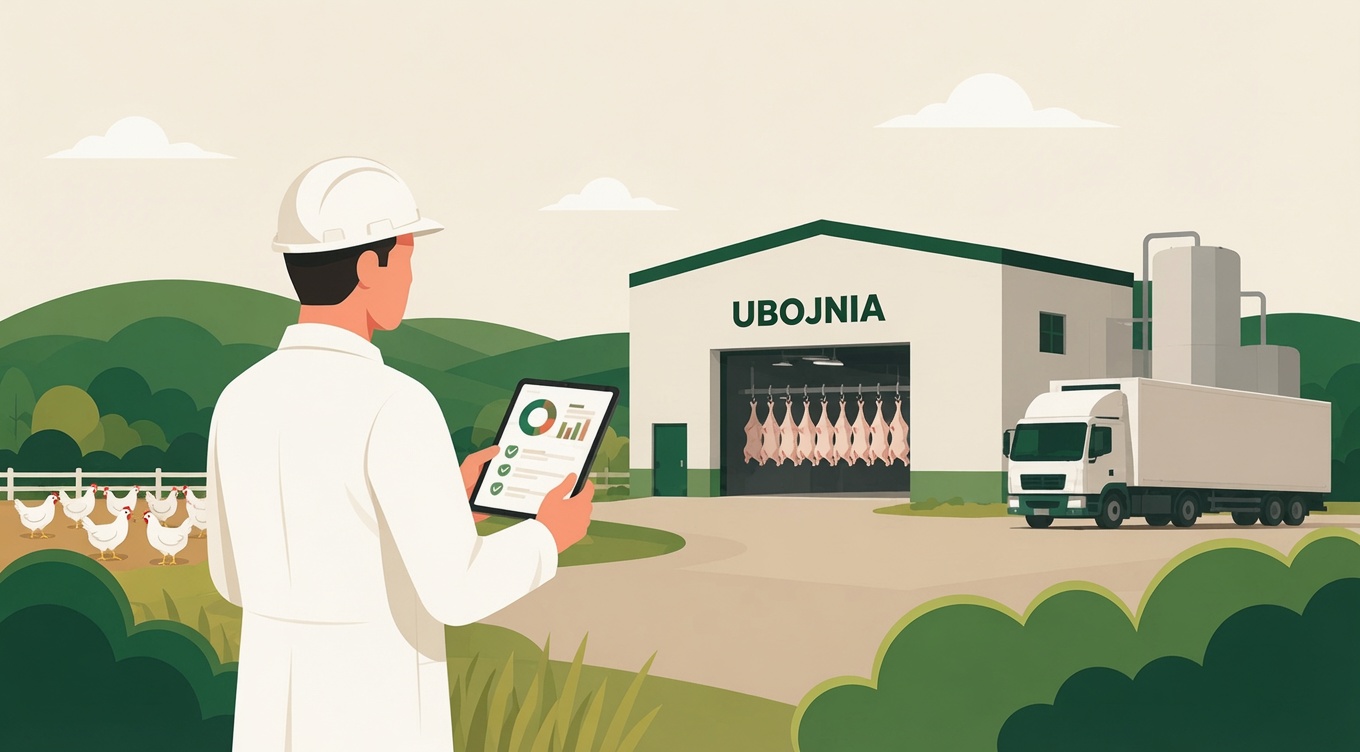
When someone asks what chicken costs, they can mean three very different numbers. The first is the live price: what a poultry processor pays the farmer per kilogram of live weight when it collects a broiler flock (Polish growers discuss these rates on industry forums such as PPR Forum). The second is the processor's price, after the costs of slaughter, cutting and packing. The third is the retail price: what a consumer pays in a shop for raw meat, or for a ready roast chicken from a rotisserie at a supermarket chain. These three numbers differ a lot and cannot be sensibly averaged into one, so we keep them apart here instead of giving a single amount.
What shapes the live price at the farm
The price a processor pays per kilogram of live weight depends first of all on feed cost. Feed is usually the biggest single cost in broiler production, so swings in feed prices go straight into what the processor can pay and still keep the chain profitable. Seasonal demand matters too, for example before holidays. So does the way you sell: under a contract with the processor, or on the open market (the spot market). Each follows its own price logic. More on the difference: broiler contracts with a processor.
What shapes the shop price
The retail price adds more layers on top of the live price: slaughter and cutting, transport and logistics, packaging, the wholesaler's margin and the shop's margin. Retail chains also use promotions. Chicken is often a loss-leader to bring shoppers in, so its price in a given shop and week can differ from the market average whatever live prices are doing. That is why the shop price and the farm price can move at different speeds, and sometimes in opposite directions.
Broiler price from the farmer: what really shapes it
Feed: the main cost, and so the main price driver
Feed is usually 60–70% of broiler production cost. That is why it does most to decide what price a processor can offer for live birds and still stay profitable. To work out feed cost per kilogram of live weight on your own farm, see feed cost per 1 kg of live broiler weight. The broiler feed requirement calculator shows how much feed the whole flock needs.
Contract or open-market sale
Farmers tied to a processor by a contract usually get a more predictable price, either fixed in advance or set by a formula linked to market quotations. The cost is less flexibility. Selling on the spot market lets you benefit from a briefly higher price, but also exposes you to drops. We describe the rules and typical clauses in broiler contracts with a processor.
Seasonal demand for live birds
Demand for poultry, and indirectly the live price, rises when consumers buy more, typically before holidays. Farmers who time flock collection for these periods can get better terms, though this is only one of many factors in the final price.
Where to check the current farm-gate price
We do not give a per-kilogram amount here, because farm-gate prices change from week to week and differ between regions. You can find current poultry market quotations in the poultry market price tool and on regional pages such as poultry prices in Mazowieckie voivodeship (similar pages exist for every voivodeship). Growers also swap informal but often current figures on industry forums such as PPR Forum. Treat them as a reference point, not an official quotation. You can set your own production cost against the farm-gate price in the cost of 1 kg of live weight calculator.
Chicken price in shops and from the rotisserie: why it differs from the farm price
Slaughterhouse and processing
Before live birds reach a shop shelf, they go through slaughter, cutting, packing and often further processing, for example into portions or ready products. Each step adds cost (labor, energy, logistics, packaging), which pushes the price above what the farmer was paid for live birds.
Distribution and retail margin
A chicken in a shop, for example in a large supermarket chain in Poland such as Biedronka, carries the wholesaler's margin and the retailer's margin, plus frequent promotions. Big chains regularly use chicken as a promotional product to draw customers in. So the price in a given week and shop can differ from the typical market price.
Rotisserie chicken: the price of a ready meal
A rotisserie chicken is no longer a raw product but a ready meal. On top of the meat price come preparation (marinade, energy for roasting, labor), packaging and the seller's margin. That is why a rotisserie chicken usually costs clearly more than raw meat of the same weight, and comparing the two directly makes no sense.
What about turkey, eggs and price charts?
The same pattern applies to turkey: one price at the farm, another after processing, another in the shop. But turkey is a different species with its own profitability and its own market, and needs a separate discussion. The same rule governs egg prices, which we cover in farm egg prices. If you want a poultry price chart over time, current quotations and their history are published by GUS (Statistics Poland), KOWR (the National Support Centre for Agriculture) and IERiGŻ-PIB (the Institute of Agricultural and Food Economics). Current market data is also in our poultry market price tool.
Frequently asked questions
How much does 1 kg of chicken cost?add
It depends on which point in the chain you mean. The price per kilogram of live weight paid to the farmer, the price after slaughter at the processor and the retail price in a shop are three different numbers, far apart. There is no single chicken price. Check farm-gate prices in the poultry market price tool and retail prices in GUS statistics.
How much does 1 kg of broiler chicken cost?add
The live price (live weight) paid to the farmer when a flock is collected is a different number from the price of broiler meat in a shop after slaughter and cutting. The gap comes from slaughter, processing and margins along the way. Check the current farm-gate price in the poultry market tool, and compare it with your own production cost in the cost of 1 kg of live weight calculator.
How much does 1 kg of poultry cost?add
Poultry is a wider category than chicken. It also covers turkey, duck, goose and guinea fowl, and each species has its own price and market. As with chicken, the price also depends on whether you mean the live price at the farm or the retail price in a shop. There is no single price per kilogram of poultry. You need to name the species and the point in the chain.
What price does a farmer get for a broiler chicken?add
This is a question about the live price: the rate a farmer receives from the processor per kilogram of live weight when the flock is collected, which is a different number from what the consumer later pays in a shop. It depends on region, season, form of sale (contract or spot market, see broiler contracts) and the current market. Instead of looking for one fixed amount, check current quotations in poultry market prices and compare them with your own production cost.
Sources & resources
- linkGUS (Statistics Poland): Consumer prices of goods and services (food price statistics)
- linkKOWR (National Support Centre for Agriculture): poultry market bulletins
- linkIERiGŻ-PIB (Institute of Agricultural and Food Economics): agricultural market analyses
Prepared by: DlaFerm Team based on data from the sources listed · Publisher: INSTA-TECH sp. z o.o.
Want to know what you really earn per kilogram of live weight?
DlaFerm calculates feed cost and margin per cycle from your own data, not from averaged prices found online. Try our <a href="/wskazniki-produkcyjne-fcr-epef">FCR and EPEF online</a> module, create a free farm account or get in touch and we will show you how it works.
Phone
+48 796 258 151