Ostrich eggs: size, weight and incubation
An ostrich egg usually weighs from about 1.4 to 1.8 kg, about the same as 25 chicken eggs. We explain how to work that out, what affects the weight and how to incubate step by step. The numbers are approximate. Exact settings come from the incubator manufacturer and your vet.
verifiedFrom the team that has organised work on poultry farms for years.
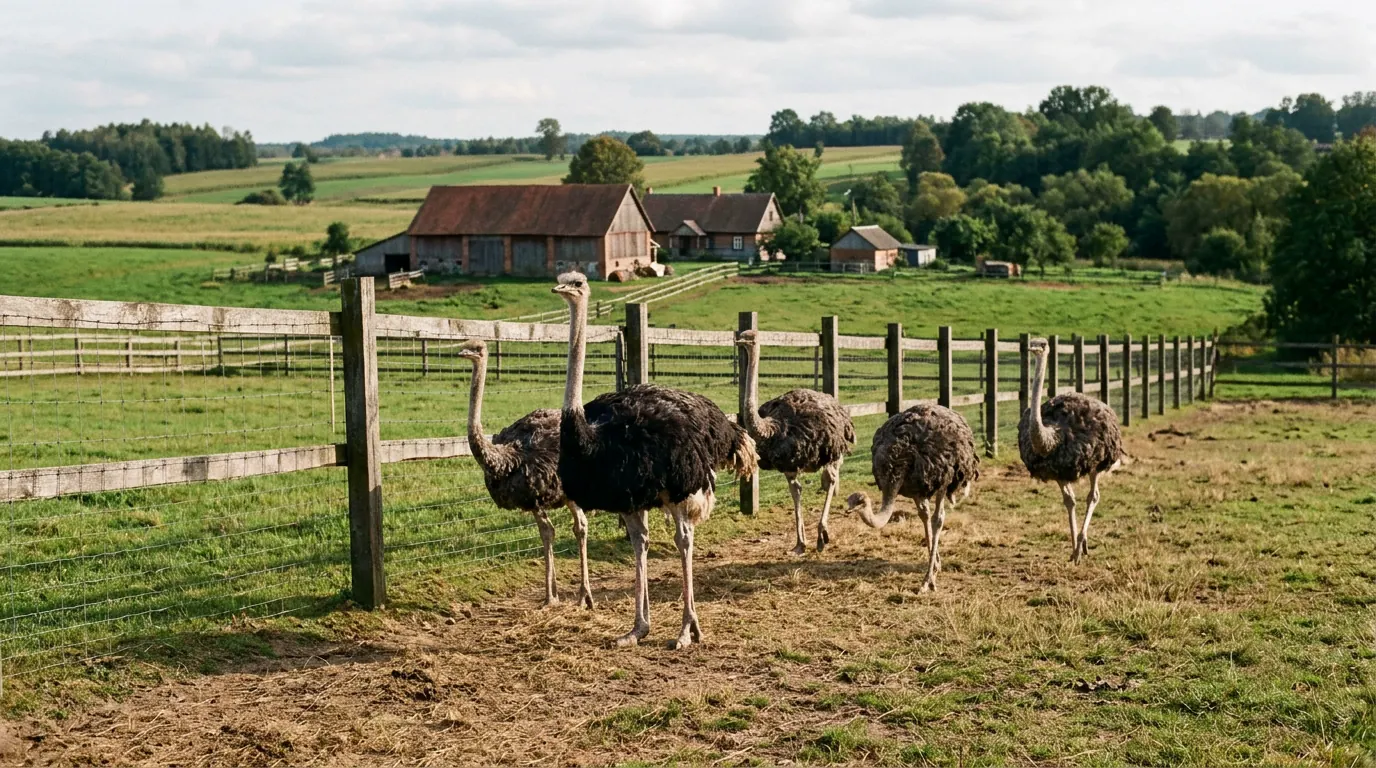
An ostrich egg usually weighs from about 1.4 to about 1.8 kg. That equals roughly 25 chicken eggs, because an average chicken egg weighs about 60–65 g. The exact weight depends on the hen's age and condition and on the breeding line. For incubation, choose clean eggs with no cracks and a normal shape, and set them after a short storage period. Hatching usually takes about 42 days.
The numbers at a glance
Three values matter most: egg weight, hatch time and incubator settings. Weigh each egg on a scale accurate to a few grams and record it for every batch. Count hatch time from the day you set the eggs. Check temperature and humidity with a separate thermometer and hygrometer, and compare them first against a reference instrument. Treat the values here as a starting point and set the exact figures according to the manufacturer's manual.
How much does an ostrich egg weigh, and why does it vary?
Weight in practice
Egg weight depends mainly on the hen's age. Young birds that have just started laying usually produce smaller eggs, and the weight settles as they mature. Feeding and season also play a part. One weighing says little, so keep a weight list for each hen and each batch. Write the weight down right after collection, together with the laying date and the hen or nest number. This makes it easy to compare hatch results with egg weight and spot batches that stray from the norm. We describe how to judge egg quality in our guide to Haugh units.
Shape and dimensions
An ostrich egg is oval and clearly elongated. It is usually about 15 cm long. The shell is thick, hard and porous, much thicker than a hen's. For that reason candling during incubation needs a strong light source, since an ordinary flashlight may not show the embryo developing. Judge shape and shell at collection. Cracks, a clearly odd shape and dirt lower the chance of hatching, so set such eggs aside in a separate category.
How many chicken eggs make one ostrich egg?
Conversion
The calculation is simple: divide the ostrich egg weight by the chicken egg weight. An ostrich egg of 1.5 kg and a chicken egg of about 60 g give about 25 eggs. With heavier eggs, around 1.8 kg, the result goes up, and with lighter ones it goes down. That is why we give a range, not one number. The conversion helps when selling and when working out how many chicken eggs replace one ostrich egg in a recipe. For a comparison with other large bird eggs, see our text on ostriches, emus and rheas.
What is inside
An ostrich egg holds clearly more white and yolk than a chicken egg, because it carries the nutrients for a long embryo development. Compare nutritional values for the same weight, not per egg. We cover white and yolk in more detail in egg nutritional values. For a breeder producing hatching eggs, though, hatchability matters more than composition, so at collection first check shell cleanliness and shape.
Collecting and storing eggs before incubation
Collection
Collect eggs several times a day to cut the time they lie in the nest and to limit dirt. Do not wash them in water with detergent, because cleaning agents can strip the protective layer of the shell and let bacteria in. Clean dirty eggs dry and gently, and do not put heavily soiled eggs in the incubator. Mark each egg with the date and the hen or nest number, since later records depend on it. It is worth writing hygiene rules into a biosecurity plan for the whole farm.
Storage before setting
Before they go into the incubator, store eggs in a cool, dry room with a stable temperature, away from drafts and direct sun. Do not keep them too long: the longer an egg waits, the greater the risk of lower hatchability. Turn eggs stored for a few days as recommended. For longer storage, talk through the conditions with your vet or an adviser, because the exact limits depend on conditions and the bird's line.
Incubating ostrich eggs step by step
Temperature and humidity
Incubate ostrich eggs at a temperature close to 36 °C, and set humidity differently in the first and final phases. Humidity is lower at the start and higher at the end, because the egg has to lose the right amount of water. Set the values according to the incubator manufacturer's manual and check them with a separate thermometer. A deviation of a few degrees over many days is enough to cut hatchability, so record readings several times a day. Place the incubator where the room temperature is steady, away from heaters and drafts. Hatching usually takes about 42 days and depends mainly on temperature.
Turning and candling
In the first phase, turn the eggs several times a day. A few days before hatching, stop turning so the embryo can settle into hatching position. With many eggs, hand turning quickly becomes a chore and gaps creep in, so consider a model with automatic turning, which we describe in our guide to the automatic egg incubator. Candle the eggs with a strong lamp a couple of weeks after setting. Remove eggs with no visible development and eggs with cracks so they do not contaminate the rest. The schedule for the following days is in our day-by-day incubation guide.
Hatch records and selling eggs
Batch records
For each batch, record the laying date, setting date, egg weight, incubator settings and hatch result. After hatching, work out hatchability as the share of hatched chicks or young birds out of the eggs set. These records show which hens and which settings give better results. We use a similar scheme for other species, as described in our guide to poultry egg incubation.
Selling eggs
The price of an ostrich egg depends on weight, origin, whether it is for hatching or eating, and on region and season. Prices change, so we give no amounts. Before selling, check the rules on trading eggs and animals with Poland's Chief Veterinary Inspectorate (Główny Inspektorat Weterynarii) and with your vet. The rules in this area change, so check the current wording before you decide.
Frequently asked questions
How much does an ostrich egg weigh?add
An ostrich egg usually weighs from about 1.4 to about 1.8 kg. The exact weight depends on the hen's age, feeding and breeding line. Weigh eggs on a scale and record the weight for each batch.
How many chicken eggs are in one ostrich egg?add
Roughly one ostrich egg equals about 25 chicken eggs of 60–65 g. With a heavier ostrich egg the number goes up, and with a lighter one it goes down. For sales, give a range, not one fixed number.
How long does it take to incubate ostrich eggs?add
Hatching usually takes about 42 days. The time depends mainly on incubator temperature, so deviations from the settings can lengthen or shorten it. The incubator manufacturer gives the exact settings, and if in doubt, check with your vet.
What temperature should an incubator be for ostrich eggs?add
Incubate eggs at a temperature close to 36 °C, checked with a separate thermometer. Humidity is lower at the start of hatching and higher at the end. Set the exact values according to the manufacturer's manual.
Can you hatch ostrich eggs in an ordinary chicken egg incubator?add
Usually not, because ostrich eggs are much bigger and have a thicker shell. The incubator needs a chamber of the right size and a range of settings that suits ostrich eggs. Check with the manufacturer before you buy.
How much does an ostrich egg cost?add
The price is not fixed, because it depends on weight, origin, purpose and season. Prices change, so we give no amounts. Check current prices with sellers and in breeders' ads in your region.
Sources & resources
- linkChief Veterinary Inspectorate (Główny Inspektorat Weterynarii) — gov.pl/web/wetgiw
- linkNational Research Institute of Animal Production (Instytut Zootechniki PIB) — izoo.krakow.pl
- linkEFSA — efsa.europa.eu
Prepared by: DlaFerm Team based on data from the sources listed · Publisher: INSTA-TECH sp. z o.o.
Planning hatch batches and incubation dates?
The DlaFerm Flock Placement and Cycle Planning module keeps setting dates, hatches and batches in one place. Create a free farm account and see how it works in practice.
Phone
+48 796 258 151