Muscovy duck farming: weight and eggs
The Muscovy duck (Cairina moschata) is a separate species, not part of the domestic duck group. It lays seasonally, takes clearly longer to hatch and shows a large weight gap between the sexes. We explain what to prepare for and how to keep records.
verifiedFrom the team that has organised work on poultry farms for years.
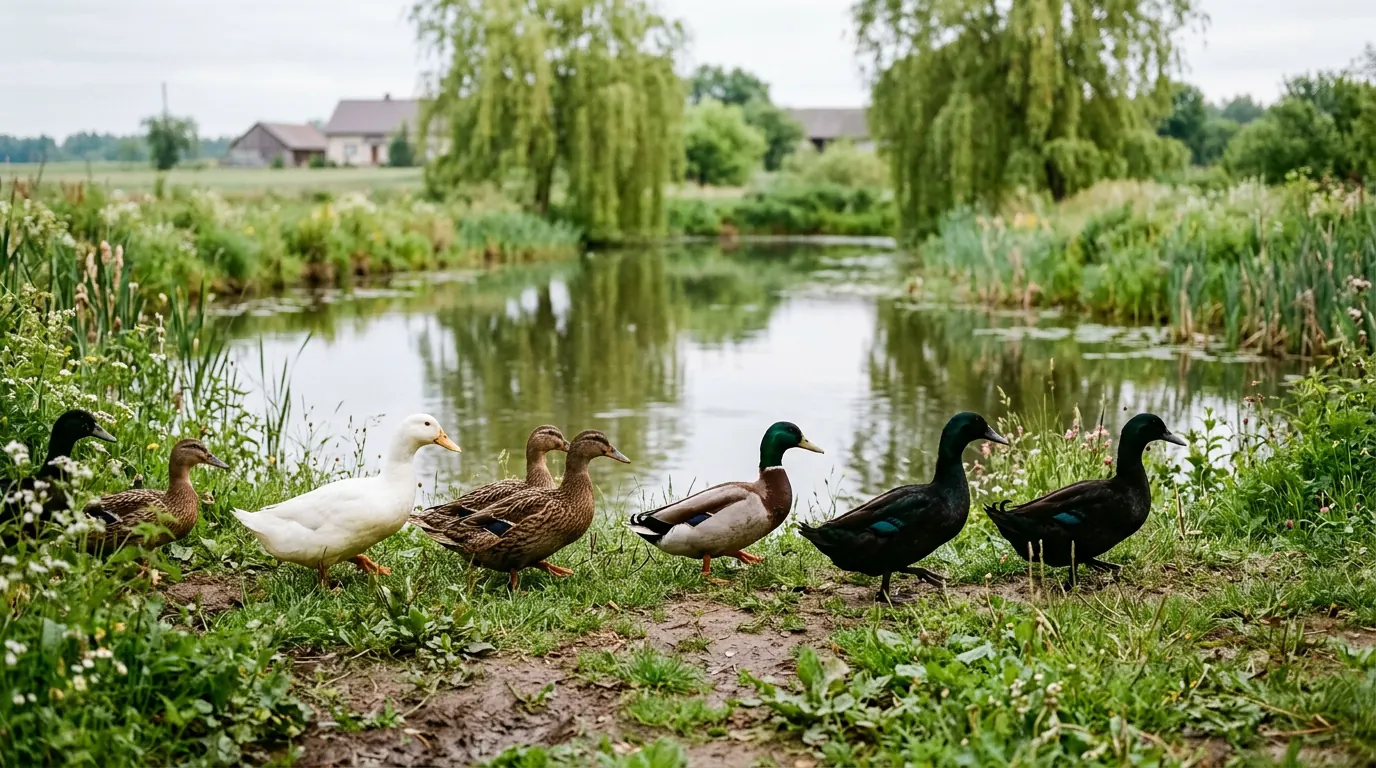
Keeping Muscovy ducks works well on a poultry farm, but it needs a different approach than domestic ducks. The Muscovy is the species Cairina moschata, not a cross with the common duck. For you that means a different laying season, a different hatching routine and different expectations for bird weight. You will find a full list of duck breeds in the table on duck breeds: Pekin, Muscovy, Indian Runner, Staropolska.
Who this suits
Muscovies suit a keeper who wants meat with a different taste from Pekin duck and can work with a seasonal cycle. This is not a species for people who expect fast flock turnover all year. Before you buy the first birds, check that you have room for a run with water and a covered pen. Bird prices depend on the local market and origin, so ask breeders directly. For a rough idea of live poultry costs, see how much a hen, duck or goose costs.
Muscovy duck weight
Weight difference between the sexes
The most important trait of the Muscovy in practice is the clear body weight gap between drake and duck. Males are much heavier and give a bigger carcass, while females stay lighter and more agile. When you plan sales, keep records by sex, not only by flock. We give no specific weights, because they depend on the line, the origin of the birds and feeding. You can compare duck breeds and their build in the table on the duck breeds page.
Weighing and recording results
Weigh birds regularly, separately by sex, at the same age and at the same time of day. Write the weight in the flock log, because changes in growth rate only show on a chart covering several weeks. If weight differs from what you expect for the line, check feeding and bird health first. The farm management software lets you record weighings for each group.
Laying and hatching Muscovy eggs
Seasonal laying
Muscovy ducks lay seasonally, usually in spring and summer. In autumn and winter laying drops clearly. The start of laying depends on day length, temperature and the condition of the bird, so do not plan egg sales on a fixed calendar. Record gaps in supply before customers start asking about regularity. Work out the number of eggs per duck from your own records over several seasons.
Hatching and brooding
Muscovies have a strong brooding instinct and readily stay on the nest. Hatching takes clearly longer than in domestic ducks, so with an incubator set the schedule with a buffer and control temperature and humidity as the equipment manual says. Store hatching eggs in a cool, clean place and do not keep them too long. Keep records of egg batches and hatches in the poultry house records module.
Housing conditions for Muscovies
Run and water
Muscovies like a pond or water tank, because water helps keep plumage clean and supports natural behavior. Make sure water drains quickly from the run so mud and standing puddles do not form. The fence must keep out foxes and rats, and the pen should be closed at night. With more birds, divide the run into sectors so you can control stocking and cleanliness more easily.
Biosecurity
Contact with wild waterfowl is a risk for the flock. Separate the Muscovy run from places where other species stay, and limit visits by strangers and equipment. You can prepare a plan for this in the biosecurity plan generator. On flock health, consult a vet, and check poultry keeping rules in official sources.
Registration and regulations
Farm registration
You register a poultry farm in IRZplus, ARiMR's online animal register (ARiMR is Poland's Agency for Restructuring and Modernisation of Agriculture), and keep flock records as the county vet (powiatowy lekarz weterynarii) requires. We describe the procedure in the article on registering a poultry farm. The legal position is described as of 22.11.2026. We give no act numbers or deadlines here, because rules change. You can check the current text in the Internet System of Legal Acts (ISAP).
Welfare and animal protection
Poland's Animal Protection Act sets general rules for keeping farm animals. In practice, inspectors look at constant access to water, a place to rest and no overcrowding in the pen. We describe the rules for keepers in the Animal Protection Act: what changes for keepers. If you doubt the requirements for your farm, ask a vet or the Chief Veterinary Inspectorate (Główny Inspektorat Weterynarii).
Treatment and withdrawal periods
A vet chooses the medicine
A vet sets every medicine and its dose for Muscovies after examining the flock. Do not pick products based on forum opinions or leaflets for other species. Record every dose with the date and batch number, because the withdrawal period for meat and eggs depends on it. Always confirm the withdrawal rule with your vet, and keep records in the treatment and withdrawal records.
Selling meat and eggs
Carcasses and eggs sold from the farm must be traceable. Batch records let you show where a product comes from and whether the withdrawal period was kept. Issue sales documents under the current invoicing rules. The KSeF invoicing module helps with invoices (KSeF is Poland's national e-invoicing system), and you handle customer settlements in one place.
Frequently asked questions
Is a Muscovy duck the same as a Pekin duck?add
No. The Muscovy is the species Cairina moschata, while Pekin ducks are a variety of the domestic duck. They differ in build, bird weight, laying season and brooding behavior. You can compare breeds in the table on the duck breeds page.
How much does a Muscovy duck weigh?add
Weight depends on sex, line and feeding, and males are clearly heavier than females. We give no specific figure here, because it depends on farm conditions. Weigh birds regularly and record results separately for each sex.
How many eggs does a Muscovy duck lay?add
Laying is seasonal and depends on the time of year, day length and the condition of the bird. The season usually falls in spring and summer. Work out the exact number of eggs from your own records over several seasons.
How long do Muscovy duck eggs take to hatch?add
Hatching takes clearly longer than in domestic ducks. The incubator manual and breeding literature for the species give the exact time. Set the schedule with a buffer and record the laying dates.
Do Muscovy ducks need water?add
They like water, but do not need a large pond to live. Fast drainage from the run and no standing puddles matter. A pond gives birds a bath and exercise, but needs regular cleaning.
How do I register a Muscovy duck farm?add
You register a poultry farm in IRZplus under the current rules. Confirm the legal position as of 22.11.2026 in the Internet System of Legal Acts and with the county vet. We describe the procedure in the article on registering a poultry farm.
Sources & resources
- linkNational Research Institute of Animal Production (Instytut Zootechniki PIB) — izoo.krakow.pl
- linkChief Veterinary Inspectorate (Główny Inspektorat Weterynarii) — gov.pl/web/wetgiw
- linkInternet System of Legal Acts (ISAP) — isap.sejm.gov.pl
- linkARiMR — gov.pl/web/arimr
Prepared by: DlaFerm Team based on data from the sources listed · Publisher: INSTA-TECH sp. z o.o.
Do you keep Muscovy ducks alongside other poultry?
The DlaFerm farm management software lets you keep records of birds by sex, group and egg batch in one place. Create a free farm account and see how it works in practice.
Phone
+48 796 258 151