Krymki and rysie pigeons: breeds and care
Krymki and rysie are pigeon varieties kept for their looks and behavior. Keeping them comes down to a dry loft, balanced feed, clean water at all times and good hygiene. We cover what to look for when choosing birds, feeding, health and record keeping.
verifiedFrom the team that has organised work on poultry farms for years.
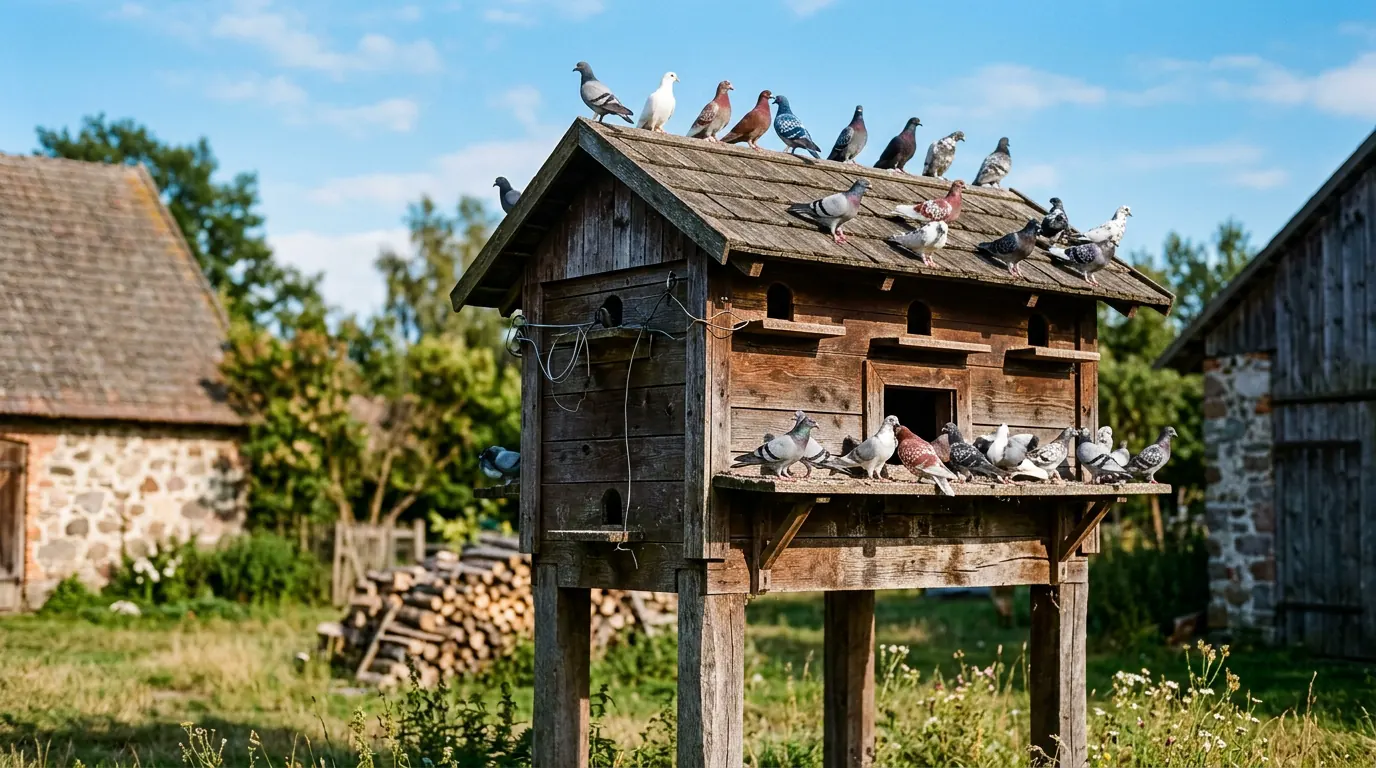
Krymki and rysie are pigeon varieties kept mainly for their looks, build and behavior, not for meat or eggs. The standard for each variety describes build, color and feather pattern, and pigeon breeders' associations set it. Before you buy your first birds, read a short overview of pigeon breeds to compare varieties.
Krymki and rysie: how they differ
The differences show mainly in appearance and in show requirements. Each variety has its own description of traits, and judges score birds against it at shows. Before buying, compare standard photos and ask the breeder to show you the birds together with their pedigree. A variety name in an advert does not tell you whether the bird meets the standard. Check where the young pigeons come from, because that decides whether you get a healthy, even line.
A loft for krymki and rysie
Space and ventilation
The loft should be dry, airy and free of drafts. Pigeons tolerate damp badly, because parasites and bacteria multiply faster on wet litter. Make the floor easy to clean and change the litter regularly. Put nests and nest bowls in a quiet spot, away from drafts and the entrance. For equipment details, see the guide to pigeon loft equipment. The loft must also keep out predators, especially cats and rats, because one gap in the wire mesh can cost you a whole clutch.
Room to fly
Fancy pigeons need regular exercise. If the variety is kept for shows or flying, build an aviary or run sized to the number of birds. A cage that is too small weakens condition and raises stress, and overcrowding raises the risk of respiratory disease. Feed the birds at the same time every day and give them clean water all day. Plan outings so the pigeons return to the loft at a set time.
Feeding krymki and rysie
The basic grain ration
A pigeon's diet is built on grain mixes made for pigeons. Match the mix to age and season: during breeding birds need more protein, and in winter more energy. Do not feed large amounts of wheat alone, because it leads to obesity. Give only what the birds eat at one time and remove the rest so it does not go sour. Agree the exact mix and amount with a vet or a feeding adviser, because needs depend on variety, condition and weather.
Grit, water and minerals
Pigeons need grit and clean water available at all times. Grit helps grind grain in the muscular stomach (gizzard), and water must be fresh and changed daily. Give mineral supplements, such as shell grit and mineral salt for birds, in a separate container and do not mix them into the feed. Dirty drinkers cause disease more often than lack of food does. Clean drinkers and feeders regularly, and more often when the season changes.
Prevention and pigeon health
Isolating new birds
Every new pigeon should spend a period in isolation in a separate room before joining the rest of the flock. This makes it easier to spot signs of disease before it spreads to other birds. Watch appetite, posture, discharge from the nostrils and eyes, and how the bird moves. At any worrying sign, call a vet, because many pigeon diseases need a quick diagnosis. Do not give medicines on your own: the vet always chooses the medicine and dose. If birds go into trade, observe the withdrawal period, which is covered in treatment and withdrawal records.
Vaccination and hygiene
Agree a vaccination program with a vet, because it depends on your region, the diseases present and the age of the birds. Hygiene is the basis: clean trays and containers, disinfect equipment when you change the flock, and limit contact with wild birds, which can carry disease. Keep visits by strangers to the loft to a minimum and always set entry rules. Biosecurity rules are best written down in a plan, and the biosecurity plan generator helps with that.
Records and breeding
Pedigree and bird records
Good breeding rests on records. For each bird note the hatch date, parents, variety, show results and any illness. Records show which lines give even offspring and reduce the risk of inbreeding. Paper notebooks are easy to lose, so many keepers use software. In DlaFerm.pl you keep records of poultry and bird groups in the farm management software, and the data is always at hand.
Pairing and clutches
Choose pairs with the standard and the health of both birds in mind. Do not pair closely related pigeons, because it weakens the offspring. Before laying, the hen needs calm and a proper nest, and squabs need checking in their first days. Watch whether the young are fed by their parents, and write down every loss with its cause. After the season, this data shows which pairs do best and which are worth removing from the breeding program.
Formalities when keeping pigeons
What to check in the rules
Keeping fancy pigeons in a backyard loft usually needs less paperwork than a farm. Rules on animal keeping and bird health do change, so check the current text in the Internetowy System Aktów Prawnych (Poland's online legal acts database), legal state as of 22.11.2026. For requirements on registering a flock, movements and shows, ask the district vet (powiatowy lekarz weterynarii). If your loft grows and you start selling birds, talking to a vet before you change scale helps you avoid paperwork problems later.
Shows and sales
Show birds usually have a recorded pedigree and are judged against the breed standard. Before selling or swapping, make sure the buyer knows where the bird comes from, and if in doubt, consult a vet. Trading birds calls for tidy records showing where each animal came from and when it was last treated. A good record system answers these questions without searching through notebooks.
Frequently asked questions
What is the difference between krymki and rysie pigeons?add
The differences are in looks and in the standard that the pigeon breeders' association sets for each variety. Compare standard photos and ask the breeder to show you the birds. Do not choose only by the name in an advert.
What kind of loft do krymki and rysie need?add
The loft should be dry, airy and protected from predators. A separate corner for nests helps, as does a small aviary or run for exercise. Size it to the number of birds.
What should I feed fancy pigeons?add
The base is a good pigeon grain mix, topped up with grit and clean water available at all times. Agree the mix and amount with a vet or adviser, because they depend on age and season.
Can I treat my pigeons myself?add
No. The vet always chooses the medicine and dose. At the first worrying signs, isolate the bird and contact a vet before you give anything.
How do I keep records for pigeons?add
Write down each bird's hatch date, parents, variety, show results and treatment. Data in one place makes pairing and judging lines easier. Farm management software helps keep these records in order.
Do fancy pigeons need to be registered?add
Requirements depend on the size of your loft and the rules in force at the time. Check the current text in Poland's online legal acts database and ask the district vet whether your loft needs registering.
Sources & resources
- linkGłówny Inspektorat Weterynarii (Chief Veterinary Inspectorate) — gov.pl/web/wetgiw
- linkMinisterstwo Rolnictwa i Rozwoju Wsi (Ministry of Agriculture and Rural Development) — gov.pl/web/rolnictwo
- linkInstytut Zootechniki PIB (National Research Institute of Animal Production) — izoo.krakow.pl
- linkInternetowy System Aktów Prawnych (online legal acts database) — isap.sejm.gov.pl
Prepared by: DlaFerm Team based on data from the sources listed · Publisher: INSTA-TECH sp. z o.o.
Keeping pigeons alongside other poultry?
DlaFerm.pl farm management software lets you keep records for different groups of birds in one place. Create a free farm account and see how it works in practice.
Phone
+48 796 258 151